






What Is CHAPEA, Exactly?
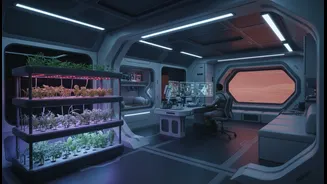
CHAPEA stands for Crew Health and Performance Exploration Analog. It's a series of three ground-based missions where four volunteers live and work for 378 days inside a simulated Martian habitat located at NASA's Johnson Space Center in Houston. The habitat,
known as Mars Dune Alpha, is a 1,700-square-foot space that was 3D-printed—a technique that could one day be used to build structures on Mars itself. This isn't a casual experiment; it’s designed to be as Mars-realistic as possible, testing both the technology and the people who will one day make the journey to the Red Planet.
Meet the Martian Housemates
The crew members are not astronauts, but highly qualified volunteers selected by NASA. They typically have advanced degrees in STEM fields or extensive experience, similar to the qualifications for astronaut candidates. For example, the first CHAPEA mission, which ended in July 2024, included a research scientist, a structural engineer, an emergency medicine physician, and a microbiologist. The second mission is currently underway, with a new crew of four—commanded by Ross Elder—who entered the habitat in late 2025 and are expected to remain inside until October 2026. These individuals undergo rigorous psychological and physical screening to ensure they are prepared for the immense challenges of long-term isolation.
A Year of Living Dangerously (Simulated)
Life inside Mars Dune Alpha is a carefully orchestrated simulation of what astronauts would face. The crew's days are packed with tasks: conducting scientific research, maintaining the habitat, exercising, and even growing their own crops like tomatoes and peppers. They perform simulated “Marswalks” in a sandbox-like area filled with red sand, wearing spacesuits to complete geological surveys and maintenance tasks. But the simulation's real test lies in the stressors. The crew deals with resource limitations, unexpected equipment failures, and significant workloads. Most notably, all communication with the outside world has a built-in 22-minute delay, mimicking the time it takes for signals to travel between Earth and Mars.
Why Put People Through This?
Sending humans to Mars is one of the most complex undertakings in history, and the biggest unknowns are human. How will people cope with being confined in a small space for years, millions of miles from home? CHAPEA is designed to collect crucial data on the physical and psychological toll of such a mission. Researchers study everything from the crew's cognitive performance and stress levels to their nutritional needs and group dynamics. This data helps NASA understand and mitigate risks, develop better support systems, and design habitats and mission plans that keep astronauts safe and productive. The knowledge gained is vital not just for Mars, but also for future long-duration missions on the Moon as part of the Artemis program.
What Comes Next?
The first two CHAPEA missions are just the beginning. NASA is already planning a third CHAPEA mission and has recently announced a new, even more complex simulation called the Moon and Mars Exploration Analog (MMEA). Scheduled to start no earlier than August 2027, MMEA will combine the surface habitat simulation of CHAPEA with a separate habitat that simulates the long transit journey in a spacecraft. This integrated approach will allow researchers to study the cumulative effects of a complete mission profile, from launch to landing and back. By running these dress rehearsals on Earth, NASA can iron out the problems and perfect the procedures before the real thing, making the giant leap to Mars a little bit safer.