

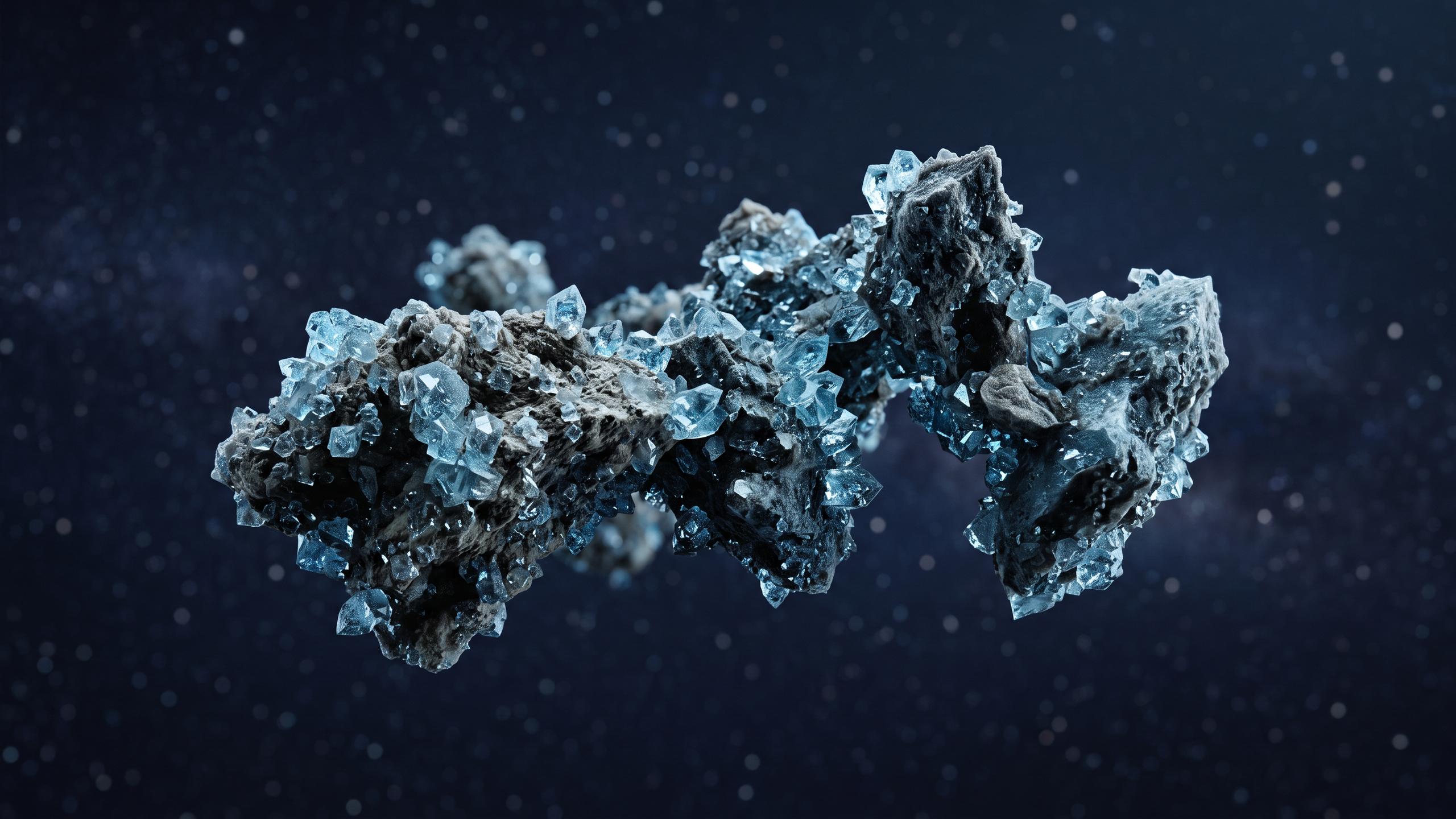

A Frozen Time Capsule
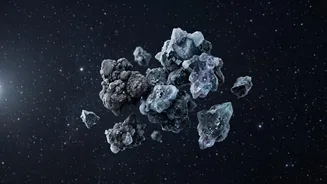
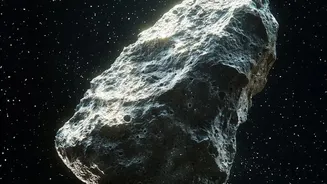
The Kuiper Belt is a vast, doughnut-shaped ring of icy bodies orbiting the Sun beyond Neptune. Think of it as a celestial deep-freeze, storing remnants from the formation of the solar system about 4.5 billion years ago. This region is populated by hundreds
of thousands of icy objects, from small bodies to dwarf planets like Pluto. Because they are so far from the Sun, these objects have changed very little over billions of years, making them pristine samples of the primordial soup from which the planets were built. NASA's New Horizons spacecraft, famous for its 2015 Pluto fly-by, has been journeying through this remote region, offering humanity its first direct look at this mysterious realm.
Listening for Dust
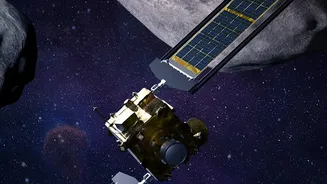
Aboard New Horizons is a special instrument called the Venetia Burney Student Dust Counter (SDC). It was designed to detect tiny dust particles as the spacecraft speeds through space. Every time a microscopic dust grain hits one of its detector panels, the instrument registers the impact. By counting these impacts, scientists can build a map of where dust is located and in what concentration. This dust is believed to be the product of collisions between larger Kuiper Belt Objects (KBOs), as well as particles kicked up when interstellar dust hits them. Essentially, the SDC is 'listening' to the debris left over from ancient cosmic fender-benders.
A Surprising Discovery
For years, scientific models predicted that as New Horizons traveled farther from the Sun, past the densest part of the Kuiper Belt (thought to end around 50 astronomical units, or AU), the amount of dust it detected would drop off sharply. But the opposite happened. As New Horizons journeyed from 45 to 55 AU, the SDC detected higher-than-expected levels of dust. The cosmic silence scientists anticipated was instead a flurry of activity, a clear sign that something about our models of the outer solar system was incomplete.
What the Dust Tells Us
So, what does this excess dust mean? The most compelling theory is that the Kuiper Belt is much larger than we thought. The high concentration of dust suggests a significant population of unseen objects colliding and grinding each other down, producing a steady supply of debris. This implies that the belt of icy bodies might not end at 50 AU but could extend much farther, perhaps to 80 AU or even beyond. Some scientists even speculate there could be a second, more distant belt we haven't discovered yet. These findings force a rewrite of the map of our own solar system.
New Clues About Our Origins
This discovery isn't just about redrawing boundaries; it provides profound clues about the chaotic early days of planet formation. The process of building planets, known as accretion, involves small particles sticking together to form progressively larger bodies. The evidence from New Horizons suggests the outer solar system was, and still is, a much more active and dusty place than previously imagined. A greater abundance of these icy, dusty building blocks in the early solar system could have influenced how the outer planets formed and evolved. By studying this ancient dust, we get a clearer picture of the raw materials and dynamic conditions that ultimately led to the creation of the planets, including our own.