



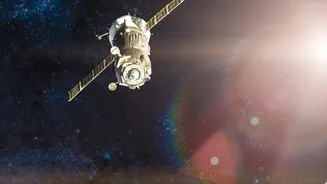
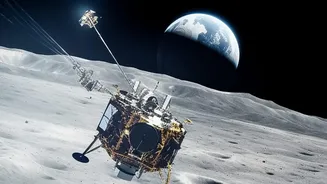
An ambitious mission is underway to solve one of the great mysteries of our solar system. The destination is Phobos, the enigmatic moon of Mars, and the goal is to bring a piece of it back to Earth for the very first time.
Meet the MMX Mission
The Martian Moons eXploration
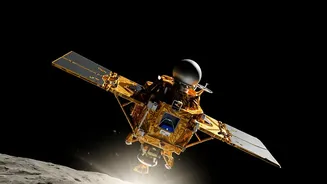
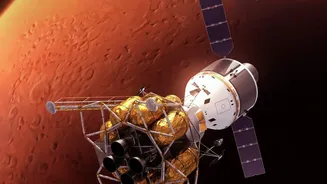
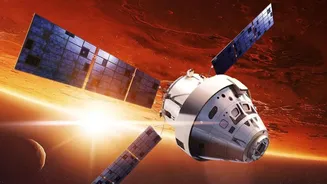
(MMX) mission, led by the Japan Aerospace Exploration Agency (JAXA), is a groundbreaking robotic probe that launched in October 2026. This is not just a flyby; it is a complex, multi-year sample-return mission. Building on the success of its Hayabusa missions which brought back asteroid samples, JAXA is now aiming for a much more challenging target in the Martian system. The mission is a major international collaboration, with significant contributions from NASA in the United States, as well as the space agencies of France (CNES) and Germany (DLR). The spacecraft is currently on its year-long journey to Mars, expected to arrive in August 2027. After its arrival, it will spend approximately three years studying both of Mars's moons, Phobos and Deimos, before making its bold attempt to land on Phobos.
The Great Debate: Why Phobos?
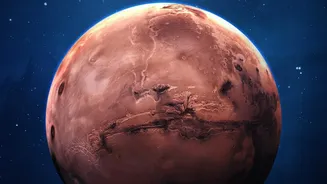
Phobos and its smaller sibling, Deimos, are celestial oddities. Scientists are divided on their origins, and this mystery is the core driver of the MMX mission. One theory suggests they are former asteroids that strayed too close to Mars and were captured by its gravity. If this is true, samples from Phobos would give us a pristine look at the building blocks of the outer solar system. The competing theory is that the moons were formed from debris blasted into orbit after a giant object crashed into a young Mars, similar to how Earth's Moon is thought to have formed. Figuring out which story is correct will tell us a tremendous amount about the chaotic early history of the inner solar system and how planets like Mars formed.
A Moon Full of Martian Secrets
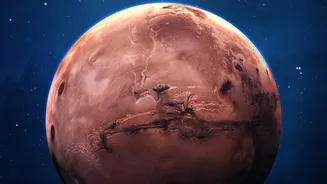
Beyond its own origin story, Phobos has another compelling secret to share. Because it orbits so close to Mars, its surface is constantly bombarded with material ejected from the Red Planet by ancient asteroid impacts. This means the dust and rock on Phobos could contain a layered history of Mars itself, a record stretching back billions of years. By analyzing these samples, scientists hope to find clues about Mars's past environment, including evidence of its long-lost water and atmosphere. In a way, Phobos has been acting as a natural archive for Mars. A sample from its surface could potentially be the first material from the Martian system ever returned to Earth, offering insights into its geological past without having to land on the much larger planet.
The Daring 'Grab and Go'
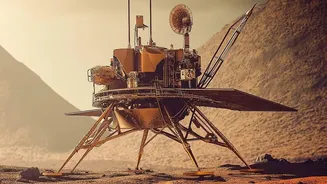
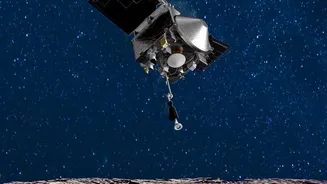
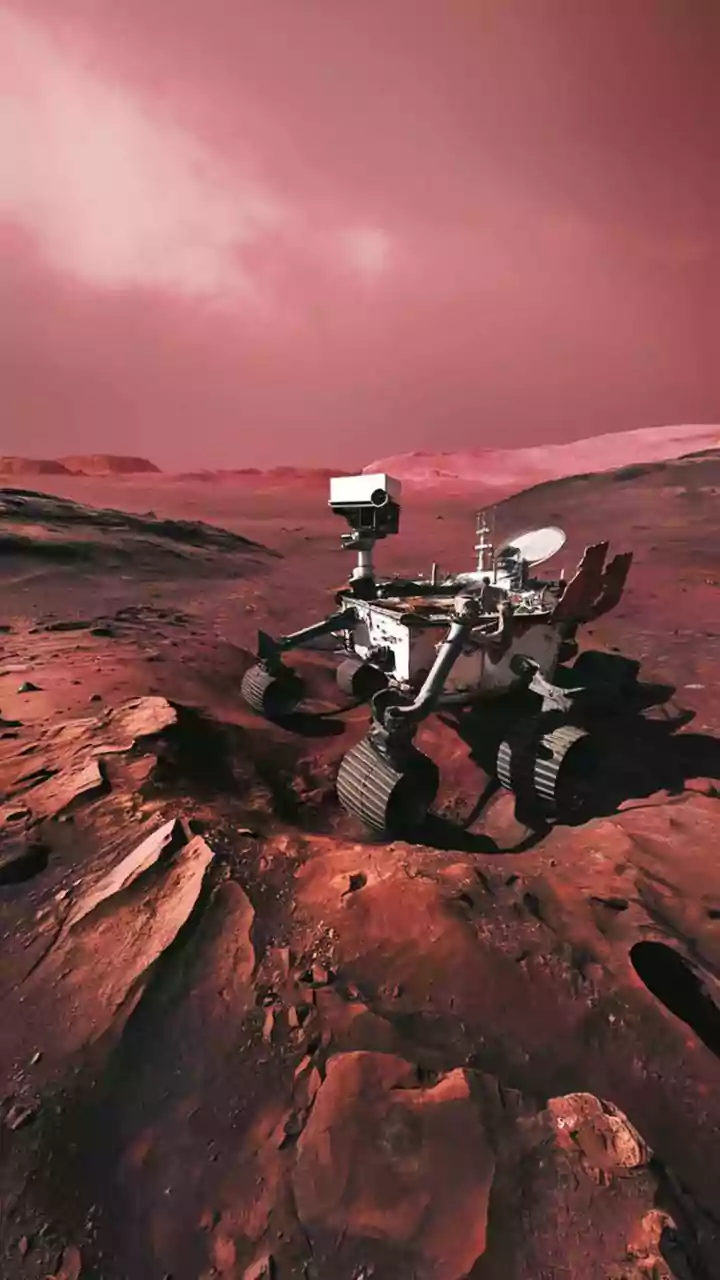
Collecting the sample will be a marvel of engineering. After extensive remote observation, the MMX spacecraft will descend toward the surface of Phobos. It will deploy a small, 25-kg rover named Idefix, jointly developed by France and Germany, to scout the surface. The main spacecraft will then perform at least one landing, a delicate operation in the moon's extremely low gravity. Using two different collection systems—a corer to dig about two centimetres deep and a pneumatic sampler that uses gas to blow material into a container—the probe aims to collect at least 10 grams of regolith. The entire landing and sampling procedure is designed to be completed in just a few hours.
The Long Journey Home
Once the precious sample is secured in a return capsule, the MMX spacecraft will lift off from Phobos in 2030. It will conduct several final flybys of the other moon, Deimos, for comparative analysis before beginning its yearlong voyage back to our planet. In 2031, the sample return capsule will separate from the main craft, endure a fiery reentry through Earth's atmosphere, and parachute down to a designated landing site in Woomera, Australia. From there, it will be transported to a specialized curation facility in Japan, where scientists from around the world will begin the painstaking work of unlocking the secrets held within its tiny grains of dust.