







What Is El Niño, Exactly?
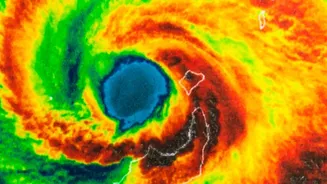
El Niño is a climate pattern that begins with the unusual warming of sea surface temperatures in the central and eastern equatorial Pacific Ocean. Think of it as a large-scale disruption in the Pacific's normal state. Typically, strong trade winds blow
from east to west, piling up warm water in the western Pacific near Asia. During an El Niño, these winds weaken. As a result, the massive pool of warm water is no longer held back and sloshes eastward, toward South America. This change in ocean temperature might seem distant, but it sets off a chain reaction in the atmosphere, altering weather patterns across the globe, including the intricate machinery of the Indian monsoon. According to the latest forecasts from August 2026, a very strong El Niño event is considered highly probable through the upcoming autumn and winter months.
The Monsoon's Trans-Pacific Rival
The Indian monsoon relies on a specific temperature and pressure gradient. The heating of the Tibetan plateau and the Indian subcontinent creates a low-pressure area that pulls in moisture-laden winds from the Indian Ocean. El Niño messes with this system. The warming of the eastern Pacific creates its own atmospheric circulation changes, which can lead to sinking air over the Indian region. This suppresses cloud formation and rainfall. In essence, El Niño competes with the monsoon's natural engine, often weakening the winds that carry moisture to the subcontinent. Historically, many El Niño years have been associated with below-normal rainfall and even droughts in India. While not every El Niño leads to a drought, it significantly increases the probability of a weaker, more erratic monsoon.
The Indian Ocean Dipole: A Potential Saviour?
While El Niño is the dominant global factor, it isn't the only player. The Indian Ocean has its own version of this phenomenon, known as the Indian Ocean Dipole (IOD). The IOD is the difference in sea surface temperatures between the western Indian Ocean (Arabian Sea) and the eastern Indian Ocean (near Indonesia). A 'positive' IOD, where the Arabian Sea is warmer than average, can actually help the monsoon. This warming enhances convection and pulls more moisture toward the Indian landmass, potentially counteracting the negative effects of an El Niño. Conversely, a 'negative' IOD can worsen the situation. Therefore, the ultimate performance of the monsoon often depends on the interplay between El Niño in the Pacific and the IOD in India's own maritime backyard. A positive IOD can sometimes rescue a monsoon season during an El Niño year, but this outcome is never guaranteed.
From Fields to Finances: The Ripple Effect
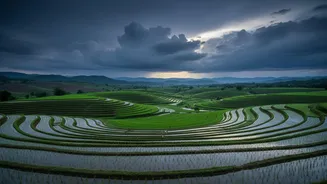
The variability of the monsoon has tangible consequences for every Indian. The agriculture sector, which employs nearly half the population, is most vulnerable. A weak monsoon can delay the sowing of critical kharif crops like rice, pulses, and oilseeds, leading to lower yields and reduced farm incomes. This directly impacts rural demand for goods like tractors and two-wheelers. The economic ripple effect continues with the threat of rising food inflation, as lower supply pushes up the prices of vegetables and grains. Furthermore, deficient rainfall affects water reservoirs, which are crucial for drinking water supplies and for generating hydroelectric power. Lower reservoir levels can strain power grids, especially as hotter-than-usual conditions associated with El Niño drive up demand for electricity for cooling.