
Preparation Before Arrival
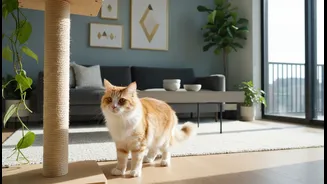
A successful introduction begins before your new cat even crosses the threshold. Designate a separate, quiet room for your new arrival. This will be their "base camp" for the first several days or even weeks. Equip this room with its own food, water,
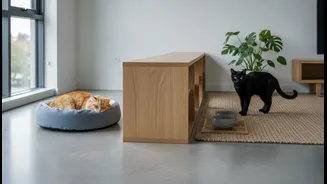
litter box, scratching post, and comfortable bedding. This separation is crucial; it allows the new cat to decompress from the stress of a new environment and prevents premature, and likely hostile, interactions with your resident cat. On arrival day, take the new cat directly to their prepared room without any contact with your current pet. This initial period of solitude gives them a space to feel secure and establish their own scent in a controlled area.
The Power of Scent
Cats navigate their world primarily through smell, making scent swapping the cornerstone of a peaceful introduction. Before they ever see each other, they should become familiar with one another's scent. Take a blanket or soft towel that each cat has slept on and place it in the other's territory. You can also use clean socks to gently rub each cat's cheeks and head, then leave the scented sock for the other cat to investigate, perhaps near some treats to build a positive association. Allow them to explore these new scents at their own pace. Hissing at the scented item is normal initially; continue swapping until the reaction is neutral or curious. This step slowly introduces the idea of another cat in a non-threatening way.
Exploring Each Other’s Territory
Once both cats are calm with each other's scents, it's time for site-swapping. Let your resident cat explore the new cat's room while the newcomer gets to roam the main part of the house. This should be done without them ever seeing each other. This process allows them to gather information and leave their own scent marks, further mingling their smells throughout the home and normalizing the presence of another feline. Pay attention to their reactions. If they seem curious and relaxed while exploring, it's a great sign. If either cat shows significant stress, hissing, or growling, it may mean you need to go back to scent-swapping for a bit longer.
First Visual Contact
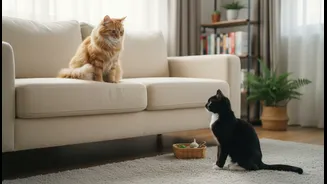
The first time the cats see each other should be brief, controlled, and positive. A common method is to use two baby gates stacked in a doorway or a screen door, allowing them to see but not touch each other. Another option is to crack the door open just enough for a peek. Keep these initial visual meetings very short. It can be helpful to feed them or give them high-value treats on opposite sides of the barrier, creating a positive association between seeing each other and receiving something good. Some hissing or posturing is normal, but watch for signs of intense aggression or fear. The goal is curiosity, not confrontation.
Supervised Face-to-Face Meetings
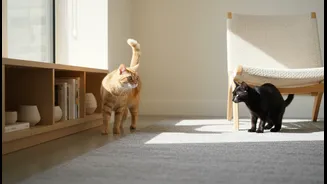
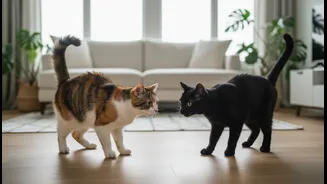
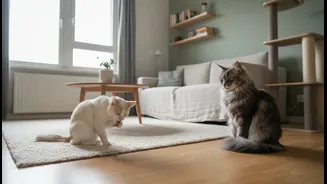
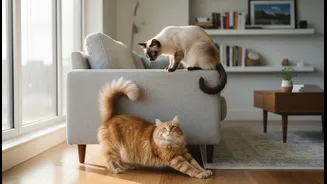
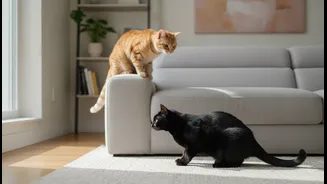
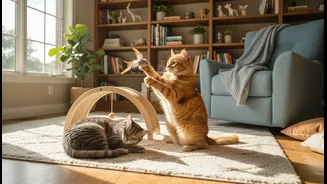
When visual contact through a barrier is consistently calm, you can proceed to short, supervised meetings in a neutral space. Keep the initial interactions brief and end on a positive note, preferably before either cat becomes stressed. Engage them in parallel play with wand toys to redirect their focus and create a fun, shared experience. Don't force them to interact. It's crucial to be able to read their body language. A relaxed posture is good; a tense body, flattened ears, and growling are signs to end the session immediately and calmly. Never let them "fight it out," as this can cause physical and psychological damage that is hard to undo.