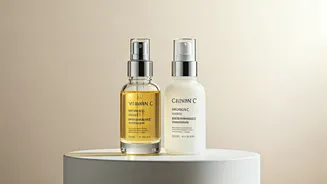









The Myth That Started It All
For years, a persistent myth has haunted skincare lovers: do not mix niacinamide and Vitamin C. This caution stems from outdated research from the 1960s, where pure, non-stabilized forms of the ingredients were combined under high heat. In these specific
lab conditions, they formed nicotinic acid, a substance that can cause temporary skin redness and flushing. However, this scenario has very little to do with how modern, sophisticated skincare products are formulated and used at home. Today's products use stabilized versions of these vitamins, making the old warnings largely irrelevant. So, let's be clear: you can safely and effectively use both in your routine.
The Power of Vitamin C
Vitamin C, often found as L-ascorbic acid in serums, is a powerhouse antioxidant. Its primary job is to protect your skin from environmental stressors like pollution and UV damage by neutralizing harmful free radicals. This protective quality makes it a daytime favorite. Beyond protection, Vitamin C is celebrated for its ability to brighten the complexion, fade dark spots and hyperpigmentation, and stimulate collagen production. Consistent use can lead to firmer, more radiant skin with a more even tone.
The Brilliance of Niacinamide
Niacinamide, a form of Vitamin B3, is the ultimate multitasker. It's known for strengthening the skin's natural barrier, which helps to lock in moisture and keep irritants out. This makes it excellent for improving hydration and reducing sensitivity. Niacinamide also helps regulate oil production, making it a fantastic ingredient for those with oily or acne-prone skin. Furthermore, it helps to visibly minimize the appearance of pores, calm redness, and improve overall skin texture. Its anti-inflammatory properties make it a soothing choice for many skin types.
Your Simple Layering Guide
Now for the practical part. While you can use both ingredients together, the order and timing can maximize their benefits. Most experts recommend applying products from the thinnest to thickest texture. Since Vitamin C serums are often watery and acidic, they should go on first, directly after cleansing. 1. Morning Routine (Recommended): Apply your Vitamin C serum to clean, dry skin. Its antioxidant properties are most valuable during the day. Wait a minute or so for it to fully absorb. Then, apply your niacinamide product, which can be in a serum or moisturizer. Finish with your daily sunscreen—a non-negotiable final step. 2. AM/PM Split: If you have very sensitive skin, you might prefer to separate them. Use your Vitamin C product in the morning to take advantage of its protective benefits and use your niacinamide product at night to help with repair and calming. This method is not about incompatibility but about gently introducing actives. 3. Wait Time: The idea of waiting 10-15 minutes between layers is another leftover from the old myth. With modern formulas, a minute or two is plenty of time for each product to absorb before applying the next. The key is to avoid pilling, not a chemical reaction.
Listen to Your Skin
While combining these ingredients is safe, everyone's skin is different. If you are new to either Vitamin C or niacinamide, introduce them into your routine one at a time. Start with one product for a few weeks to see how your skin tolerates it before adding the next. Always perform a patch test on a small area of skin before applying a new product to your entire face to check for irritation. Redness, stinging, or itching are signs that the specific formulation or concentration might not be right for you. The goal is to get glowing, healthy skin, and the best way to do that is to pay attention to its needs.