






The Official Deep Freeze
To understand the current situation, a quick look back is necessary. Following geopolitical tensions, bilateral trade relations have been formally suspended since 2019, with further restrictions added in subsequent years. India revoked Pakistan's 'Most-Favoured
Nation' (MFN) status in 2019 and later prohibited all direct or indirect imports from Pakistan in May 2025. Pakistan also implemented a ban on trade with India, including shipments routed through third countries. The result was a near-total collapse of official trade, which once stood at over USD 2 billion annually. This formal freeze, however, did not eliminate the demand for goods on either side of the border; it simply rerouted it.
The Dubai Detour
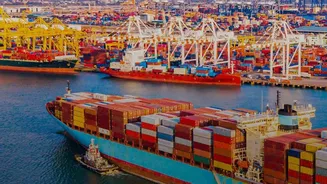
When politics closes a door, commerce often finds a window. The primary workaround for Indian suppliers and Pakistani importers has been the use of third-country hubs. Cities like Dubai in the UAE, and to a lesser extent Singapore and Colombo, have become crucial intermediaries. The process, sometimes called a 'grey-zone strategy', is straightforward: Indian goods are exported to a free-trade zone like Dubai. There, in bonded warehouses, the shipment's documentation is altered. The country of origin is changed, and the goods are then re-exported to Pakistan. While this allows businesses to meet market demand, it adds significant costs and complexity to the supply chain.
By the Numbers: A Growing Shadow Economy
Recent statistics from the State Bank of Pakistan (SBP) highlight the scale of this indirect trade. In the first quarter of the 2026-27 financial year (July-September 2026), Pakistan recorded imports from India worth USD 61.74 million, a staggering 69% increase from the USD 36.55 million recorded in the same period the previous year. While these official numbers only capture a fraction of the reality, they point to a growing trend. Think tanks like the Global Trade Research Initiative (GTRI) have estimated that total unofficial trade, including this third-country route, could be as high as USD 10 billion annually. This massive flow of goods operates in the shadows, uncaptured by official bilateral statistics but very real for the businesses and consumers involved.
What's in the Crates?
The demand in Pakistan for Indian products spans several critical sectors. The most significant is pharmaceuticals. For the 2025-26 fiscal year, pharmaceuticals and organic chemicals accounted for over 96% of Pakistan's recorded imports from India, with items like vaccines and blood products being particularly prominent. This reliance is driven by cost-effectiveness and established supply chains that are hard to replace. Beyond medicine, other key products include cotton, dyes, chemicals, machinery parts, and various food items like spices and tea. The trade suspension has forced Pakistani industries, especially textiles, to source materials like cotton from more distant and expensive markets, adding to their operational costs.
The Economic Toll and Calls for Normalisation
While indirect trade provides a release valve, it comes at a high price. The extra logistics, re-invoicing, and shipping through a third country add layers of cost that are ultimately passed on to consumers and businesses. The Pak-India Business Council estimates that the suspension of direct trade has led to economic losses of around USD 40 billion for Pakistan since 2019. For the pharma industry alone, resuming direct imports of raw materials could save an estimated USD 2 to 3 billion annually. This economic pressure has led to repeated calls from business communities on both sides to separate trade from politics and restore direct commercial ties, arguing it would lower costs, create opportunities, and benefit both economies.