

The Promise of a Simple Breath
For decades, medical diagnosis has relied on often invasive and time-consuming methods like blood tests, biopsies, and scans. But what if our bodies broadcasted health signals with every breath we exhale? This is the core idea behind breath analysis,
or 'breathomics'. Our breath is more than just air; it contains thousands of Volatile Organic Compounds (VOCs), which are microscopic particles produced by our body's metabolic processes. When something goes wrong, such as the development of a disease, the pattern of these VOCs changes, creating a unique chemical 'signature'. The ability to read these signatures offers a revolutionary path to healthcare: a non-invasive, painless, and rapid screening tool that could detect health issues at their earliest stages, long before symptoms appear.
How the Technology Works: Nano Meets AI
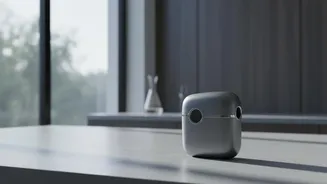
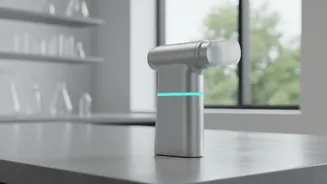
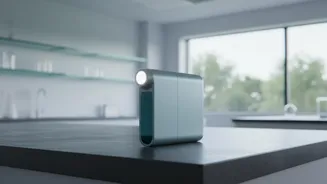
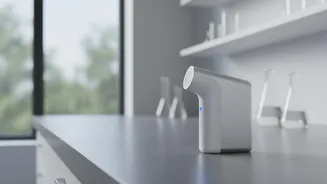
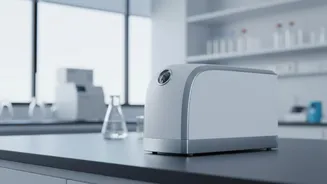
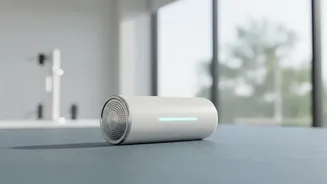
The magic happens at the intersection of nanotechnology and artificial intelligence. The device, often called an 'electronic nose', contains a series of highly advanced nanosensors. These sensors are engineered from special materials designed to be extremely sensitive to different VOCs. When a person breathes into the device, these sensors react to the compounds in their breath, generating a complex pattern of electrical signals. By itself, this pattern is just data. This is where AI comes in. A machine-learning algorithm, which has been trained on thousands of breath samples from both healthy individuals and patients with known diseases, analyzes this signal pattern. It looks for the specific 'fingerprint' associated with conditions like cancer, diabetes, or liver disease. The AI can make a classification in seconds—flagging a sample as potentially indicative of a disease.
Indian Innovation at the Forefront
India has emerged as a key player in this deep-tech healthcare revolution. Researchers at institutions like IIT Kharagpur are developing AI-enabled breath analyzers to screen for chronic kidney disease, liver issues, and diabetes. Similarly, a study highlighted at the Bengaluru India Nano 2026 conference showcased an AI-powered nanosensor from TCS Research specifically designed to screen for pre-diabetes, a condition affecting an estimated 136 million people in India. Meanwhile, scientists at IIT Jodhpur are working on their own 'electronic nose' using MEMS and nano-sensors. Adding to this momentum, a Thiruvananthapuram-based startup, Accubits Invent, has secured a patent for its 'VolTrac' sensor technology, which analyzes VOCs from breath to detect metabolic disorders and cancers.
A Practical Look at Screening Accuracy
The most critical question for any screening tool is its accuracy. The results from Indian labs and early trials are highly promising. Accubits Invent, for example, reports a lab-verified accuracy rate of 98.5% for its technology. Another research paper on an AI-powered system for Chronic Obstructive Pulmonary Disease (COPD) demonstrated 96.68% accuracy in its study. Related technologies, like the Swaasa app which analyzes cough sounds, have shown around 90% accuracy in distinguishing between normal and abnormal lung conditions in validation studies involving AIIMS. However, it is crucial to understand what these numbers mean. These are often results from controlled environments. The next major hurdle is validating this accuracy through large-scale, real-world clinical trials to account for variables like comorbidities and environmental factors.
From the Lab to the Local Clinic
The ultimate goal is not to replace traditional diagnostic methods but to augment them. These breath sensors are envisioned as frontline screening tools. Their low cost and portability make them ideal for deployment in primary healthcare centres, remote villages, and community health camps where access to advanced lab infrastructure is limited. A person flagged by a breath test would then be referred for more definitive diagnostic procedures like a spirometry test for lung function or imaging for cancer confirmation. This approach shifts the focus from reactive treatment to proactive screening, enabling early intervention that can dramatically improve patient outcomes and save lives, particularly for diseases where early detection is paramount.