




The Problem with Scoops
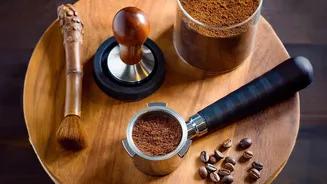
We get it. Using a scoop is fast, easy, and it feels like the way it's always been done. But that trusty scoop is the number one source of inconsistency in your coffee routine. The problem is that it measures volume, not weight, and not all coffee is created
equal. A scoop of dark, oily beans is lighter and less dense than a scoop of light roast beans. Even the same beans can pack differently depending on the grind size or how you scoop them. This means that even when you think you are being consistent, you could be using a significantly different amount of coffee each day, leading to a wildly different tasting cup.
Control Through Consistency
The single biggest upgrade you can make to your coffee game isn't a fancier grinder or a new brewer; it's a simple digital kitchen scale. When you weigh your coffee in grams, you eliminate all the guesswork. Fifteen grams is always fifteen grams, regardless of roast level, bean size, or grind. This introduces control and, most importantly, repeatability. When you finally brew that perfect cup—the one with the perfect balance of sweetness and brightness—you can write down the exact weight of coffee and water you used and replicate it perfectly the next morning, and the morning after that.
Understanding Extraction
Brewing coffee is all about extraction: the process of dissolving flavour from the grounds into water. This process happens in stages. First, acidic and fruity notes are released, then sweetness and body, and finally, bitter compounds. Get the balance wrong, and your coffee suffers. If you don't extract enough, you're left with a sour, thin-tasting cup. This is called under-extraction. If you extract too much, you pull out those harsh, bitter compounds, resulting in an astringent and hollow cup—this is over-extraction. Inconsistent measurements are a primary cause of swinging between these two unpleasant outcomes.
The Golden Ratio
So, how much coffee should you use? The specialty coffee world has a well-established starting point known as the 'golden ratio'. Generally, this falls between 1:15 and 1:18—that is, one part coffee to 15-18 parts water, by weight. A common and easy place to begin is a 1:16 ratio. For a single large mug, this might mean using 20 grams of coffee and 320 grams of water (since for water, millilitres and grams are the same). A scale is the only way to accurately hit this ratio every time. It provides a stable foundation, allowing you to make small, deliberate adjustments to suit your personal taste.
How to Get Started
Making the switch is easy. All you need is a basic digital kitchen scale that can measure in grams. Start with the 1:16 ratio. Place your brewer or mug on the scale and tare it to zero. Add your desired amount of ground coffee, for example, 20 grams. Tare the scale to zero again. Now, as you pour your hot water, watch the scale until it reaches 320 grams. This process gives you a reliable baseline. If the coffee tastes a little weak, you can try a 1:15 ratio next time (more coffee per part of water). If it's too strong, try 1:17. This systematic approach is how you dial in your brew and stop guessing.