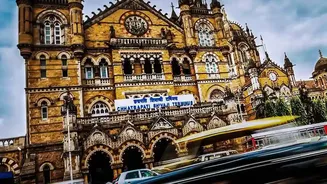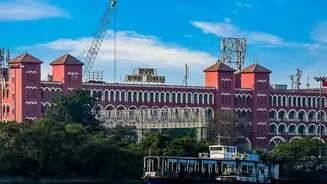



The Problem with 'Running Late'
The information provided by the National Train Enquiry System (NTES) and other apps is often limited to a single data point: how late a train is relative to its last major update point. A train might be reported as "running 30 minutes late," but this
is a historical fact, not a future prediction. It tells you where the train has been, not where it is going or, more importantly, when it will actually arrive at your station, which could be hundreds of kilometres down the line. This departure-centric model fails to account for all the potential delays that lie ahead, from unscheduled stops and signal issues to congestion on crowded routes. This focus on past performance creates a false sense of certainty that quickly unravels as the journey progresses.
The Real-World Cost of Incomplete Data
This lack of a holistic view has tangible consequences for millions of passengers. It affects the family member trying to time their arrival to pick you up from the station, forcing them into long, anxious waits. It causes chaos for the business traveller with a tight connection, who cannot be sure if they will make their next train. For those travelling to smaller, less-frequented stations, the information can be even more sparse, leaving them in a true information black hole. A study has even highlighted that passengers face numerous problems, including a lack of punctuality and accurate timings. Inaccurate data isn't a simple inconvenience; it's a systemic failure that disrespects passengers' time and creates unnecessary stress and financial burdens, such as missing a connecting journey.
The Technology for Better Tracking Exists
The frustrating part is that Indian Railways has the technology to do better. Many locomotives are now equipped with a Real-Time Train Information System (RTIS), developed with ISRO, which uses GPS to ping the train's location every 30 seconds. This means a wealth of real-time data is being generated. However, the way this information is processed and presented to the public remains stuck in the old paradigm. The system reports what has happened, rather than using the data to predict what will happen. While thousands of locomotives are fitted with these devices, many still rely on manual or intermittent updates from stations, leading to the inconsistencies passengers experience. The problem isn't a lack of technology, but a failure of imagination in its application for the passenger.
What a Truly Smart System Looks Like
A modern train status system should provide a dynamic, predictive Estimated Time of Arrival (ETA) for every single station on the route, not just the next major hub. Imagine a system that uses machine learning to analyse the current location, speed, and upcoming track congestion. It would know about scheduled crossings, temporary speed restrictions, and even historical delay patterns on certain segments of the journey. Some third-party apps are already attempting to offer predictive ETAs, showing that it's possible. An official, reliable system could tell a passenger in Delhi not just that their train left Patna an hour late, but that, based on current conditions, they can expect an additional 45-minute delay before reaching their destination, allowing them to plan accordingly.
A Call for a Passenger-First Approach
Indian Railways itself has acknowledged the need for better data accuracy, with the Railway Board urging zones to take action against officials who feed incorrect information into the system. This admission highlights that the issue is known at the highest levels. But fixing data entry is only half the battle. The core philosophy must shift from simply reporting historical delays to providing forward-looking, route-wide intelligence. Indian Railways is undertaking a massive upgrade of its passenger reservation system, which is a perfect opportunity to overhaul its status information systems as well. A full-route status check is not a futuristic fantasy; it is a basic requirement for a modern, customer-focused railway network.