





The Common Problem with Leftover Rice
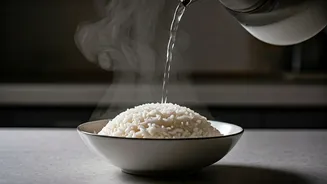
Almost everyone who cooks rice has faced the challenge of leftovers. Once refrigerated, rice often becomes hard, dry, and unappealing. [2, 7] This happens because as the cooked starches in the rice cool down, they begin to lose moisture and recrystallize,
a process known as retrogradation. The result is a texture that is a far cry from the tender grains you enjoyed just a day before. While dry, day-old rice is excellent for making fried rice, it’s less than ideal when you simply want to enjoy a side of fluffy steamed rice with your meal. [7] Many people resort to adding a splash of water or covering it with a damp paper towel, which can be effective but sometimes yields uneven results. [5, 11]
The Instant Ice Cube Solution
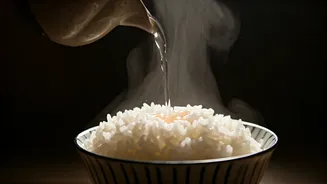
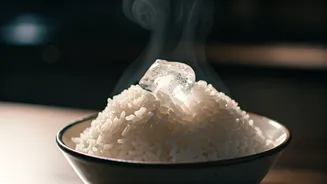
Enter the viral kitchen hack that has transformed how home cooks reheat rice: the ice cube trick. [2, 10] The method is incredibly simple. Start by placing your leftover rice in a microwave-safe bowl or on a plate. Break up any large clumps to ensure more even heating. Then, place a single ice cube directly on top of the rice. [1, 10] There is no need to add any water. Microwave the rice for about one minute. [1] For larger portions, you might need a little more time or an additional ice cube. [10] You'll find that the rice becomes steaming hot and perfectly soft, as if it were freshly made.
The Science Behind the Steam
It might seem counterintuitive that an ice cube wouldn't just melt into a puddle, leaving you with soggy rice. However, the science behind this trick is what makes it so effective. Microwaves primarily heat food by agitating the water molecules within it. In solid ice, the water molecules are locked into a rigid crystal structure by strong hydrogen bonds. [4, 15] These bonds prevent the molecules from rotating easily, so they don't absorb much energy from the microwaves. [10, 15] Instead of the ice cube melting rapidly, the microwave energy heats the rice and the small amount of condensation on the surface of the ice. This creates a gentle, penetrating steam that rehydrates the rice grains evenly and thoroughly. [1, 8] The ice cube essentially functions as a time-release steamer, restoring moisture without over-saturating the rice. Some sources even note the ice cube remains largely intact after a minute in the microwave. [7, 10]
Best Practices for Storing Rice
To set your leftovers up for success, proper storage is key. It's important for both food safety and texture. Cooked rice should not be left at room temperature for more than an hour or two, as it can be a breeding ground for bacteria. [6, 9] Once it has cooled down, store it in an airtight container in the refrigerator. [3, 6] This helps to prevent moisture loss and keeps the rice from absorbing other odours from the fridge. Properly stored rice will last for about three to four days. [3, 9] For longer storage, you can portion and freeze cooked rice in sealed bags or containers for up to a month, which can help retain more moisture than refrigeration. [3, 6]
Other Reliable Reheating Methods
While the ice cube trick is fantastic for its simplicity, especially in the microwave, there are other trusted methods to revive leftover rice. A very popular alternative is to cover the rice with a damp paper towel before microwaving. [3, 18] The moisture from the towel creates steam, similar to the ice cube. [18] You can also reheat rice on the stovetop. Add the rice to a pot with a small splash of water or broth, then cover and heat over low heat, stirring occasionally until it's warmed through. [5, 9, 14] This method also gently steams the grains back to life. No matter which method you choose, the key is always to reintroduce moisture to counteract the drying that occurs in the fridge.