








The Rise of the 'Active' Desk
The hum of servers, the clatter of keyboards, and the glow of dual monitors—this is the familiar soundscape for millions in India's booming tech industry. But beneath the surface of innovation and growth, a silent health crisis is brewing. A lifestyle
defined by 10-hour workdays spent sitting has led to a rise in posture problems, weight gain, and metabolic issues. The initial solution was the standing desk, a simple ergonomic shift. However, employees are now taking it a step further. Instead of just standing, they are actively moving, squatting, and stretching, embracing high-tempo workouts in short bursts to break the monotony and invigorate their bodies.
Why Sitting is the New Smoking
Health experts have been sounding the alarm for years. According to the World Health Organization, a sedentary lifestyle is a leading cause of noncommunicable diseases. Prolonged sitting is linked to an increased risk of heart disease, type 2 diabetes, and certain cancers. For the Indian tech worker, this is compounded by high-stress environments and often, a commute that involves more sitting. The body is simply not designed to be inactive for such long periods. Standing desk workouts are a direct, proactive response to this health threat, aiming to reintroduce movement into a workday that has become dangerously still.
Five Simple Desk Exercises to Start
You don't need gym equipment or a lot of space. The goal is to perform small, controlled movements that activate your muscles. Here are five simple exercises to try: 1. Desk Push-Ups: Stand a couple of feet from your desk, place your hands on the edge shoulder-width apart, and perform a push-up. Keep your body straight. Aim for 10-15 repetitions. 2. Bodyweight Squats: Stand with your feet shoulder-width apart. Lower your hips as if you are sitting in a chair, keeping your back straight and chest up. Go as low as is comfortable and return to standing. Do 15-20 reps. 3. Calf Raises: Stand straight and lift your heels off the ground, holding the position for a few seconds before lowering them. You can hold onto your desk for balance. Aim for 20 reps. 4. Standing Leg Lifts: While holding your desk for support, lift one leg straight out to the side or back, keeping it straight. Hold for a moment, then lower it. Repeat 10-15 times per leg. 5. Torso Twists: Stand with your feet planted and gently twist your upper body from side to side. This is great for spinal mobility.
Building a Sustainable Routine
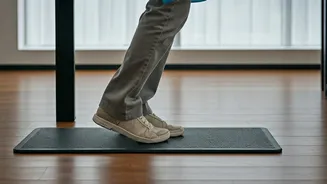
The key to success is consistency, not intensity. Start small. Try incorporating one or two of these exercises into your day. A popular method is the Pomodoro Technique: work for 25 minutes, then use your 5-minute break for a quick set of squats or desk push-ups. It's crucial to listen to your body. If something hurts, stop. Ensure you are wearing comfortable footwear; performing these exercises in formal shoes or heels is not recommended. Also, make sure your standing desk is sturdy and at the correct height (your elbows should be at a 90-degree angle when typing) to maintain good posture throughout the day.
Words of Caution
While beneficial, desk workouts are a supplement, not a replacement, for a proper fitness regimen. Fitness experts advise that these micro-workouts are excellent for improving blood circulation, preventing stiffness, and boosting energy levels during the day. However, they do not provide the same cardiovascular or strength-training benefits as a dedicated 30-minute workout. It's also important to focus on form over speed to prevent injury. A quick stretch is always a better option than a poorly executed exercise. Think of it as 'movement snacking'—a healthy addition to your daily routine, but not the whole meal.