
Swap Your Cutting Board
One of the most significant sources of microplastics in the kitchen may be your cutting board. Studies have shown that every time a knife strikes a plastic cutting board, it can shave off thousands of tiny plastic particles that mix directly with your food.
One study estimated that a person could be exposed to tens of millions of microplastic particles from chopping on plastic boards annually. A simple and effective switch is to use a wooden or bamboo cutting board. Not only do you avoid adding plastic to your meal, but wood also has natural antimicrobial properties, which can help keep your prep surface cleaner. Mice fed a diet prepared on wooden boards showed none of the negative intestinal effects seen in mice fed food prepared on plastic boards.
Rethink Food Storage and Reheating
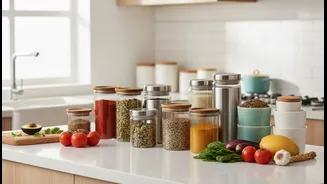
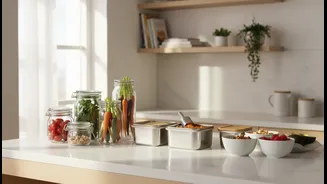
Plastic containers are convenient, but they can be a source of microplastics, especially when exposed to heat. Microwaving food in plastic containers is a major culprit, as heat can cause particles to leach into your meal. Even if a container is labeled 'microwave-safe', this typically means it won't melt, not that it won't release particles. The simple solution is to store and reheat food in glass, ceramic, or stainless steel containers. When you do need to microwave food, transfer it to a ceramic plate or glass dish first. For wrapping food, consider alternatives to plastic cling wrap, such as beeswax wraps or aluminum foil.
Choose Your Cookware and Utensils Wisely
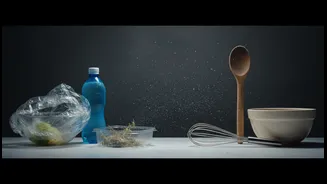
The tools you cook with also matter. Plastic utensils like spatulas and spoons can degrade over time, especially with exposure to heat, releasing microplastics into your pots and pans. Opt for utensils made from wood, bamboo, or stainless steel to minimize this risk. Non-stick pans, often coated with materials like PTFE, can also release particles, especially when scratched or overheated. Consider using cookware made from stainless steel, cast iron, or pure ceramic for a more durable and stable cooking surface.
Filter Your Water and Ditch the Bottles
Bottled water has been found to contain significantly higher levels of microplastics compared to tap water, in some cases more than double. Switching to drinking tap water from a reusable glass or stainless steel bottle is a major step in reducing your intake. To go a step further, you can install a water filter on your tap. Many filters are certified to reduce microplastics, giving you an extra layer of protection for both your drinking and cooking water.
Be Mindful of Your Brew
Your daily cup of tea could be a surprising source of microplastics. Many teabags, particularly the 'silky' pyramid-shaped ones, are made from plastics like nylon or polypropylene. When steeped in hot water, a single plastic tea bag can release billions of microplastic and even smaller nanoplastic particles. Some studies have found that polypropylene bags release the most particles. The easiest way to avoid this is to switch to loose-leaf tea and use a metal or ceramic infuser. If you prefer bags, look for brands that explicitly state they use 100% paper, staple-free bags.