



What is the Invitation, Exactly?
During the ninth meeting of the India-U.S. Civil Space Joint Working Group in Bengaluru, NASA extended a formal invitation for the Indian Space Research Organisation (ISRO) to participate in its Moon Base programme. This isn't just a friendly suggestion;
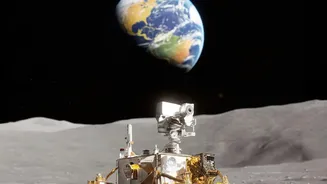
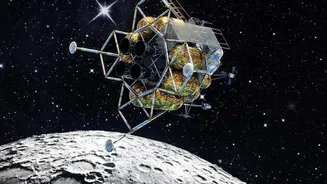
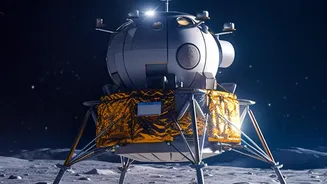
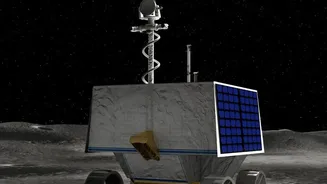
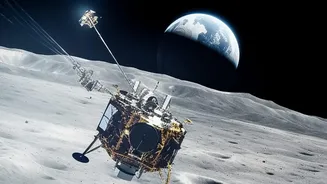
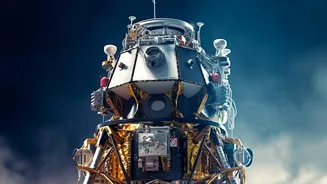
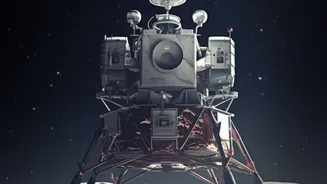
it's a strategic move built upon India signing the Artemis Accords in 2023. The Accords are a U.S.-led framework for responsible and cooperative lunar exploration. NASA's program aims to establish a long-term human presence near the Moon's south pole, the same region where India's Chandrayaan-3 mission made its historic landing in 2023. The base, often called the Artemis Base Camp, will be developed in phases, starting with robotic missions before deploying infrastructure for sustained human habitation after 2032.
A 'Golden Ticket' for India's Space Program
For India, this invitation is a massive validation of its decades of investment and success in space. Participation provides ISRO with access to cutting-edge technologies, invaluable experience in long-duration space missions, and a seat at the table shaping humanity's future on another world. The collaboration aligns perfectly with India's own ambitious goals, which include a lunar sample-return mission (Chandrayaan-4), establishing its own space station (the Bharatiya Antariksha Station) by 2035, and landing an Indian astronaut on the Moon by 2040. Partnering with NASA can accelerate these timelines, offering crucial insights into everything from lunar geology to life-support systems. The partnership also promises to energize India's burgeoning private space sector, opening doors for over 400 startups to integrate into the global lunar economy.
The Geopolitical Chessboard in the Cosmos
This collaboration is about much more than science; it's a significant geopolitical development. The new space race isn't just about planting flags but about building infrastructure and alliances. By inviting India, the U.S. is solidifying a partnership with the world's largest democracy, a nation with proven, cost-effective space capabilities. This move is widely seen as creating a democratic counterweight to the parallel lunar ambitions of China and Russia. The U.S.-India partnership aims to establish an open, transparent, and interoperable standard for lunar operations, ensuring that one or two powers do not dominate the final frontier. For Washington, India is a credible and capable partner to anchor a broad coalition of space-faring nations under the Artemis framework. For New Delhi, it cements its status as a major global power.
Beyond the Moon: Deepening a Strategic Alliance
The lunar partnership is the next logical step in a rapidly deepening U.S.-India relationship that has expanded from Earth observation to deep space exploration. The two nations are already collaborating on the NASA-ISRO Synthetic Aperture Radar (NISAR) satellite, a sophisticated Earth-imaging project. This new lunar focus moves the partnership into a more complex and integrated phase involving human spaceflight, robotics, and logistics on another celestial body. It transforms the relationship from one of individual joint missions to building an enduring technological network. This deep-space alliance strengthens economic and strategic ties on Earth, creating what one analyst called a "lock-in effect" where both democracies become invested in each other's success, both in orbit and on the ground.