




Your Guide to the Cosmic Dance
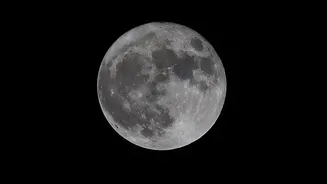
October 2026 is shaping up to be a spectacular month for amateur astronomers and casual sky-watchers across India. The Moon will appear to drift close to some of our solar system's most brilliant planets, creating what are known as conjunctions. These
events occur when two celestial bodies share the same right ascension, making them appear close together in our sky. While they look like they're about to touch, the objects are, of course, millions of kilometres apart. These pairings are a beautiful illusion created by our perspective here on Earth. The best part is that for most of these events, you won’t need any special equipment—just your eyes, a bit of patience, and a clear view of the heavens.
Today: A Moon and Mars Encounter
The celestial show begins right away. During the early hours of October 5th, you can spot the Moon and Mars together above the eastern horizon. Look for them before sunrise for the best view. Mars will be identifiable by its distinct reddish glow. For those who are up a little later in the morning, brilliant Jupiter will also join the scene, creating a trio of celestial objects. While perfectly visible to the naked eye, a pair of binoculars can offer a more detailed look at the Red Planet. This close-looking alignment offers a fantastic opportunity for anyone wanting to start their day with a cosmic spectacle.
An Impressive Display: Moon and Jupiter
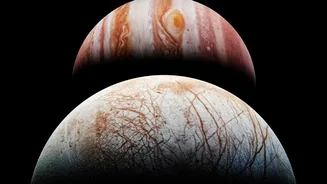
Get ready for another pre-dawn spectacle on October 6th. A thin, waning crescent Moon will appear incredibly close to the brightest planet in our night sky, Jupiter. To see this beautiful duo, you'll need to look towards the eastern sky before sunrise. In some parts of the world, the Moon will actually pass in front of Jupiter in an event called a lunar occultation. While the full occultation may not be visible everywhere in India, the close pairing will still be a stunning sight. Jupiter shines so brightly that it is unmistakable. With a simple pair of binoculars, you might even be able to spot its four largest moons—Io, Europa, Ganymede, and Callisto—appearing as tiny star-like points of light flanking the gas giant.
Saturn Takes Centre Stage
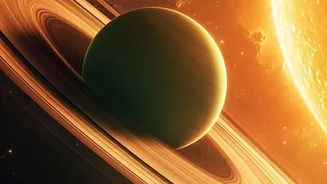
While not a conjunction with the Moon this week, Saturn is putting on its best show of the year. On October 4th, the ringed planet reached opposition, meaning Earth passed directly between it and the Sun. This makes Saturn appear at its biggest and brightest in our sky, and it will remain visible all night long. The nights around this date are the perfect time to spot the planet. Even without a telescope, it will appear as a steady, bright yellowish point of light. If you do have access to a small telescope, now is the ideal time to try and spot its magnificent rings, a sight that has captivated astronomers for centuries.
Tips for the Best Viewing Experience
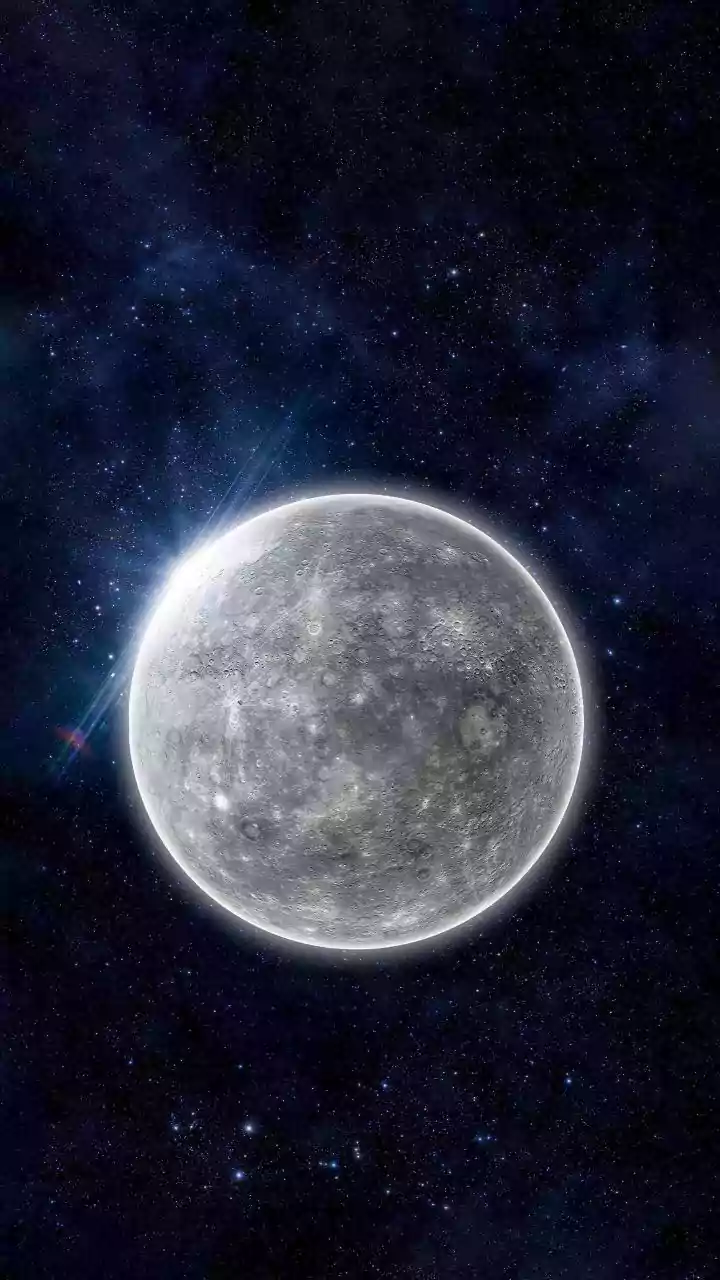
To make the most of these celestial events, a little preparation goes a long way. First, try to find a location away from bright city lights. Light pollution can wash out fainter stars and detract from the main event. Even moving to a local park or a rooftop can make a significant difference. Give your eyes at least 15-20 minutes to fully adapt to the darkness; this will help you see much more detail. For events happening near the horizon, ensure you have an unobstructed view without tall buildings or trees in the way. While telescopes are not necessary for these pairings, binoculars are a fantastic tool to enhance your view, revealing craters on the Moon or even the moons of Jupiter.
More to See: Meteor Showers This Month
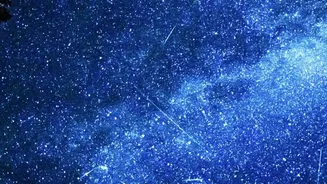
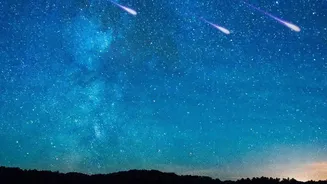
Beyond the planets, October also brings two meteor showers. The Draconid meteor shower peaks on the night of October 8-9, best viewed right after sunset. Later in the month, the Orionids, known for bright and fast meteors, will peak overnight on October 21-22. These showers are created by debris left behind by comets, and watching them is as simple as finding a dark spot, lying back, and looking up. The pre-dawn hours of October 22 are considered the best window for the Orionids this year.