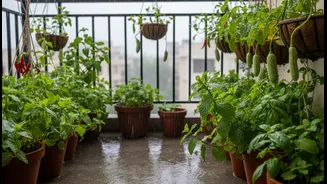






Why Your Balcony is the Perfect Monsoon Project
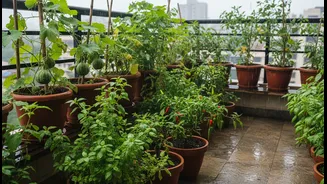
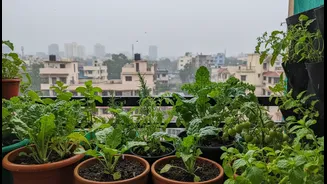
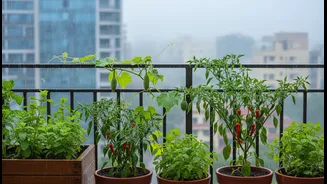
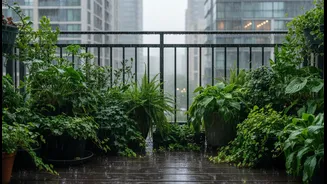
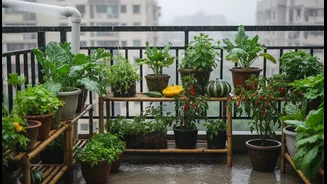
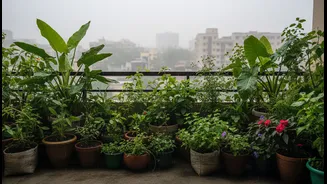
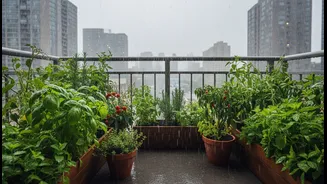
The rainy season in India brings with it ideal conditions for gardening: natural watering, high humidity, and moderate temperatures that encourage rapid growth. For urban dwellers, a balcony is a slice of cultivable land waiting to be transformed. Starting
a kitchen garden offers numerous benefits beyond just a convenient supply of fresh produce. It provides complete control over what goes into your food, eliminating concerns about pesticides. Growing your own vegetables is a well-known stress reliever, a chance to connect with nature, and an opportunity for the whole family to understand where food comes from. This small act fosters a deeper appreciation for seasonality and the effort behind every meal.
Gearing Up: Your Essential Starter Kit
Starting a balcony garden doesn’t require a huge investment. The essentials are simple: containers, a good soil mix, and the right seeds or saplings. Choose containers based on your space and what you plan to grow. Lightweight plastic pots, fabric grow bags, or traditional clay pots all work well, but ensure they have drainage holes to prevent waterlogging, a major risk during the monsoon. A good potting mix is crucial for container gardening. The ideal blend consists of garden soil, compost or vermicompost for nutrients, and coco peat to keep the mixture light and well-draining. For vining plants, you will also need a trellis or some form of support.
The Green Army: Leafy Vegetables
Leafy greens flourish in the monsoon because the moisture and mild temperatures encourage fast leaf development. Spinach (palak), amaranth (chaulai/laal saag), and fenugreek (methi) are excellent choices that can be harvested multiple times. These are best grown in wide, shallow trays or grow bags. Scatter the seeds evenly, cover with a thin layer of soil, and keep them in a spot that receives partial sunlight, as intense afternoon sun can scorch the tender leaves. With these greens, you can have a fresh harvest ready in just four to six weeks.
Gourds and Climbers: Reaching for the Sky
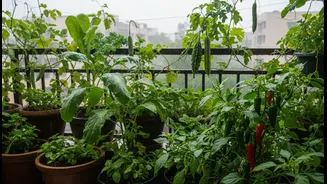
Gourds are champions of monsoon gardening, thriving in the humidity and producing abundantly. Varieties like bottle gourd (lauki), bitter gourd (karela), and ridge gourd (turai) are excellent candidates for balcony pots. These plants are vigorous climbers and will require a sturdy trellis or bamboo framework to support their growth. Providing vertical support not only saves space but also keeps the fruit off the wet ground, preventing rot. Use large containers (at least 12-14 cm in diameter) to accommodate their root systems and ensure they get 4-6 hours of sunlight.
Spice of Life: Chillies and Aromatic Herbs
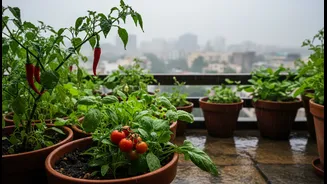
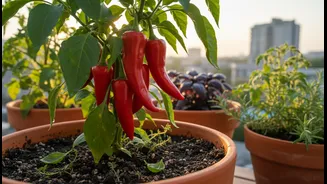
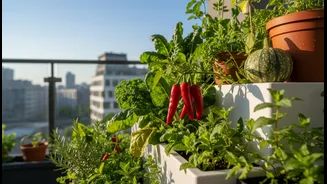
No Indian kitchen is complete without a touch of spice and fresh herbs. The monsoon is the perfect time to grow green chillies, which thrive in the high humidity. A single plant in a medium-sized pot can provide a steady supply for several months. Culinary herbs like mint (pudina), coriander (dhania), and holy basil (tulsi) also do exceptionally well. Mint is famously easy to grow, while coriander loves the cooler, humid weather. These herbs don't require much space and can be grown in small pots on a windowsill or in hanging baskets, bringing fresh flavours right to your fingertips.
Monsoon Care and Troubleshooting
While the monsoon provides free water, it also brings challenges. The biggest threat is overwatering and root rot. Always check if the top inch of soil is dry before watering, even during rainy spells. Good drainage is non-negotiable. High humidity also creates a breeding ground for pests like aphids, whiteflies, and slugs, as well as fungal diseases like powdery mildew. Regularly inspect your plants, especially the undersides of leaves. Ensure good air circulation by not overcrowding pots. A simple, organic neem oil spray can be an effective preventive measure against many common pests.