








Why a Fan Alone Falls Short
The core issue with indoor drying, especially during the rains, is high humidity. When the air is already saturated with moisture, it cannot absorb much more from your wet clothes. A ceiling fan is excellent at moving air, but if that air is already damp,
the fan simply circulates humid air around the room. This slows down the evaporation process significantly. While it creates a breeze, a fan doesn't actually remove moisture from the environment; it just pushes it around, which is why clothes can remain stubbornly damp.
The Science of Humidity
Effective drying is all about managing the moisture level in the air. A single load of laundry can release up to two litres of water into your home's atmosphere. This drastically increases the indoor relative humidity. When humidity levels are high, not only do clothes dry slowly, but the excess moisture can lead to condensation on walls and windows. This creates a perfect breeding ground for mould and mildew, which can cause musty odours on your clothes and pose health risks like triggering allergies or respiratory issues.
The Dehumidifier Difference
For a truly effective solution, a dehumidifier is a game-changer. Unlike a fan that only circulates air, a dehumidifier actively pulls moisture out of it. It works by drawing in damp air, condensing the water vapour inside the machine, and collecting it in a tank. The result is drier air being released back into the room, which can then absorb more moisture from your laundry. Placing a dehumidifier in the room where your clothes are hanging will dramatically speed up drying time, prevent mould growth, and keep the air in your home healthier.
Strategic Setups for Faster Drying
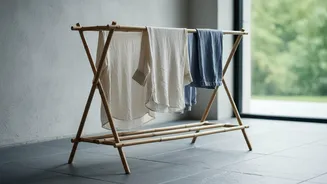
How and where you hang your clothes matters immensely. First, ensure your washing machine's spin cycle has removed as much excess water as possible; some experts even suggest running a second spin cycle. When hanging, space garments well apart on a drying rack to allow air to circulate freely around each item. Using hangers for shirts and kurtas can help them maintain their shape and dry more evenly. Position the drying rack in a larger, well-ventilated room rather than a small, closed-off space where moisture can get trapped.
Combining Methods for Best Results
For the ultimate indoor drying setup, combine a dehumidifier with a fan. The dehumidifier tackles the root problem by removing moisture from the air, while a fan helps to circulate the newly dried air around the clothes, speeding up evaporation even further. If you don't own a dehumidifier, running an air conditioner can also help, as ACs naturally remove some humidity from the air as part of their cooling process. In a pinch, even just opening a window for cross-ventilation on a non-rainy day can make a significant difference.