



Ajanta: A Painted Library of Ancient Life
The allure of Ajanta lies in its breathtaking murals, considered masterpieces of Buddhist religious art. These aren't just decorations; they are vibrant stories painted on rock walls between the 2nd century BCE and the 5th century CE. The paintings predominantly
narrate the Jataka tales, which are legends about the previous lives of the Buddha. For a cultural traveller, these artworks are a window into the past, revealing details about the society, clothing, music, and courtly culture of ancient India. The use of natural pigments and the sheer emotional depth in the expressions of the figures make a visit to Ajanta an immersive experience in art history.
Ellora: Where Faiths Converge in Stone
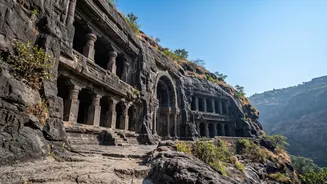
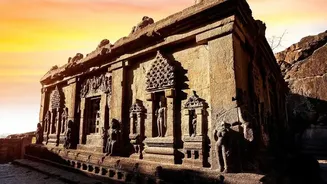
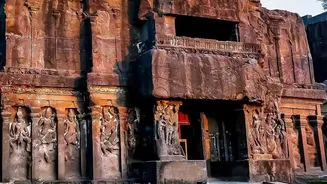
While Ajanta is celebrated for its paintings, Ellora is famed for its architectural grandeur, representing a unique harmony of three major Indian religions. The site features 34 caves, with monasteries and temples dedicated to Buddhism, Hinduism, and Jainism, built between 600 and 1000 CE. This convergence illustrates the religious tolerance that existed in ancient India. The main attraction is the Kailasa Temple (Cave 16), an unparalleled feat of engineering. It is the world's largest single monolithic excavation, carved top-down from a single basalt cliff to resemble a chariot for Lord Shiva. The scale and ambition of this temple alone make Ellora a pilgrimage site for anyone interested in architecture and human ingenuity.
A Masterclass in Rock-Cut Engineering
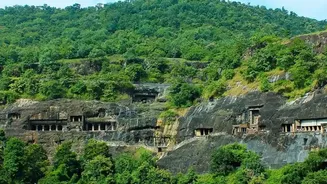
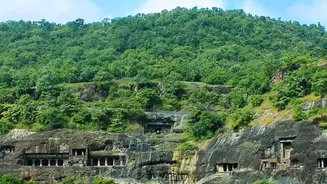
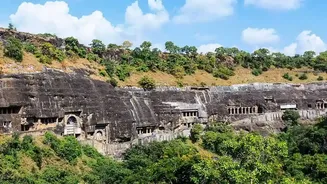
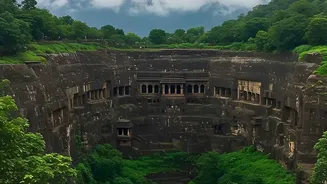
Both sites are UNESCO World Heritage monuments that showcase the peak of ancient rock-cut engineering. Artisans carved these elaborate structures using little more than chisels and hammers, a process that required immense skill and planning. At Ajanta, the caves are carved into a horseshoe-shaped gorge, creating a stunning visual. At Ellora, the creation of the Kailasa Temple involved removing an estimated 200,000 tonnes of rock. This was not construction but excavation on a monumental scale, a vertical process starting from the top of the cliff and moving downwards. This achievement is a powerful draw for travellers who appreciate the technical and artistic genius of past civilisations.
An Experience Beyond Sightseeing
For the cultural traveller, a trip to Ajanta and Ellora is more than just ticking off a destination. It's about standing in halls where monks chanted thousands of years ago, tracing the outlines of stories that have shaped philosophies, and marvelling at the devotion that powered such epic undertakings. Ajanta offers a deep dive into Buddhist art and storytelling, while Ellora presents a broader narrative of Indian spirituality. Visiting these caves is an intellectual and emotional journey that connects you to the deep-seated cultural and artistic history of India, offering a perspective that a simple photograph can never capture.
The Journey Made Simple with IRCTC
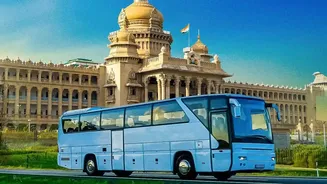
Recognising the profound appeal of these sites, the Indian Railway Catering and Tourism Corporation (IRCTC) offers tour packages that simplify the logistics of this historic journey. These packages often combine visits to Ajanta and Ellora with other significant sites in and around Chhatrapati Sambhajinagar (formerly Aurangabad). Typically spanning a few days, these tours manage transport, accommodation, and sometimes guided visits, allowing travellers to focus completely on the experience. For instance, packages often include rail travel to Aurangabad, followed by road transport to the caves, Grishneshwar Jyotirlinga Temple, and other local points of interest, making it a convenient and comprehensive way to explore this rich heritage circuit.