

What Exactly is Nordic Walking?
Imagine going for a walk, but with the added benefit of an upper-body workout. That’s Nordic walking in a nutshell. Originally developed in Finland as a summer training method for cross-country skiers, this activity involves walking with specially designed
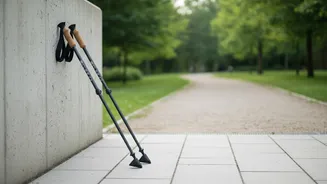
poles. It’s not to be confused with using trekking poles for stability on a hike. With Nordic walking, the poles are angled behind you and you actively use them to propel yourself forward, mimicking the motion of cross-country skiing. This simple addition transforms a regular stroll into a comprehensive, low-impact exercise that engages muscles from your shoulders to your toes.
The Surprising Science of a Slower Pace
The magic of Nordic walking lies in its efficiency. By engaging the upper body—including the arms, core, chest, and back—you activate up to 90% of your body's muscles, compared to about 50% with regular walking. This increased muscle engagement has a significant payoff: studies show Nordic walking can burn anywhere from 20% to 60% more calories than walking without poles at the same pace. Yet, because the effort is distributed across the entire body, it often doesn't feel significantly harder. The poles also provide support, reducing the strain on joints like knees and hips, making it an excellent choice for people of all ages and fitness levels, including those with joint concerns.
Why is it Becoming Popular Again?
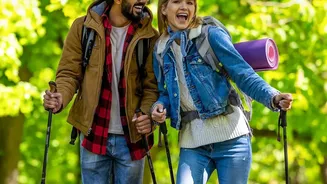
Nordic walking is experiencing a revival for several reasons. The global pandemic spurred a massive interest in outdoor activities, and many people are now seeking sustainable fitness routines that they can enjoy for a lifetime. There is a growing appreciation for low-impact exercises that deliver results without the punishing toll of high-intensity interval training (HIIT). It appeals to a wide demographic, from young professionals looking to de-stress outdoors to older adults seeking to improve balance, strength, and mobility. Its accessibility and proven benefits—ranging from improved cardiovascular health and posture to reductions in chronic pain and anxiety—make it a powerful, modern solution for holistic wellness.
Mastering the Basic Technique
Getting started is simpler than it looks. The core principle is diagonal movement: as your right foot steps forward, your left arm swings forward with the pole, and vice versa. Keep your posture upright, shoulders relaxed, and gaze forward. The key is to plant the pole at an angle behind you and push off to propel yourself forward. As you push, your hand should open at the end of the movement, allowing the strap to do its job. Start by simply dragging the poles to get a feel for the rhythm before applying active pressure. The goal is a smooth, flowing motion, not a jerky or jarring one. The gradual pace allows you to focus on form and enjoy the movement.
Getting Started in India
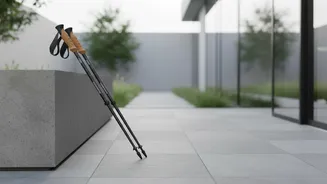
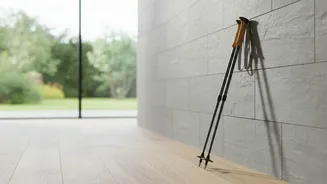
All you need to begin are a pair of proper Nordic walking poles. These are different from hiking poles; they are lighter and have a specific glove-like strap system that allows for the proper push-off technique. These can be found at major sporting goods stores or online. Look for adjustable-length poles to ensure they fit your height correctly—your forearm should be roughly parallel to the ground when holding the grip. India's numerous parks and walking tracks are perfect venues. An early morning or evening session is ideal to avoid the midday heat. You can start solo or look for local walking groups in your city to make it a social and motivating activity.