







What is a Celestial Conjunction?
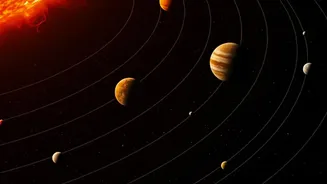
In astronomy, a conjunction happens when two celestial objects, like the Moon and a planet, appear very close to each other in our sky. It's an illusion of perspective; the objects aren't physically close in space, but they line up from our viewpoint
on Earth. Conjunctions involving the bright Moon and a planet like Saturn are some of the most beautiful and easily observed events for sky-watchers.
When and Where to See the Conjunction
The Moon will have a close encounter with Saturn on the nights of October 24 and 25, 2026. This event occurs shortly after Saturn reaches opposition on October 4, a point when it is opposite the Sun in our sky, making it appear particularly bright all night long. To see the pairing, look towards the eastern sky after dusk. Saturn will be visible as a bright, steady, yellowish point of light very close to the Moon. The bright, nearly full Hunter's Moon will make finding the ringed planet incredibly easy. On October 25, the Moon, Saturn, and the star Algenib will form a noticeable triangle in the sky.
Viewing With and Without a Telescope
The great news is that you don't need any special equipment to see this conjunction. Both the Moon and Saturn are bright enough to be seen with the naked eye, even from city suburbs. Saturn will appear as a bright 'star' that doesn't twinkle, shining with a steady, golden glow next to the Moon. However, if you have a pair of binoculars or a small telescope, you'll be in for a treat. Binoculars will make Saturn appear sharper and more distinct. A telescope will reveal its most famous feature: its magnificent rings. In October 2026, the rings will be tilted about 10 degrees toward us, making them visible even with modest equipment.
Tips for the Best Viewing Experience
To make the most of this celestial event, find a location with a clear view of the sky, away from the direct glare of streetlights. The post-monsoon period in India, especially October and November, often provides excellent atmospheric clarity. Give your eyes about 20-30 minutes to adapt to the darkness; this will help you see more detail. While the Moon's brightness might wash out fainter stars, it won't hide Saturn. Using a stargazing app on your phone, like Stellarium or Star Walk, can help you identify constellations and other objects in the vicinity.
Other Sights in the October Sky
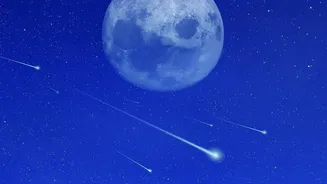
October 2026 is a busy month for sky-watchers in India. Besides the Saturn conjunction, you can also look for the Orionid meteor shower, which peaks around October 21-22. This shower is created by debris from the famous Halley's Comet. While the bright Moon will interfere with the fainter meteors, you might still catch some bright, fast streaks of light in the pre-dawn hours after the Moon has set. Later in the month, on October 27-28, the Moon will pass close to the beautiful Pleiades star cluster, also known as the Seven Sisters.








