







The 'One-Hand-Bag' Rule is Now Strictly Enforced
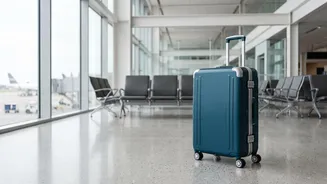
The most significant change for travellers is the strict enforcement of the 'one-hand-bag' rule by the Bureau of Civil Aviation Security (BCAS). While the rule itself has existed for years, airports across India are now consistently ensuring compliance.
This means passengers in all classes are permitted to carry only one piece of cabin baggage. Any additional items, such as a laptop bag, purse, or backpack, must be consolidated into that single bag. However, airlines do permit one small personal item, like a lady's handbag or a small laptop bag, that can fit under the seat in front of you, provided it meets weight limits, typically around 3 kg. The reality at busy boarding gates, however, is that agents often ask passengers to fit everything into the main cabin bag to speed up the process.
Cabin Baggage: Weight and Dimensions
For most domestic airlines in India, the standard cabin baggage allowance for economy class is one bag weighing up to 7 kg. Some full-service carriers like Air India may allow 8 kg. Business and First Class passengers often have a higher allowance, typically up to 10 or 12 kg. While the weight limits are crucial, so are the dimensions. The most common size restriction is a total of 115 cm (Length + Width + Height), often specified as 55 cm x 35 cm x 25 cm. It's important to note that enforcement of both weight and size has become much stricter, with random checks at gates now a common practice.
Check-In Luggage: The 15 kg Standard
For domestic economy class travel within India, the standard check-in baggage allowance is 15 kg per passenger. This is consistent across major carriers like IndiGo, SpiceJet, and Akasa Air. Some fare categories, such as 'Flexi' fares, may offer a higher allowance of 20 kg or 25 kg. For international flights, the allowance is typically higher, often starting at 23 kg or 30 kg depending on the destination and airline, but it's crucial to check the specific policy for your ticket. If you know you'll be over the limit, it is almost always cheaper to pre-purchase extra baggage online rather than paying excess fees at the airport counter, which can range from ₹400-₹750 per extra kilogram.
Power Banks and Electronics: Cabin Only
This is a critical safety rule that often trips up passengers. All power banks and spare lithium-ion batteries must be carried in your cabin baggage only. They are strictly prohibited in checked luggage due to fire risk in the cargo hold. Most power banks under 100Wh (around 27,000mAh) are allowed without special permission, and passengers can typically carry up to two units. Those between 100Wh and 160Wh require airline approval beforehand. Furthermore, the Directorate General of Civil Aviation (DGCA) has also banned the use of power banks for charging devices during a flight.
Liquids, Aerosols, and Prohibited Items
The rules for carrying liquids, aerosols, and gels (LAGs) in cabin baggage remain the same: they must be in containers of 100 ml or less. All such containers must fit into a single, transparent, re-sealable one-litre plastic bag. Items that are completely banned from both cabin and checked luggage include explosives like fireworks, flammable items such as lighter fluid and paint thinner, and corrosive substances. Sharp objects like knives and scissors with blades over a certain length must be placed in your checked baggage. E-cigarettes are also prohibited from being carried on flights.