







The Age-Old Guessing Game
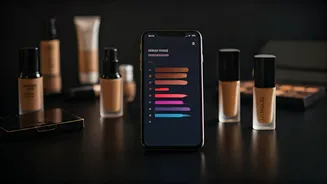
For decades, finding the right beauty products has been a frustrating process of trial and error. From smearing foundation testers on your wrist under harsh store lighting to buying a concealer online based on a vague shade name, the odds have always
been stacked against a perfect match. This guessing game is not just an inconvenience; it's expensive, wasteful, and often leaves consumers with a drawer full of products that are just slightly off. The fundamental challenge has been translating an individual's unique skin tone and needs into a successful product choice, a gap that technology is now eager to fill.
How AI Changes the Game
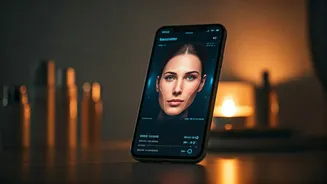
Artificial intelligence is revolutionising the beauty industry by offering a solution based on data, not guesswork. Using your phone's camera, AI-powered apps and websites can perform a sophisticated analysis of your skin. These tools use advanced algorithms, sometimes mapping over 150 points on your face, to account for lighting conditions, angles, and skin texture. In seconds, the AI can detect your precise skin tone, identify your undertones (the subtle warm, cool, or neutral hues beneath the surface), and provide a list of products that are a near-perfect match. This moves beyond simple quizzes, which are often inaccurate because most people struggle to correctly self-assess their skin's characteristics.
Finding Your Perfect Shade
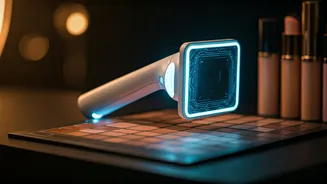
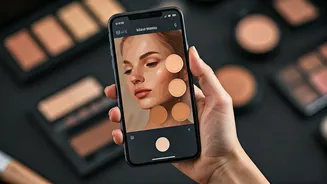
The most common and popular application of this technology is for foundation and concealer matching. Brands and retailers across India, like Nykaa and Forest Essentials, are integrating these tools. L'Oréal's ModiFace technology, for instance, allows for virtual try-ons that realistically show how a shade will look on you. Some platforms, like the one used by LOOKFANTASTIC, can even use a special 'Colour Card' held next to your face during a selfie to create a match that is reportedly 10 times more sensitive than the human eye. The result is a curated list of foundation shades from various brands, taking the uncertainty out of online shopping.
More Than Just Makeup
But the AI revolution doesn't stop at colour matching. The same technology is being applied to deliver hyper-personalised skincare. Apps from brands like Cetaphil and platforms like Skin Beauty Pal use your camera to perform a detailed skin analysis, identifying concerns like dryness, acne, pigmentation, and wrinkles. Based on this diagnostic-level assessment, the AI can recommend a complete skincare routine, suggesting specific cleansers, serums, and moisturisers tailored to your needs. Some advanced systems even track your skin's progress over time, adjusting recommendations as your skin changes. It's like having a personal dermatologist in your pocket, available 24/7.
Is the Hype Real?
The benefits are clear: convenience, greater accuracy, and access to a level of personalisation once reserved for the very wealthy. However, the technology is not without its challenges. The accuracy of any camera-based analysis depends heavily on factors like good, natural lighting. More importantly, the use of facial scanning technology raises significant privacy concerns. These apps collect biometric data, which is highly sensitive. Consumers should be mindful of how their data is being stored and used, and brands have a responsibility to be transparent and secure. Experts advise that while AI is a powerful tool, it should be viewed as an assistant, not a replacement for human expertise, especially for complex skin conditions.