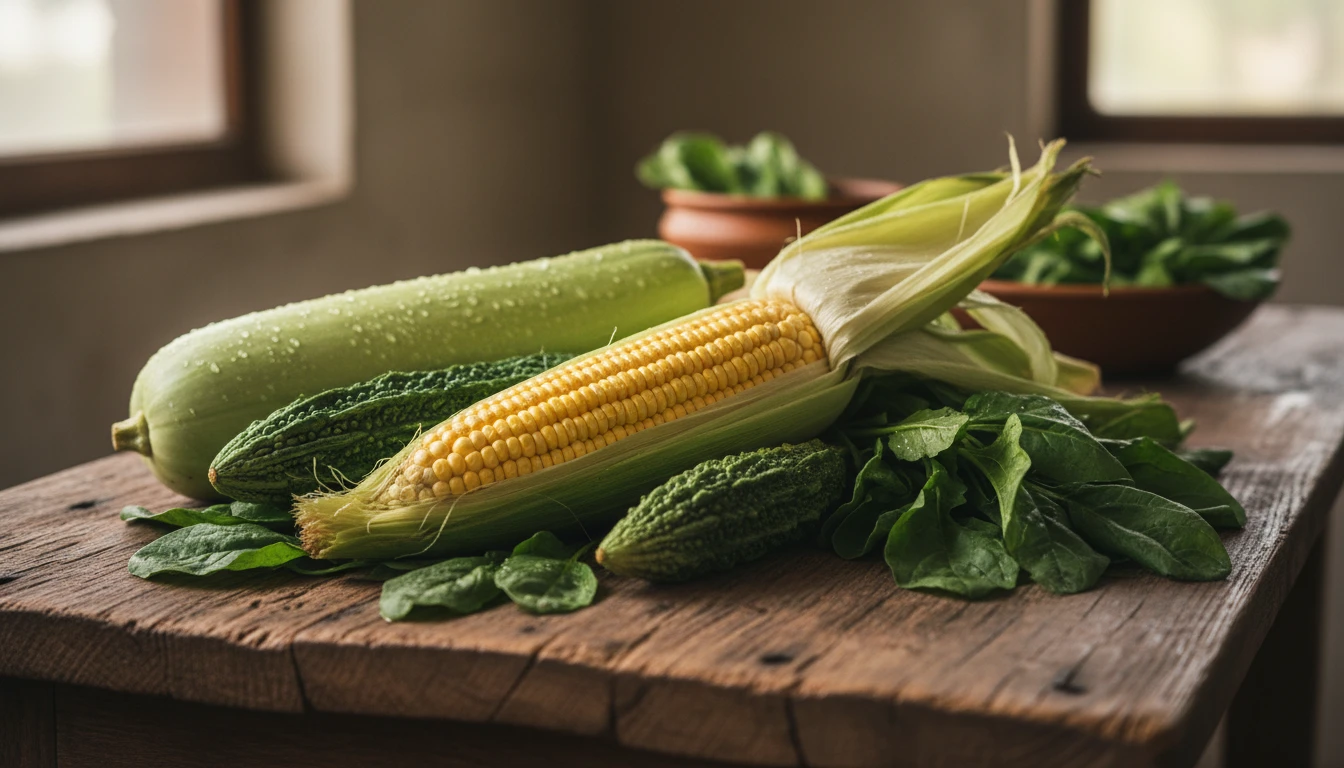









Celebrating Corn and Earthy Mushrooms
The quintessential monsoon vegetable, bhutta or corn, is a versatile star. While roasted corn on the cob is a classic snack, its sweet, juicy kernels are perfect for dinner. Try a creamy sweet corn soup, spiced with a hint of black pepper and ginger to
ward off seasonal chills. Another fantastic option is a masala corn chaat, which can be bulked up into a light dinner with sprouts and boiled potatoes. Earthy mushrooms, which thrive in the damp weather, add a wonderful depth to meals. A simple mushroom and corn sabzi, sautéed with onions, tomatoes, and everyday spices, makes a quick and satisfying weeknight dinner paired with hot chapatis. For something more indulgent, a rich mushroom stir-fry or a creamy pasta dish can be the perfect treat on a particularly gloomy evening.
The Goodness of Gourds
Monsoon brings a variety of gourds like bottle gourd (lauki), ridge gourd (turai), and bitter gourd (karela). While often unloved, these vegetables are packed with nutrients, easy to digest, and ideal for the season when the digestive system can be sluggish. Lauki, known for its high water content, can be transformed into a light and flavourful dal, where it melts into the lentils, or a simple sabzi tempered with cumin and mustard seeds. Turai pairs beautifully with moong dal, creating a comforting curry that is both nutritious and light on the stomach. Even the much-maligned karela, valued for its immunity-boosting properties, can be delicious when prepared correctly. Try a stuffed karela with a spiced onion filling or slice it thin for baked, crispy chips that change the game.
Leafy Greens, Cooked Just Right
While it's advised to be cautious with raw leafy greens during the monsoon due to the higher risk of contamination, cooked greens are a powerhouse of immunity-boosting vitamins. Spinach (palak), fenugreek (methi), and amaranth leaves (chawli) are excellent choices. A classic palak dal or palak paneer offers a comforting and protein-rich meal. Methi leaves can be kneaded into the dough for flavourful parathas or cooked with potatoes for a classic aloo methi sabzi. For a regional touch, try Poi Saag, or Malabar spinach, which is a great source of calcium and helps boost immunity. The key is to wash all leafy vegetables thoroughly and cook them well to ensure they are safe and deliver their full nutritional benefits.
The Soul-Warming Power of Lentils and Rice
No monsoon dinner menu is complete without the ultimate comfort food: khichdi. This one-pot dish of rice and lentils is gentle on the stomach, easy to prepare, and incredibly versatile. A simple moong dal khichdi tempered with ghee, cumin, and asafoetida (hing) is soothing and restorative. You can easily enhance its nutritional value by adding seasonal vegetables like carrots, peas, and cauliflower. Served with a side of yogurt, pickle, and papad, it’s a complete meal that feels like a warm hug in a bowl. For a different take, Bengal's khichuri often features roasted moong dal and a medley of vegetables, offering a slightly different texture and flavour profile.
Roots and Spices for Immunity
The monsoon is the season for infections, making it the perfect time to lean on immunity-boosting roots and spices. Ginger, garlic, and turmeric should be your kitchen staples. Freshly grated ginger can be added to dals, curries, and soups, lending a warm, pungent flavour while aiding digestion. Garlic, with its powerful antibacterial properties, can be generously used in tadkas and vegetable stir-fries. Turmeric is a potent anti-inflammatory; a pinch in your food or a glass of warm turmeric milk before bed can be beneficial. Hot soups, like a spicy tomato rasam loaded with pepper and garlic, are not just comforting but also help in keeping seasonal colds and coughs at bay.