


Understanding Functional Abs
Before diving in, it's important to understand what 'functional abs' really means. It's not just about achieving a visible 'six-pack'. Functional core strength is about training the entire network of muscles around your trunk to work together. This includes
your abs, obliques, lower back, and glutes. A strong, functional core supports your spine, improves your balance, and makes everyday activities like lifting groceries, playing with kids, or even just sitting at a desk easier and safer. These exercises are designed to build that real-world strength.
The Plank: The Foundation of Stability
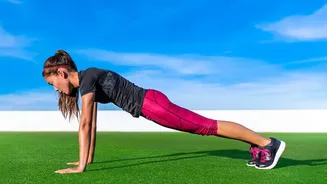
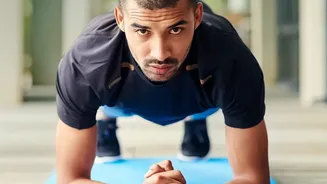
The plank is a fundamental core exercise for a reason: it engages multiple core muscles at once, including the transverse abdominis, which acts like your body's natural corset. To perform a plank, position yourself as if you're about to do a push-up, but rest on your forearms instead of your hands. Your body should form a straight line from your head to your heels. Engage your core by pulling your belly button towards your spine and squeeze your glutes. Avoid letting your hips sag or rise too high. Hold for 30-60 seconds, focusing on maintaining perfect form.
The Dead Bug: Deep Core Control
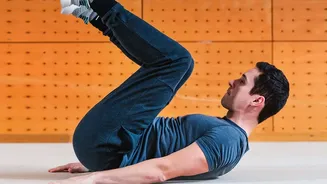
The Dead Bug is excellent for enhancing core stability and coordination without straining your back. Lie on your back with your arms extended towards the ceiling and your knees bent at a 90-degree angle over your hips. Slowly lower your right arm and left leg toward the floor simultaneously, keeping your lower back pressed firmly into the mat. Exhale as you lower, and inhale as you return to the starting position. Alternate sides with controlled movements, aiming for 10-12 repetitions per side. The key is to move slowly and prevent your back from arching.
The Bird-Dog: Enhancing Balance
The Bird-Dog exercise improves stability, coordination, and strengthens your back, hips, and core muscles. Start on all fours, with your hands directly under your shoulders and knees under your hips. Engage your core to keep your back flat. Extend your right arm straight forward and your left leg straight back, forming a straight line from your hand to your foot. Hold for a moment, ensuring your hips and shoulders remain square to the floor. Return to the start and repeat on the other side. This movement teaches the body to stabilize the spine while the limbs are in motion.
The Glute Bridge: Posterior Chain Power
A strong core includes strong glutes. The Glute Bridge activates your glutes and hamstrings while also engaging your lower back and abs, making it a crucial functional exercise. Lie on your back with your knees bent, feet flat on the floor hip-width apart, and your arms at your sides. Squeeze your glutes and lift your hips off the floor until your body forms a straight line from your shoulders to your knees. Pause at the top, then slowly lower back down. This helps counteract the effects of prolonged sitting and strengthens the entire posterior chain.
Bicycle Crunches: Rotational Strength
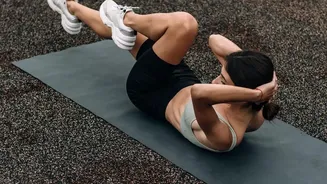
Bicycle Crunches are a dynamic movement that targets the rectus abdominis and the obliques, which are responsible for twisting motions. Lie on your back with your hands lightly behind your head and your legs in a tabletop position. Lift your shoulders off the floor and bring your right elbow toward your left knee while extending your right leg straight. Then, switch sides in a controlled 'pedalling' motion. The key is to twist from your torso, not just move your elbows, and to avoid pulling on your neck.