






The Forest's Hardy Treasure
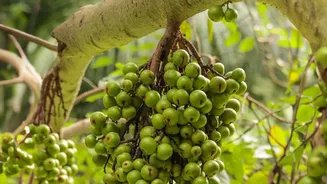
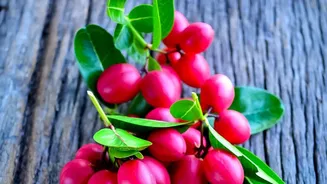
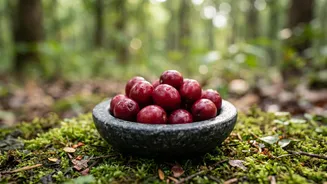
Deep in the Dang region of Karauli, the wild 'Ber' (a type of Indian Jujube, Ziziphus mauritiana) thrives without human intervention. This hardy fruit grows naturally, ripening under the winter sun to offer a distinctive sweet and sour flavour. For centuries,
it has been a vital part of the local ecosystem and diet, sustaining both rural communities and wildlife through harsh seasons. Elders in the area recount how the fruit serves as a crucial food source that costs nothing to cultivate, illustrating a perfect harmony between nature and community. Its cultural significance is also profound, with mythological links to Mata Shabari and Lord Shri Ram mentioned in local lore. This history has cemented the berry's place not just as a food, but as a symbol of natural resilience.
A Tradition of Wellness
In traditional systems of medicine and local wellness practices, the Ber fruit is held in high regard. It's widely considered an immunity booster, largely due to its high concentration of Vitamin C. Traditional healers and local experts also point to its significant fibre content as a reason for its use in promoting digestive health. Ayurvedic texts have long valued the fruit, known as 'Badara' in Sanskrit, for its cooling properties and its ability to pacify certain doshas. The fruit, leaves, and even the bark have been used in various preparations to address everything from digestive issues to skin ailments and fever. These long-standing beliefs form the foundation of the berry's reputation as a natural powerhouse of health.
What The Science Says About Ber
While the specific wild Beri from Karauli's Dang forest has not been the subject of extensive, targeted studies, research on its close relative, Ziziphus mauritiana, provides valuable insights. Scientific analyses confirm that the Indian Jujube is indeed nutritionally impressive. It is a rich source of Vitamin C, a potent antioxidant that supports immune function and skin health. Studies have also identified numerous bioactive compounds like flavonoids, saponins, and alkaloids, which exhibit anti-inflammatory and immune-regulating effects. Some modern research appears to back traditional claims, with studies suggesting extracts may help reduce stress, accelerate wound healing, and support collagen formation. The fruit is also a good source of potassium, dietary fibre, and various other vitamins and minerals.
A Gap Between Claim and Proof
Here lies the core of the issue: while the general nutritional profile of the Ber fruit family is well-documented, specific health claims often require more rigorous scientific validation. For instance, while traditional use for anxiety and sleep is common, scientific evidence for these effects in humans remains limited and requires further study. Similarly, claims about managing blood sugar or blood pressure need more robust human trials before they can be stated as fact. Experts caution that wild plants can have varying concentrations of active compounds based on soil, climate, and specific genetics. Therefore, the effects of the Karauli wild berry cannot be automatically assumed to be identical to cultivated varieties studied elsewhere. It is a food, not a treatment, and should be viewed as a nutritious part of a balanced diet.
Balancing Tradition with Evidence
The story of the Karauli Dang forest's wild Beri is a classic example of where traditional knowledge meets modern scientific inquiry. The fruit's long history of use and its revered status in local culture are undeniably important. This traditional wisdom often provides the clues that lead scientists to investigate a plant's properties. However, for a wild fruit to be responsibly promoted to a wider audience for specific health benefits, those benefits must be supported by clear, specific evidence. This ensures safety, efficacy, and transparency. Preserving the natural ecology of the Dang region is crucial to protect these indigenous plants, which provide valuable resources to the local ecosystem. As interest in 'superfoods' and natural remedies grows, a balanced approach that respects tradition while demanding scientific proof is the best way forward.