






India's Next Interplanetary Frontier
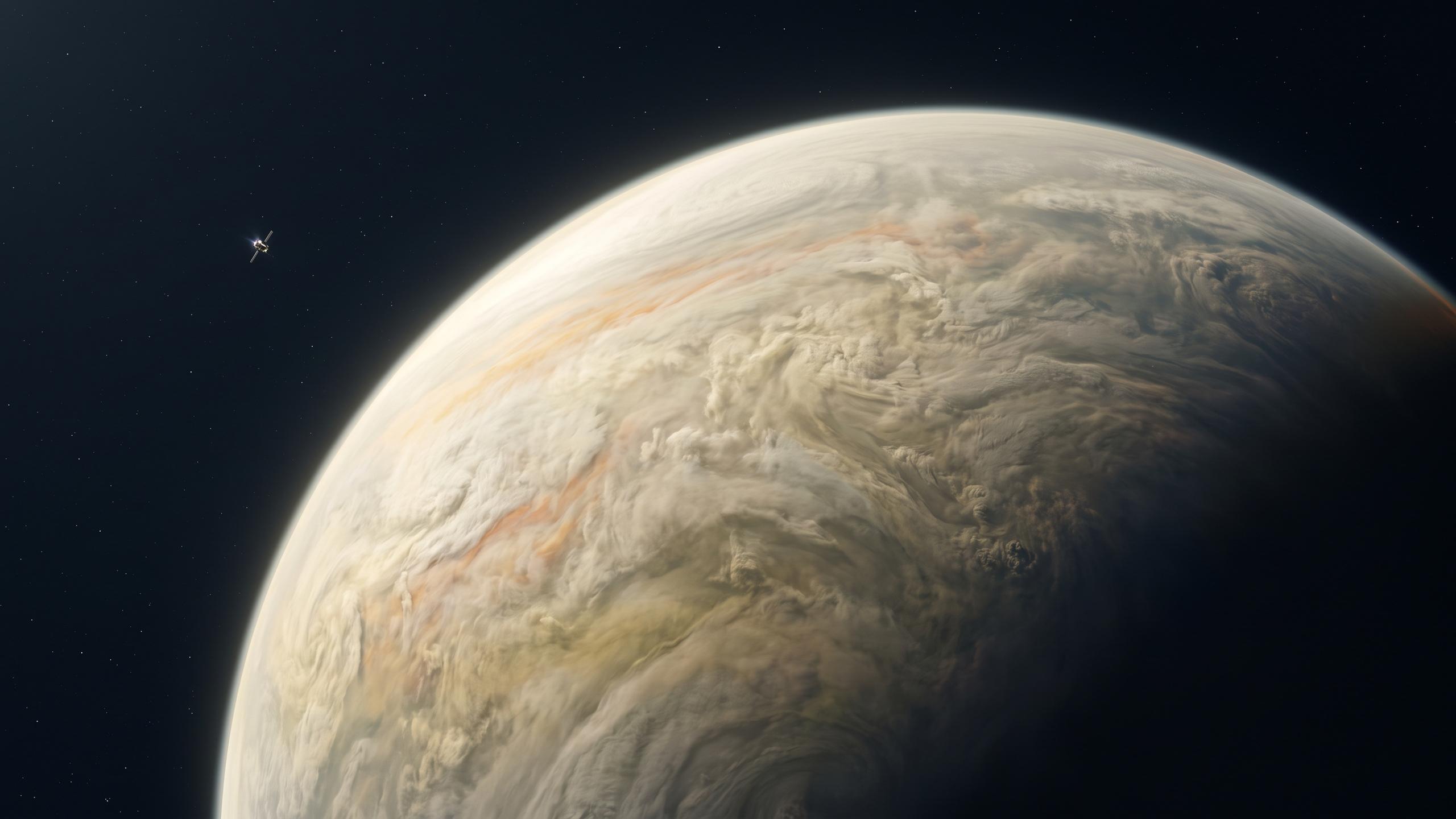
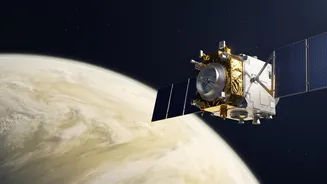
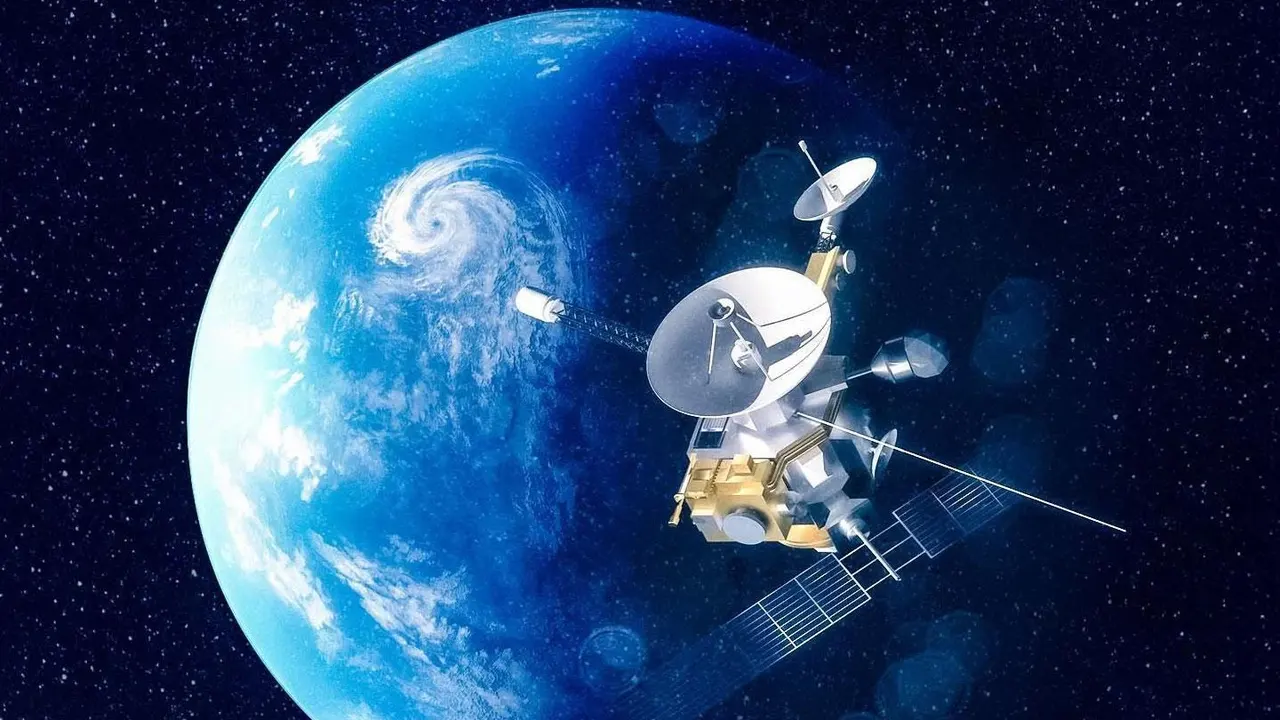
Following the historic successes of Chandrayaan on the Moon and the Mangalyaan mission to Mars, the Indian Space Research Organisation (ISRO) is venturing to our other celestial neighbour. The Shukrayaan mission, formally the Venus Orbiter Mission (VOM),
represents India’s first dedicated voyage to Venus. Officially approved by the Indian government in September 2024, this ambitious project places India among a select group of spacefaring nations to explore the second planet from the sun. The mission underscores ISRO’s growing expertise in complex interplanetary exploration and solidifies the nation's position as a key player in planetary science. With a planned launch in 2028, Shukrayaan is poised to become the next chapter in India's celebrated space saga.
Why Venus? Earth's Cautionary Tale
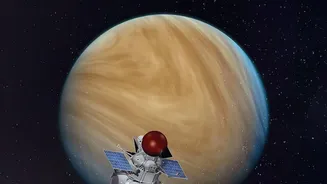
Venus is often called Earth's twin because of its similar size and mass. However, the similarities end there. Venus is a hellish world with surface temperatures hot enough to melt lead and an atmospheric pressure over 90 times that of Earth's. Its atmosphere is composed of about 96% carbon dioxide, which has triggered a runaway greenhouse effect. The planet is completely shrouded in opaque clouds made of corrosive sulphuric acid. Scientists believe Venus may have once been more like Earth, possibly with liquid water oceans, but something caused its climate to change dramatically. Studying Venus, therefore, isn't just about exploring another planet; it's a way to understand planetary evolution and offers a stark cautionary tale about how a planet’s climate can transform. By learning why our twin took such a different path, we can gain invaluable insights into Earth's own climate dynamics and long-term sustainability.
Piercing the Clouds: The Mission's Goals
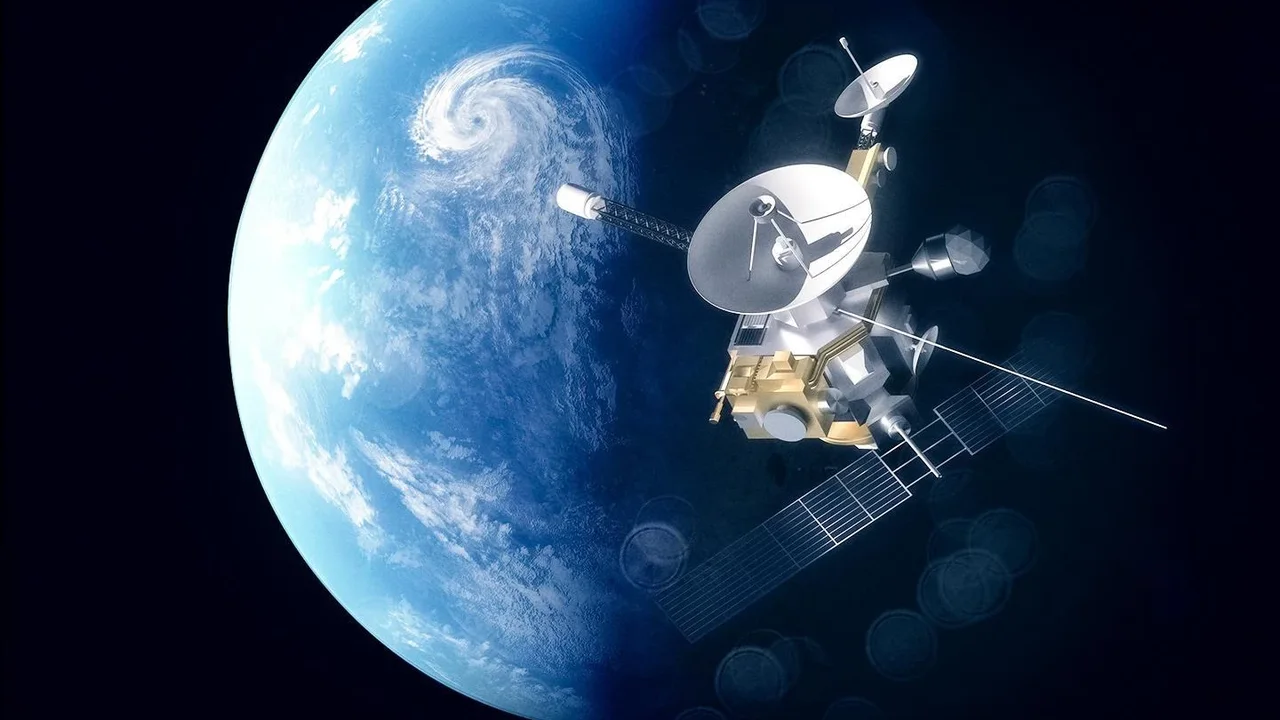
The primary objective of Shukrayaan is to conduct a comprehensive global survey of Venus. The headline mission is to study the structure, composition, and dynamics of its dense atmosphere. The orbiter will carry a suite of advanced scientific instruments designed to peer through the thick cloud cover. A high-resolution Synthetic Aperture Radar (SAR) will map the planet's surface in unprecedented detail, searching for signs of active volcanoes and lava flows. Another key goal is to perform the first-ever study of Venus's subsurface, using a ground-penetrating radar to understand its geology. The mission will also investigate the mysterious 'super-rotation' of the Venusian atmosphere, where winds whip around the planet at speeds far exceeding the planet's own slow rotation. International collaboration is also key, with payloads from Sweden and Russia set to study the interaction between the solar wind and the Venusian ionosphere.
A Deep Dive into Cloud Chemistry
The dense, planet-encircling clouds of Venus hold the key to understanding its extreme environment. Made primarily of sulphuric acid droplets, these clouds are so thick they reflect most sunlight back into space. Yet, the radiation that gets through is trapped, creating the intense greenhouse effect. The Shukrayaan orbiter will carry instruments specifically designed to analyze this complex chemistry. Payloads like the Venus Surface Emissivity and Atmospheric Mapper (VSEAM) will study the cloud structure and map thermal emissions to identify volcanic hotspots that may be pumping gases into the atmosphere. By analyzing the chemical makeup and dynamics of these clouds, from the hazes high above down to the main decks, scientists hope to piece together a complete picture of the Venusian climate engine. This focus on atmospheric science is crucial for understanding how and why Venus became so inhospitable.
The Road to Launch and Beyond
With the mission formally approved and a budget of around ₹1,236 crore allocated, ISRO is targeting a launch date of March 29, 2028. The spacecraft is expected to be launched aboard India's powerful LVM-3 rocket. After a journey of approximately 112 days, Shukrayaan is scheduled to enter a highly elliptical orbit around Venus on July 19, 2028. From this vantage point, which will range from 500 km to 60,000 km above the surface, the orbiter will spend several years collecting data. This long-duration mission will allow scientists to observe Venus over an extended period, capturing changes in its atmosphere and monitoring for geological activity. The data gathered will be invaluable, not just for understanding Venus, but for refining our models of exoplanets and the conditions that determine habitability across the galaxy.