
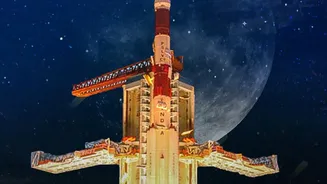
The Ultimate Ejection Seat
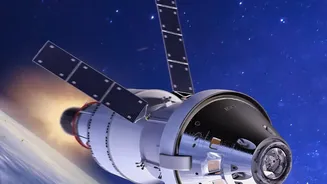
Imagine an ejection seat, not for a fighter jet, but for an entire space capsule. That's the simplest way to understand the Gaganyaan mission’s Crew Escape System (CES). It is a specialized, quick-acting rocket system mounted on top of the crew module.
Its sole purpose is to execute a split-second rescue if something goes catastrophically wrong during launch or the initial ascent. If the main HLVM-3 rocket falters, the CES is designed to fire a set of powerful solid motors, pulling the capsule and its crew away from danger at incredible speed. This system must work perfectly every single time it's needed, making it one of the most critical safety components of the entire human spaceflight program. Without a proven and reliable escape system, no astronaut would ever be cleared for flight.
A Gauntlet of Successful Tests
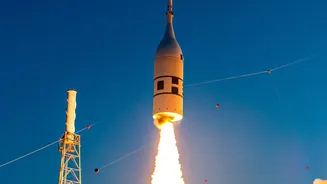
ISRO has been methodically validating every piece of the Gaganyaan safety puzzle. A major milestone was the TV-D1 test mission, which successfully demonstrated an in-flight abort scenario. In this dramatic test, the escape system fired while the test vehicle was travelling faster than the speed of sound, pulling the module to a safe distance before it parachuted into the Bay of Bengal. More recently, ISRO has completed a series of crucial qualification tests on the crew module itself. These include verifying the module's structural ability to withstand the intense forces of the escape system firing, ensuring the umbilical cords that supply power and data disconnect cleanly, and testing the system that inflates floats to keep the capsule upright after it splashes down in the ocean. Each successful test builds confidence in the vehicle's design.
How an Escape Works in Seconds
In an emergency, there is no time for deliberation. The Crew Escape System's response is automated and brutally efficient. Within milliseconds of detecting a launch vehicle failure, a sequence is triggered. First, powerful escape motors ignite, producing massive thrust to pull the crew module away from the failing rocket. Simultaneously, smaller pitch motors orient the capsule on a safe trajectory, away from the launch pad and any debris. Once at a safe altitude, the escape system jettisons itself, and a series of parachutes deploy in a precise sequence to slow the capsule's descent. The final moments involve the deployment of drogue and main parachutes, culminating in a gentle splashdown at sea, where recovery teams would be waiting. The entire event, from abort initiation to parachute deployment, can take less than two minutes.
More Than Just One System
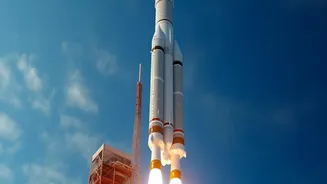
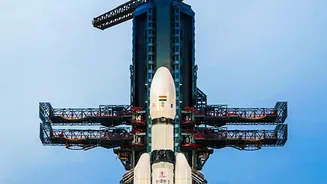
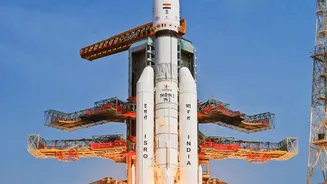
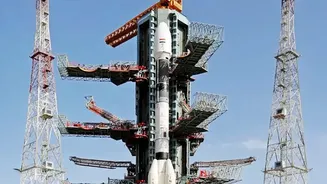
The Crew Escape System is the most dramatic safety feature, but it is part of a much larger ecosystem of safety-critical technologies ISRO has been perfecting. The Human Rated Launch Vehicle (HLVM-3) itself is a version of the reliable LVM-3, but with enhanced redundancy and safety margins built in. The parachutes, essential for a safe landing during both normal and aborted missions, have undergone extensive trials, including being dropped from helicopters to simulate mission conditions. Furthermore, the environmental control and life support systems, which will provide breathable air and a stable temperature for the crew, have also been developed and tested. These overlapping systems ensure that from the launch pad to orbit and back to Earth, every phase of the mission has multiple layers of protection for the crew.
What This Means for India's Space Dream
These successful tests are far more than just technical achievements; they are the bedrock of trust upon which India's human spaceflight ambitions are built. By rigorously proving the escape and safety systems, ISRO demonstrates its commitment to astronaut safety above all else. This progress keeps the Gaganyaan programme on track, with the first uncrewed flight, carrying the humanoid robot Vyommitra, scheduled for late 2026. Successfully completing these milestones brings India one step closer to joining the elite group of nations—after Russia, the USA, and China—capable of independently sending its citizens into orbit. It transforms the dream of a crewed Indian space mission into a tangible, and safe, engineering reality.