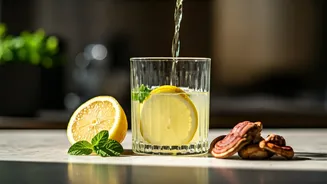








What is an Adaptogenic Lemonade?
At its core, this new wave of beverages takes a familiar, beloved classic—lemonade—and infuses it with adaptogens. Adaptogens are a class of non-toxic plants, herbs, and mushrooms that have been used for centuries in Chinese and Ayurvedic healing traditions.
Their modern claim to fame is their purported ability to help the body resist, or ‘adapt’ to, physical, chemical, and biological stressors. Instead of just sugar, water, and lemon, these drinks contain active ingredients like Ashwagandha, an herb thought to reduce stress and anxiety; Rhodiola Rosea, which may fight fatigue; or Lion’s Mane mushroom, often linked to cognitive focus. You might also find L-theanine, an amino acid found in green tea known for promoting a feeling of ‘calm alertness.’ The result is a drink that positions itself not just as a thirst-quencher, but as a functional tool for managing the rigors of modern urban life.
The Perfect Storm for a Wellness Trend
The rise of adaptogenic lemonade isn’t happening in a vacuum. It’s the product of several converging cultural currents. First, there's the ever-expanding wellness industry, which has primed consumers to seek health benefits in every sip and bite. Post-pandemic, there's a heightened collective focus on mental health and stress management, making ingredients that promise calm and focus incredibly appealing.
Second is the “sober curious” movement. As more people, particularly younger millennials and Gen Z, reduce their alcohol intake, the demand for sophisticated, non-alcoholic beverages has skyrocketed. An adaptogenic lemonade offers the complexity, ritual, and premium feel of a craft cocktail without the alcohol. It’s something interesting to hold at a social gathering that isn’t a seltzer water or a sugary soda. Finally, they are undeniably photogenic. In the age of Instagram, a pastel-hued, minimalist-labeled bottle is as much a lifestyle accessory as it is a beverage.
But Do They Actually Work?
This is the million-dollar question. The answer is… complicated. Proponents swear by the subtle, cumulative effects of adaptogens, reporting lower stress levels and improved focus over time. Some studies on specific adaptogens, like Ashwagandha, have shown promising results in reducing cortisol (the stress hormone). However, much of the research is preliminary, performed on animals, or involves dosages and concentrations far different from what you might find in a commercial beverage.
The U.S. Food and Drug Administration (FDA) classifies these ingredients as dietary supplements, meaning they don’t undergo the rigorous testing required for pharmaceuticals. The effects can be highly subjective and vary wildly from person to person. For some, the benefit might be a powerful placebo effect—the very act of consuming something you believe is good for you can make you feel better. For others, it’s a gentle, noticeable shift. The consensus is that they aren’t a magic bullet for anxiety or burnout, but can be a supportive tool within a broader healthy lifestyle.
The New Face of Daily Hydration
While calling it the “default” hydrator may be a stretch, the adaptogenic lemonade has certainly carved out a significant niche in the urban wellness landscape. Brands that started as online-only ventures are now fixtures in the refrigerated aisles of high-end grocers and on the menus of coffee shops from New York to Los Angeles. They represent the premiumization of everything, including the simple act of drinking water.
Why pay $2 for a bottle of water when, for $6 or $7, you can hydrate while simultaneously managing your stress and boosting your focus? This is the value proposition that has captivated a key consumer demographic. It reframes hydration from a basic necessity into an act of aspirational self-care. It’s less about quenching thirst and more about optimizing one’s state of being, one expensive, beautifully marketed sip at a time.