




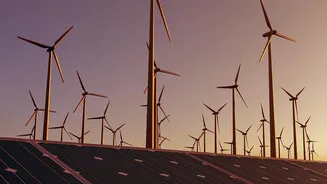
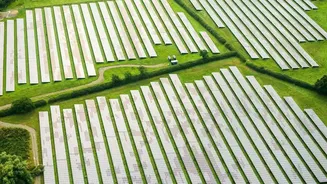
For Indian farmers, the monsoon is both a lifeline and a yearly source of anxiety. Now, an innovative approach called agrivoltaics promises not only to harness the sun's power but also to protect farms from the monsoon's fury.
What is Agrivoltaics?
Agrivoltaics is the practice
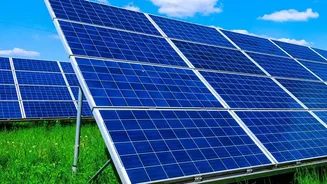
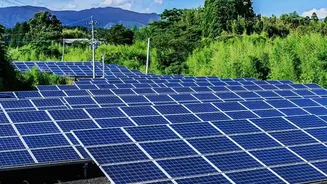
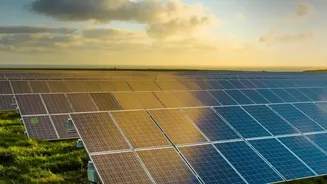
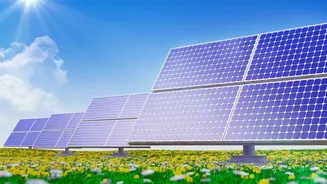
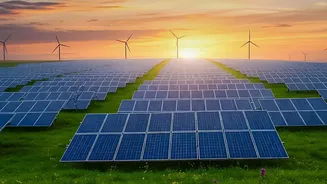
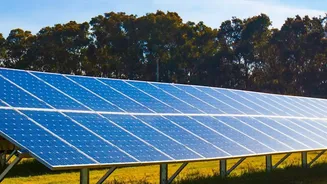
of using the same piece of land for both agriculture and solar energy generation. Instead of covering fields with ground-mounted panels, this method uses elevated structures, raising the solar arrays several metres above the ground. This design allows farming activities, from manual planting to the use of machinery, to continue unhindered underneath. The concept is simple but powerful: create a dual-use system that harvests sunlight for electricity while crops grow below, effectively boosting the land's overall productivity. In a country where land is a precious resource, this solves a major conflict between the need for renewable energy and the need for food security.
Engineered for the Elements
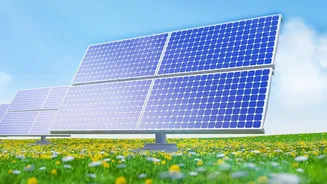
The key to surviving severe weather lies in robust engineering. Elevated solar arrays are not simply panels on stilts; they are sophisticated systems designed to handle harsh conditions. The foundations are crucial, with steel or aluminum frames driven deep into the ground to provide a firm anchor against high-velocity winds that accompany monsoons and cyclones. Many modern mounting systems are rated to withstand wind speeds well over 150 kmph. The panels themselves are built with durable tempered glass and corrosion-resistant frames. The tilt of the panels is also a critical design feature. A slight angle helps reduce wind load by allowing gusts to flow over and under the structures, rather than pushing against a flat surface. This tilt also ensures that heavy rainwater runs off efficiently, preventing water from pooling and potentially damaging the system while simultaneously helping to wash away accumulated dust.
A Shield for Crops, A Source of Power
Beyond their own resilience, these elevated arrays offer significant protection to the crops growing beneath them. The panels act as a physical shield against the direct force of heavy downpours and hailstorms, which can flatten or destroy entire fields of produce. This protective canopy creates a more stable microclimate at ground level. The partial shade reduces heat stress on plants during scorching summer days and lowers the rate of water evaporation from the soil by up to 30%. This means crops are less stressed, require less irrigation, and are buffered from the extremes of both sun and rain. For farmers, this translates into more stable and sometimes even improved yields, especially for shade-tolerant crops like leafy vegetables, turmeric, and certain fruits.
Challenges and the Path Forward
Despite its immense potential, the adoption of agrivoltaics in India is still in its early stages and faces several hurdles. The primary challenge is cost; the additional structural infrastructure needed to elevate the panels makes these projects about 25–30% more expensive than conventional ground–mounted solar farms. This high upfront investment can be a significant barrier for India's small and marginal farmers, who make up over 85% of the farming community. Furthermore, not all crops are suitable for cultivation under the partial shade of panels, with staples like rice and sugarcane being less compatible. The government is actively working on policy frameworks, such as integrating agrivoltaics into the PM–KUSUM scheme, to address these issues and make the technology more accessible. As pilot projects across the country demonstrate success, the goal is to create viable business models that protect farmers' land rights while boosting their income and resilience.