



What is a Landslide Dam?
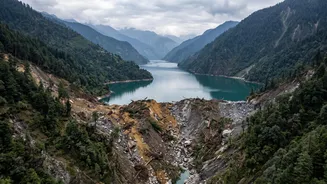
Imagine a major river in a steep mountain valley suddenly blocked by millions of tonnes of rock, soil, and trees. This is a landslide dam. In regions like the Himalayas, heavy monsoon rains or earthquakes can destabilise entire mountainsides, causing
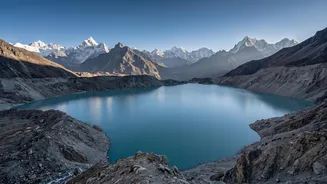
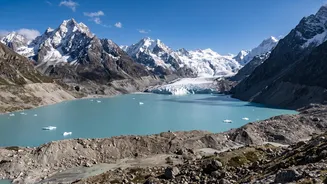
them to collapse into river channels. Unlike a concrete dam, this barrier is a loose, unconsolidated jumble of debris. With the river’s flow obstructed, water begins to collect behind this natural blockage, forming a large and rapidly growing lake. This process is common in Nepal's geologically young and fragile mountains, where steep slopes and intense rainfall create a high-risk environment.
The Ticking Time Bomb Effect
As the lake behind the landslide dam expands, the pressure on the unstable barrier intensifies with each passing moment. The dam itself is weak; it has no engineered spillway to safely release excess water. Water begins to seep through the porous debris, further weakening its structure from within. Eventually, the rising lake will overtop the dam. This is the most dangerous moment. The cascading water quickly erodes the loose rock and soil, carving a breach that can widen catastrophically in minutes. This sudden, violent failure is known as a Landslide Dam Outburst Flood, or LDOF.
The Devastation of an Outburst Flood
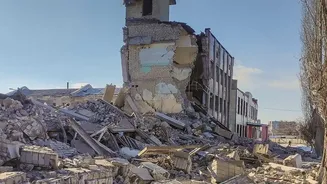
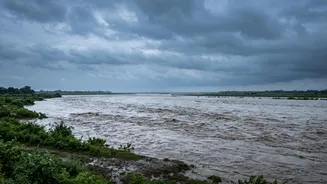
An LDOF is not merely a water flood; it is a terrifying, fast-moving slurry of water, mud, boulders, and uprooted trees. This destructive mass is far heavier and more powerful than water alone. It moves with incredible speed and force, capable of destroying bridges, scouring riverbanks, and burying entire villages in a thick layer of sediment that is incredibly difficult to dig through. Experts describe the force as being like liquid concrete, hitting with a power that can sweep away multi-storey buildings and heavy vehicles as if they were toys. The recent flash floods along the Nepal-China border, which caused immense destruction, are suspected to have been triggered or worsened by such a mechanism, where a landslide or ice avalanche blocked a river, leading to a sudden, catastrophic release.
Why This Matters for India
Many of the major rivers that flow through Nepal, such as the Kosi and Gandak systems, are transboundary, eventually crossing into India and flowing through states like Bihar and Uttar Pradesh. A major LDOF event in the upper reaches of these rivers in Nepal does not stop at the border. The flood surge travels downstream, posing a direct threat to Indian communities. Indian authorities are often on high alert during such events in Nepal, monitoring water levels and preparing for potential inundation. For example, after a recent flood in Nepal, all 36 gates of the Gandak Barrage in Bihar were opened to manage the surge, and alerts were issued for several districts.
The Challenge of Prediction and Mitigation
Predicting these events is incredibly difficult. They are part of a complex chain of hazards involving weather, geology, and sometimes even melting glaciers (a similar phenomenon called a Glacial Lake Outburst Flood, or GLOF). The initial landslide often occurs in remote, inaccessible mountain terrain, making it hard to detect the dam before it becomes a critical threat. Early warning, therefore, depends heavily on international cooperation. Sharing information from satellite imagery and river monitoring stations across borders is crucial for providing downstream communities with precious time to evacuate. Without trusted communication channels between countries like China, Nepal, and India, the risk to lives and infrastructure remains immense.