
An Art Form Born of the Desert
Lippan kaam, which translates to ‘mud-washing work’, is a traditional mural art native to the Kutch region of Gujarat. For generations, women of pastoral communities like the Rabari, Mutwa, and Kumbhar have decorated the inner and outer walls of their
homes, known as ‘bhungas’, with this unique craft. Historically, it served a dual purpose: the thick mixture of clay and animal dung acted as a natural insulator, keeping homes cool in the blistering desert heat, while the intricate designs brought beauty to an otherwise harsh environment. The addition of small, hand-cut mirrors, or ‘aabhla’, was a stroke of genius, reflecting precious light into the dimly lit interiors and creating a mesmerising, star-like shimmer.
The Soul of Kutch on a Wall
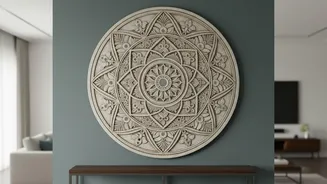
The designs in Lippan art are a visual diary of the region's culture and environment. Motifs are drawn directly from the artists’ surroundings and beliefs. You will find representations of peacocks symbolising grace, camels for resilience, the tree of life, and various floral and geometric patterns that speak of harmony and community. Traditionally, this work was a communal activity, especially before festivals or weddings, where women would gather to adorn their homes, reinforcing social bonds and passing down techniques from mother to daughter. The styles can also vary; for instance, artisans from the Muslim Mutwa community often focus on intricate geometric patterns, avoiding figurative depictions.
A Modern-Day Renaissance
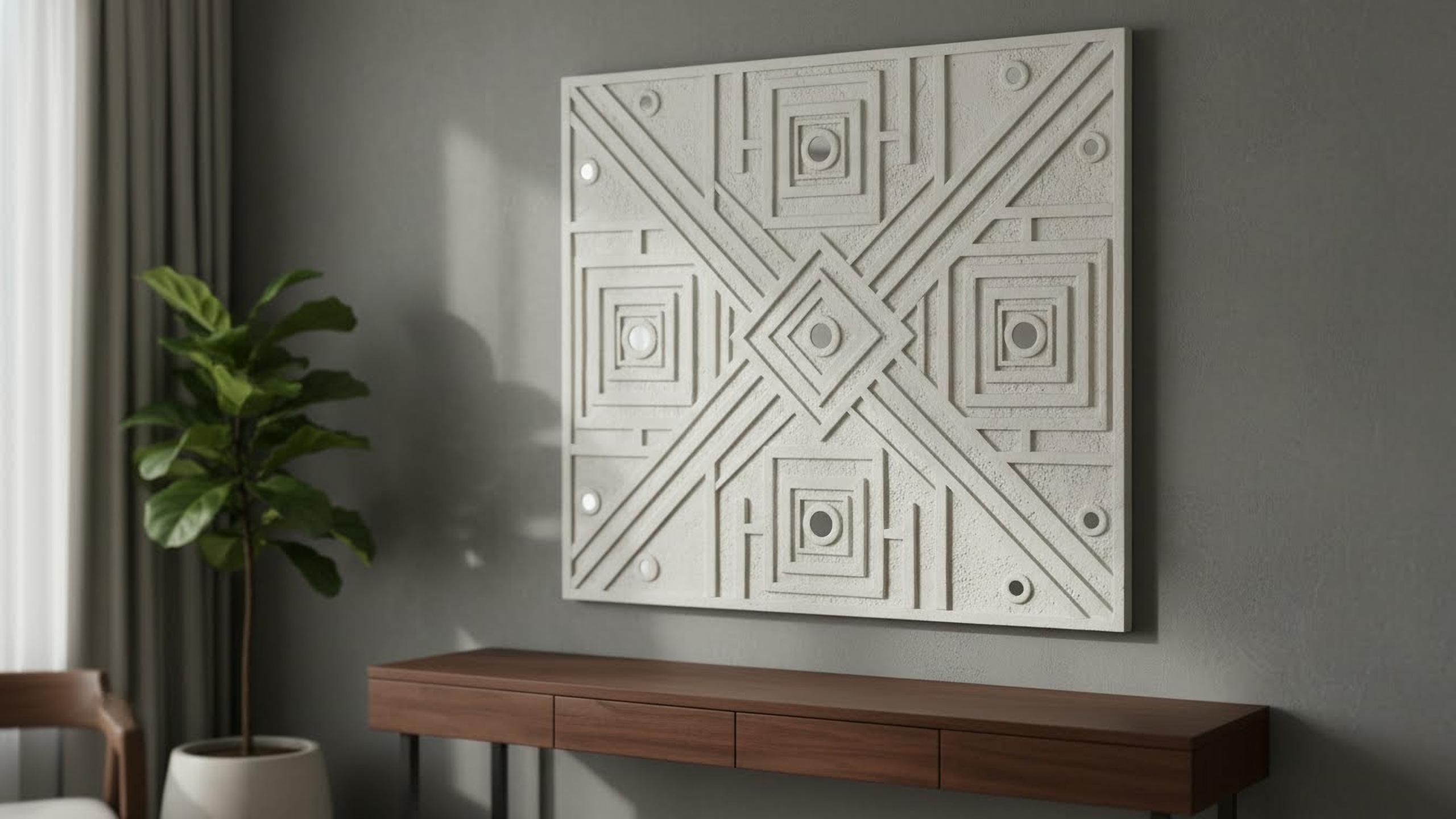
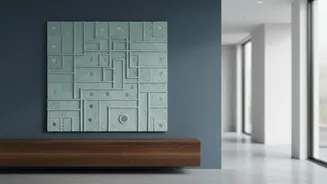
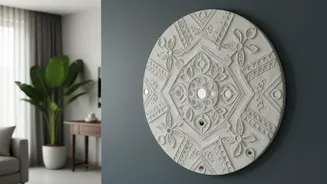
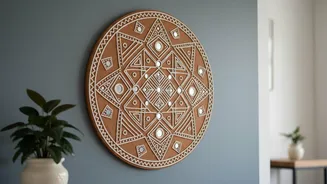
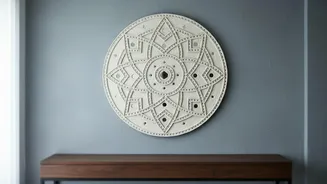
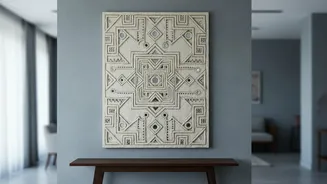
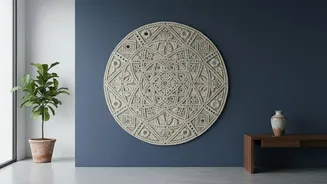
What was once an architectural feature, inseparable from the walls of a bhunga, has now become a portable piece of art. This transition is at the heart of its modern revival. Artisans today have ingeniously adapted the craft to make it accessible to a wider, urban audience. Instead of mud walls, they now use more durable and transportable bases like MDF boards, plywood, and canvas. The traditional clay and dung mixture is often replaced with more robust modern materials like chalk powder, sawdust, and adhesives, which make the artworks lighter, odour-free, and less prone to cracking. This innovation allows the art to be sold as wall hangings, decorative panels, furniture inlays, coasters, and even keychains, finding a place in contemporary home decor.
Empowering Artisans, Preserving Heritage
This revival is more than just an aesthetic trend; it represents a significant source of economic empowerment, particularly for women in rural Kutch. By adapting their skills for a commercial market, many artisans have found a sustainable livelihood. Online platforms, artisan-focused businesses, and social media have played a crucial role, connecting these craftspeople directly with buyers in metropolitan cities and even globally. This newfound attention not only provides financial stability but also instils a renewed sense of pride and helps preserve a cultural heritage that might have otherwise faded. Buying a piece of Lippan art becomes a conscious choice to support this ecosystem of skill and tradition.
Bringing an Earthy Elegance Home
For the modern homeowner, Lippan art offers a unique blend of earthy texture and sophisticated sparkle. It perfectly complements a range of interior styles, from minimalist and bohemian to traditional. The neutral, natural tones of the mud base combined with the glittering mirrors create a piece that is both a conversation starter and a subtle nod to timeless Indian craftsmanship. Displaying a piece of Lippan kaam is about more than just decoration; it’s about incorporating a story, a slice of cultural history, and the soul of the Kutch desert into one's personal living space.