



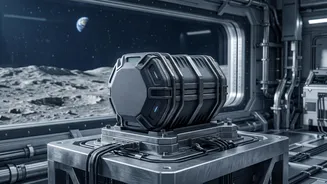
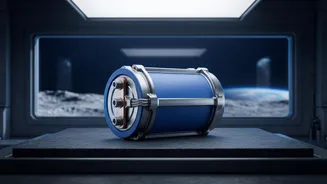
The Challenge of the Lunar Night
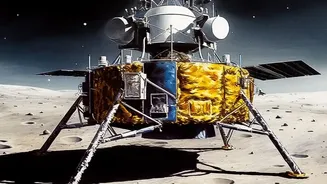
Powering a mission on Earth is one thing, but the Moon presents a far greater challenge. For roughly 14 Earth days at a time, the lunar night plunges surface temperatures to as low as minus 200 degrees Celsius. Standard lithium-ion batteries, like those
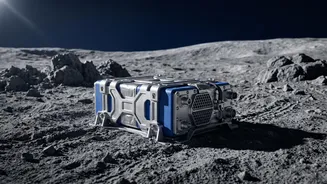
in our phones and laptops, use liquid electrolytes that would freeze solid in such cold, damaging the battery and rendering it useless. To date, missions have relied on power-hungry heating systems to keep batteries within a narrow operational temperature range, but this adds significant mass and complexity. For a sustained human presence under the Artemis program, where long-duration missions are the goal, a better solution is needed to power everything from rovers exploring shadowed craters to an astronaut's emergency equipment.
A 'Solid' Solution to a Liquid Problem
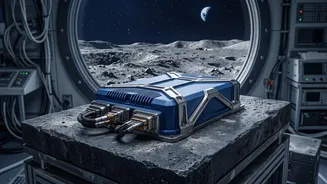
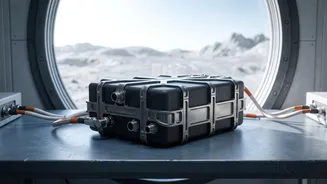
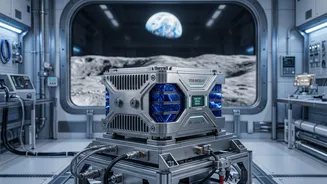
NASA's answer is a project called SPEARS, which stands for Solid Power for Extreme Environment Adaptability and Resilience in Space. Led by NASA's Glenn Research Center, the project is developing a new class of solid-state batteries. These batteries replace the vulnerable liquid electrolyte with a solid material, such as a ceramic or polymer. This fundamental change has a huge benefit: because the solid electrolyte doesn't freeze, the battery can survive extreme cold without being permanently damaged. While even these advanced cells can't generate power at the coldest lunar temperatures, they can be warmed up with small, efficient heaters only when needed, instead of requiring a constant, energy-intensive thermal management system.
Impressive Results in Extreme Tests
Recent tests have shown just how resilient these new battery cells are. In thermal vacuum chambers that simulate space conditions, the SPEARS prototype cells have operated successfully at temperatures as low as minus 80 degrees Celsius, albeit with slightly reduced performance. More importantly, they have survived exposure to a staggering temperature range from 212 degrees Fahrenheit (100 C) down to minus 274 F (minus 170 C) without sustaining any damage. This proves the core concept: the batteries can endure the brutal lunar night and be ready to work once the sun returns or a heater brings them up to operational temperature.
The Critical Role of Reducing Weight
Every single kilogram launched into space is incredibly expensive, costing thousands of dollars. This high cost forces engineers to make every component as light as possible. Conventional batteries require heavy thermal management systems—heaters, radiators, and insulation—just to keep them alive. By developing batteries that can survive the cold, the SPEARS project aims to significantly reduce the mass of these support systems. A lighter power system means a lighter overall spacecraft. That saved mass can be used for more scientific instruments, more supplies for astronauts, or it could simply reduce the overall launch cost, making more ambitious missions feasible.
Powering the Future of Artemis and Beyond
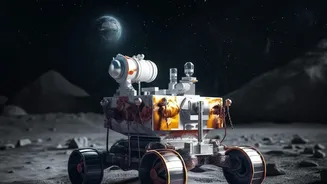
The applications for this technology are vast. On the Moon, SPEARS-derived batteries could power long-duration rovers, scientific instruments placed in permanently shadowed craters, and even serve as emergency power packs for astronauts. The ability to tune the battery's chemistry for different needs—whether for high power, high energy storage, or extreme durability—makes it a versatile tool for the Artemis campaign. The research not only supports NASA's goal of a sustained human presence on the Moon but also has potential applications back on Earth, such as in electric vehicles or grid storage systems that need to operate in extreme climates.