






More Than Just Wells
For centuries, these magnificent structures were more than just reservoirs; they were vital community centres, spiritual sanctuaries, and cool retreats from the searing Indian sun. Built across western and northern India from as early as the 7th century,
stepwells were marvels of engineering and design. Each one tells a story of the kingdom that built it, the artisans who carved it, and the communities that thrived around it. Today, a new generation of road-tripping explorers is rediscovering these subterranean palaces, mapping a journey into India's architectural soul. Here are some of the most spectacular stops on that map.
Chand Baori, Rajasthan
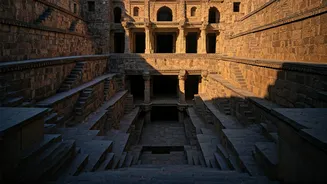
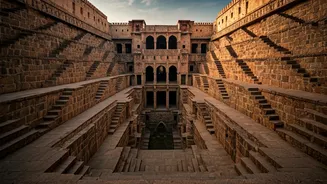
Prepare to be mesmerised. Located in the village of Abhaneri, Chand Baori is perhaps the most visually dramatic stepwell in India. It’s a dizzying, Escher-like spectacle of 3,500 narrow steps descending 13 stories (about 100 feet) into the earth. The perfect symmetry of its crisscrossing staircases creates a breathtaking geometric pattern that seems almost unreal. Built by King Chanda of the Nikumbha Dynasty between 800 and 900 AD, it was designed to conserve water and provide a cool gathering place. Standing at its edge, you feel a sense of awe at the sheer scale and precision of its construction, a testament to ancient ingenuity.
Rani ki Vav, Gujarat
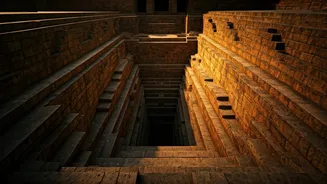
If Chand Baori is an exercise in geometry, Rani ki Vav (the Queen's Stepwell) in Patan is a masterpiece of sculpture. This is not just a well; it's an inverted temple honouring water. A UNESCO World Heritage Site, it was built in the 11th century by Queen Udayamati in memory of her husband, King Bhimdev I. As you descend its seven levels, every surface comes alive with over 500 principal sculptures and a thousand minor ones depicting deities, celestial beings, and scenes from mythology. The central theme is the Dashavatara, the ten incarnations of Vishnu. It’s a spiritual and artistic journey that reveals more detail with every step you take.
Agrasen ki Baoli, Delhi
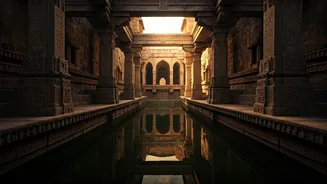
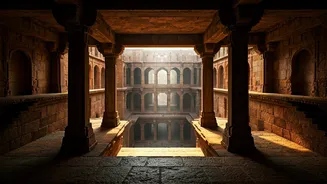
Hidden amidst the high-rises of central Delhi, Agrasen ki Baoli offers a sudden, stunning escape from the city's chaos. This protected monument, with its 108 steps and three levels, provides a quiet, cool sanctuary. While its exact origins are debated, it’s believed to have been rebuilt during the Tughlaq or Lodi period of the Delhi Sultanate in the 14th century. The long, deep corridor flanked by arched niches creates a powerful sense of perspective, drawing your eyes down to the water level. Its accessibility has made it a popular spot for photographers, history buffs, and Bollywood location scouts, and it carries an air of urban mystique, with local legends whispering of haunting tales.
Adalaj ni Vav, Gujarat
Just outside Ahmedabad lies the Adalaj Stepwell, a beautiful example of Indo-Islamic architectural fusion. Completed in 1499, its story is one of tragedy and tribute. Legend says it was started by a Hindu king and completed by a Muslim sultan who, captivated by the queen's beauty, promised to finish the well in exchange for her hand. The octagonal structure is five stories deep, renowned for its intricate floral and geometric carvings. Uniquely, it has three entrance staircases, a design that allowed villagers to enter from multiple sides. The air inside is said to be several degrees cooler than the outside, a natural air-conditioning system that still works wonders today.