



An Astronaut and a Physician
Anil Menon is not your typical astronaut, if such a thing even exists. Born in Minneapolis, Minnesota, to a Ukrainian mother and an Indian father from Kerala, his background is as diverse as his skill set. A decorated colonel in the U.S. Space Force,
he is also an actively practicing emergency medicine physician with extensive experience in extreme environments. Before being selected as a NASA astronaut in 2021, Menon served as a NASA flight surgeon, responsible for the health of astronauts on the International Space Station (ISS). He was also SpaceX's first-ever flight surgeon, helping to launch the company's first human spaceflights. His career has taken him from providing medical aid during earthquakes in Haiti and Nepal to treating wounded soldiers in Afghanistan, all of which uniquely prepared him for the rigors of space.
The Challenge of Eight Months in Space
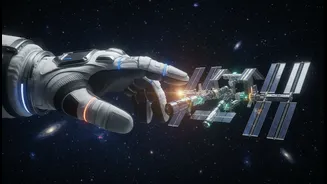
An eight-month mission in space is a monumental undertaking that pushes the human body to its limits. Beyond the psychological challenges of isolation and confinement, astronauts face a barrage of physiological threats. Microgravity causes fluids to shift upwards, potentially leading to vision problems, a condition known as Spaceflight-Associated Neuro-Ocular Syndrome. Bones lose density at a rate of 1% to 1.5% per month, muscles atrophy, and the cardiovascular system weakens without the constant pull of Earth's gravity. Furthermore, outside the protection of Earth's magnetic field, exposure to space radiation dramatically increases the long-term risk of cancer and other degenerative diseases. Menon's mission aboard the ISS, which launched on July 14, 2026, is specifically designed to study these effects and test ways to counteract them.
A Doctor on the Deep-Space Frontier
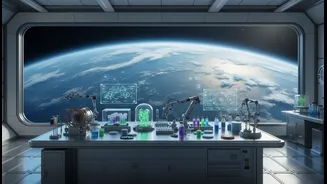
This is where Menon's dual role becomes a true milestone. Having an experienced physician on board for such a long-duration mission is a game-changer for space medicine. He is not just a subject of research; he is one of the lead researchers. A significant part of his mission involves conducting experiments that could be vital for future trips to the Moon and Mars. These include testing methods to produce IV fluids from drinking water on the station, using augmented reality and AI-powered ultrasound to reduce reliance on ground support, and studying how blood circulation changes in microgravity. This research is crucial because a mission to Mars could take three years round-trip, making real-time medical support from Earth impossible. Menon's work is essentially field-testing the very procedures and technologies that will keep future Mars explorers alive.
The Stepping Stone to Mars
Every long-duration mission on the ISS is a dress rehearsal for humanity's next giant leap: Mars. NASA's Artemis program aims to establish a sustainable presence on the Moon to prepare for missions to the red planet. The data collected during Menon's eight-month stay will directly inform the design of these future missions. Understanding how to mitigate bone loss, maintain psychological health, and treat medical emergencies autonomously are not just interesting scientific questions—they are essential prerequisites for deep-space travel. By studying semiconductor manufacturing and bioprinting tissue in space, Menon is also contributing to technological advancements that could have profound benefits back on Earth, from high-performance computers to new medical therapies.
An Inspiration for India and the World
As the first NASA astronaut of Malayali descent, Anil Menon's journey is a source of immense pride and inspiration. His family traces its roots to Kerala, and he is the great-grandson of Sir Chettur Sankaran Nair, a prominent figure in India's independence movement. Menon himself has strong links to the country, having spent a year there as a Rotary Ambassadorial Scholar to support polio vaccination efforts. His mission highlights the global and collaborative nature of modern space exploration. While he wears a NASA patch, his journey inspires aspiring scientists, doctors, and explorers around the world, proving that the path to the stars is paved with dedication, a diverse set of skills, and a commitment to serving humanity, whether on Earth or far above it.