



The New Players on the Launchpad
For decades, space was the domain of two superpowers: the US and the Soviet Union. The new arena is vastly different, featuring a mix of established and emerging national agencies alongside a dynamic private sector. While NASA (USA) and Roscosmos (Russia)
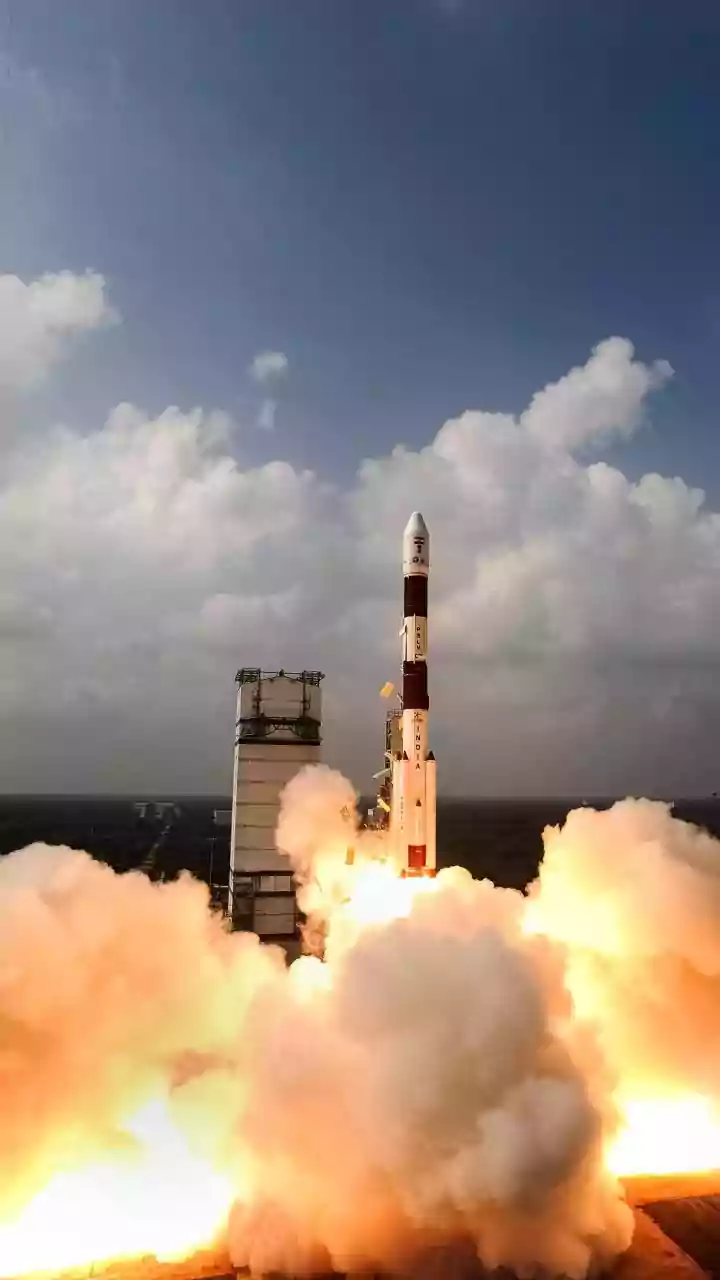
remain key players, the China National Space Administration (CNSA) has rapidly emerged as a top-tier challenger, with ambitious lunar and Martian goals. Adding to this mix is the Indian Space Research Organisation (ISRO), which has garnered global attention with cost-effective missions, including its historic landing near the Moon's south pole and its successful Mars orbiter on the first attempt. Beyond governments, private companies have revolutionised access to space. Elon Musk’s SpaceX, with its reusable rockets and Starship vehicle, is a dominant force, contracted by NASA for Artemis missions but also pursuing its own goal of colonising Mars. Jeff Bezos's Blue Origin is also developing heavy-lift rockets and lunar landers, while a host of other companies are targeting everything from satellite launches to commercial space stations.
Beyond the Moon: Mars and Asteroids
While the Moon is once again a major focus—this time as a stepping stone—the ultimate destinations have become more ambitious. Mars is the headline prize. NASA's Artemis program explicitly frames the return to the Moon as preparation for sending humans to the Red Planet. SpaceX's entire long-term vision is centered on building a self-sustaining city on Mars. China is also in the Mars game, aiming to retrieve samples from the planet by 2031, potentially ahead of the US. Beyond Mars, the solar system's asteroids represent another frontier, not just for scientific study but for their economic potential. These celestial bodies are believed to be rich in valuable resources, including platinum-group metals and water. Several private companies are being founded with the specific goal of developing asteroid-mining technologies, signalling a shift from pure exploration to resource utilisation.
The Economic Frontier: Resources and Riches
This new race is fundamentally driven by economics. The projected value of the space economy is expected to grow into a multi-trillion-dollar industry, with a significant portion coming from the use of space resources. The most immediate target is water ice, believed to be abundant in permanently shadowed craters at the Moon's poles. This water can be converted into breathable air for astronauts and, more importantly, rocket propellant (liquid hydrogen and oxygen). Creating a refueling station on the Moon would dramatically lower the cost and increase the feasibility of missions to Mars and beyond. Looking further out, asteroids are rich in metals that are crucial for technology and clean energy on Earth. Economic modelling suggests a single large metallic asteroid could contain rare earth elements worth trillions of dollars. The goal is to build an in-space economy, where resources are mined and used to build and fuel further exploration, creating a self-sustaining human presence off-planet.
Geopolitics in Zero Gravity
With high stakes come intense geopolitical rivalries. Two major blocs are forming, shaping the rules for this new era. The United States is leading the Artemis Accords, a set of principles for peaceful and transparent lunar exploration. As of early 2026, over 60 nations have signed on, creating a broad coalition committed to cooperation and interoperability. In opposition, China and Russia are spearheading the International Lunar Research Station (ILRS), a plan for a permanent, and potentially nuclear-powered, lunar base. This initiative has attracted its own set of partners. This division reflects earthly power dynamics, creating a contest over who will set the precedents for resource extraction, site selection, and operational standards on the Moon and beyond. The nation or bloc that establishes the first permanent outpost and infrastructure will have a powerful advantage in shaping the future of the space economy.
India’s Ascent: A Rising Space Power
Amidst this global competition, India has firmly established itself as a major space power. ISRO's Space Vision 2047 outlines an ambitious future, including the Gaganyaan human spaceflight program, which aims to send Indian astronauts ('vyomanauts') into orbit. Following the success of Chandrayaan-3, future lunar missions are planned for sample return and joint exploration with Japan (LUPEX). Beyond the Moon, a Venus Orbiter Mission is scheduled for 2028. A key part of India's strategy is building the Bharatiya Antariksh Station (BAS), a planned modular space station that will support long-duration human missions and scientific research. To support these ambitions, India is heavily investing in expanding its launch infrastructure, including a new spaceport and next-generation launch vehicles, and fostering private-sector participation to accelerate growth. India's space economy is projected to grow from $8 billion to over $40 billion in the next decade, a testament to its rising influence.