
What Makes a Harvest Moon Special?
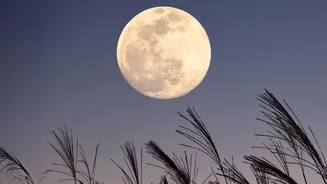
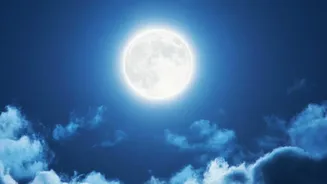
Any full moon is a treat, but the Harvest Moon holds a special place in culture and astronomy. It's the name given to the full moon that occurs closest to the autumnal equinox, which marks the beginning of autumn in the Northern Hemisphere. For centuries,
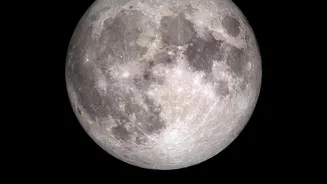
this particular moon was a welcome sight for farmers. It rises very soon after sunset for several evenings in a row. Before the age of electric lights, this extended twilight provided farmers with precious extra hours of bright moonlight to bring in their crops before the first frost, earning it the name “Harvest Moon.” On September 26, 2026, the moon will officially become full around 10:19 PM IST, but it will appear gorgeously full as soon as it rises in the east around sunset. As it climbs above the horizon, expect it to take on a beautiful golden-orange hue due to the way its light filters through Earth's atmosphere.
A Celestial Meeting with Planetary Giants
This year's Harvest Moon travels through the constellation Pisces, and it brings along some impressive company. Sharing the same patch of sky will be two of our solar system's gas giants: Saturn and Neptune. While the moon itself will be the star of the show, its presence acts as a brilliant guidepost to help you locate these distant worlds. Saturn will be a relatively easy companion to spot, but finding the much more distant Neptune will be a rewarding challenge for dedicated sky-watchers.
Easily Spotting the Ringed Jewel: Saturn
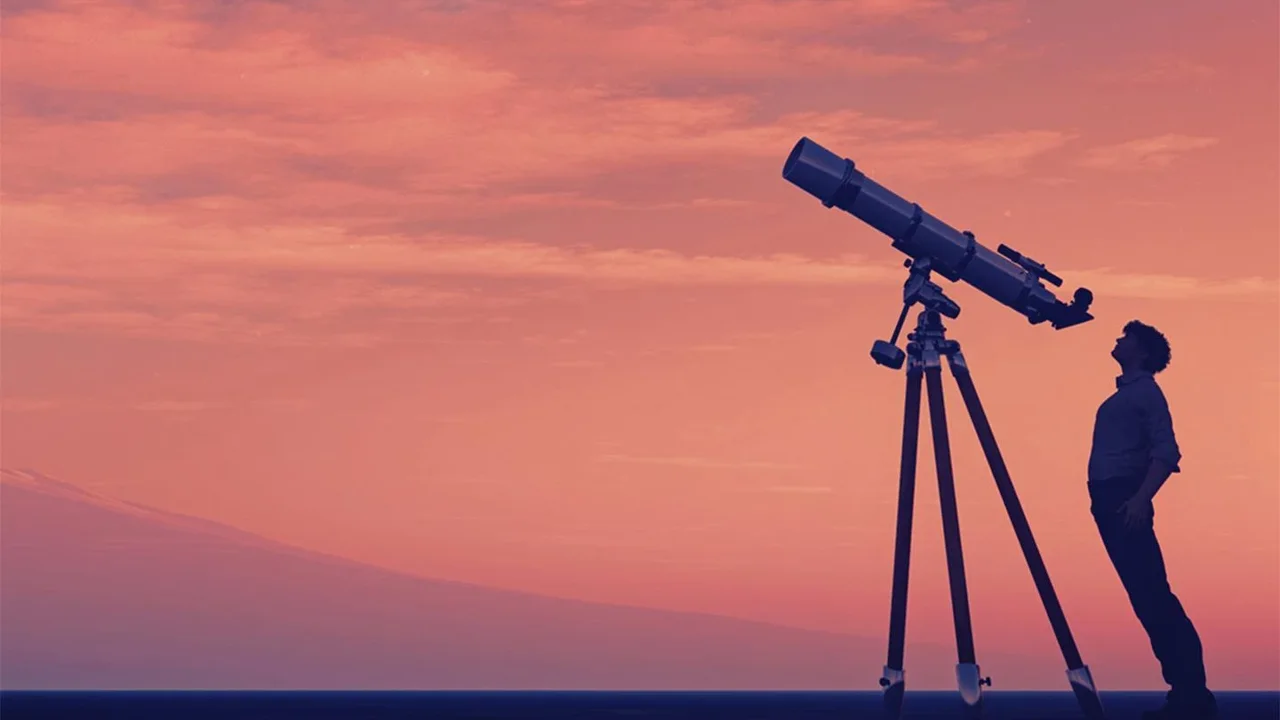
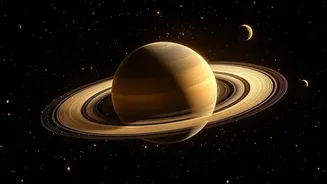
You won't need any special equipment to see Saturn. On the night of September 26, just look for the brightest star-like object shining steadily near the full moon. That will be the planet Saturn. It will appear as a bright, yellowish-white point of light, trailing the moon as they both journey across the night sky. While it will be stunning to the naked eye, binoculars will give you a clearer view of its golden colour. For those with a small telescope, you'll be in for a real treat. Even a modest instrument can reveal Saturn's most iconic feature: its magnificent ring system, which will appear as a narrow but dramatic line encircling the planet.
The Rewarding Hunt for Distant Neptune
Finding Neptune is a much bigger challenge. This ice giant is so far from Earth that it is never visible to the naked eye. However, the 2026 Harvest Moon occurs at the perfect time for an attempt. Neptune reaches “opposition” on September 25, the day before the full moon. Opposition is when Earth passes directly between the Sun and an outer planet, making that planet appear at its brightest and largest for the year. On the night of the 26th, Neptune will be in the same general area as the moon and Saturn. To find it, you’ll need at least a good pair of binoculars, though a telescope is highly recommended. Scan the area about 9 degrees southwest of Saturn. With patience and a steady hand, you might spot a tiny, faint point of light with a distinct bluish tint—the faint glow of a world nearly 4.5 billion kilometres away.
Tips for the Best Viewing Experience
To make the most of this celestial event, try to get away from the glare of city lights. A park or any open area with a clear view of the eastern horizon will be perfect for watching the moonrise. Give your eyes about 15-20 minutes to fully adjust to the darkness; this will help you see fainter objects like the planets and surrounding stars. While Saturn will be easy to find, using a stargazing app on your phone can help you pinpoint Neptune's exact location. And, of course, check the weather forecast. Clear skies are the most important ingredient for a great night of stargazing. If your view is clouded on the 26th, don't worry—the moon will still appear nearly full on the nights just before and after.