







The Billion-Rupee Question
For decades, the Indian box office followed a predictable pattern: Hindi films, colloquially known as Bollywood, held sway over the national imagination, while films from the Telugu, Tamil, Kannada, and Malayalam industries were largely confined to their
respective states. That era is decisively over. In recent years, the combined revenue of regional language films has frequently surpassed that of the Hindi film industry. Films like 'Baahubali', 'K.G.F.', 'RRR', and 'Pushpa: The Rise' didn't just perform well in the Hindi-speaking heartland; they decimated records, proving that audiences are increasingly language-agnostic and hungry for high-quality entertainment. This seismic shift was made possible by two unassuming but powerful tools: dubbing and subtitles.
More Than Just Words
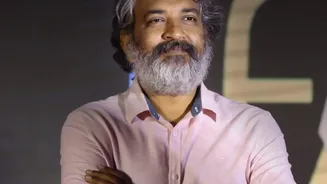
The art of dubbing has undergone a radical transformation. What was once a clunky, often comical afterthought has evolved into a sophisticated process. The turning point can be traced back to S.S. Rajamouli’s 'Baahubali' series, which invested heavily in high-quality Hindi dubbing that felt natural and emotionally resonant. Producers realised that for a film to truly work pan-India, the dubbed dialogue couldn't just be a literal translation; it had to be a cultural one. This involves adapting humour, idioms, and local references to connect with a new audience. For 'Pushpa', the now-iconic Hindi line 'Pushpa naam sunke flower samjhe kya? Fire hai main!', voiced by actor Shreyas Talpade, captured the same swagger as its Telugu original and became a national catchphrase, demonstrating the power of thoughtful localisation.
The Streaming Gateway
The explosion of Over-The-Top (OTT) platforms like Netflix, Amazon Prime Video, and Disney+ Hotstar acted as the ultimate catalyst. During the pandemic, with theatres closed, audiences across India turned to streaming services for their entertainment fix. These platforms democratised content, making a Malayalam thriller or a Tamil drama just as accessible as a big-budget Hindi movie. This did two crucial things: First, it normalised the act of watching content with subtitles, breaking what director Bong Joon-ho called the 'one-inch-tall barrier'. Second, it exposed millions of viewers to the stars, storytelling styles, and production quality of regional industries, creating a ready-made, curious audience for their eventual theatrical releases.
Content is the New Superstar
Ultimately, dubbing and subtitles opened the door, but it was the content that walked through it. Audiences, now exposed to a world of cinema on their devices, began demanding more than formulaic plots and familiar faces. Many successful pan-India films offered a potent combination of ambitious, high-concept storytelling, culturally rooted narratives, and spectacular visual effects. Whether it was the raw, rustic action of 'Kantara' or the grand, historical fantasy of 'Baahubali', these films provided fresh, immersive experiences that resonated on a universal emotional level. They proved that a compelling story, well told, needs no specific language to connect with viewers.
A New Cinematic Landscape
The success of regional cinema has fundamentally altered the economics and creative dynamics of the Indian film industry. In 2021, South Indian films generated a staggering ₹2,400 crore at the box office, nearly triple the revenue of Hindi films. The Hindi-dubbed versions of films like 'K.G.F: Chapter 2' and 'RRR' alone earned hundreds of crores, outperforming many mainstream Bollywood releases in their own territory. This has forced a rethink within Bollywood, which is now navigating a more competitive landscape. We're seeing more cross-industry collaborations, with stars and technicians moving between Mumbai, Hyderabad, and Chennai, and a greater willingness to invest in diverse stories that can appeal to a truly national audience.