





The End of the Unruly Bun
A low bun is the height of simple elegance. It’s professional enough for the office, chic enough for a dinner out, and practical enough for a busy day. Yet, for many, its simplicity is deceptive. The frustration of a bun loosening, drooping, or completely
falling apart by midday is a universal hair woe. It often leads to a collection of abandoned bobby pins and a resigned sigh. The truth is, the fault often lies not in our hair, but in our tools and technique. A secure, lasting bun doesn't require a mountain of pins or a cloud of hairspray. It requires the right pins, used in the right way, to create a stable structure that works with your hair, not against it.
A Guide to Your Pin Arsenal
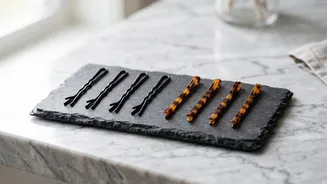
Not all hair pins are created equal. Choosing the correct one for the job is the first step toward a successful updo. Bobby Pins: These are the most common pins, but they are often misused. Best for detail work, like pinning down small flyaways or securing the ends of a braid, their primary function is to hold small sections of hair flat against the scalp. For a secure hold, always insert them with the wavy side against your head. U-Shaped Pins: Often called hair pins or French pins, these are the true heroes of the updo. Their open 'U' shape is designed to anchor larger sections of hair, like a bun or twist, by distributing tension evenly. They are less likely to pinch or pull, making them more comfortable for all-day wear. They slide into hair smoothly and are ideal for creating softer, more voluminous styles. * Spiral Pins (or Spin Pins): These corkscrew-shaped wonders are game-changers for bun security. By twisting them directly into the centre of your bun, they lock the hair in place from the inside out. Two spiral pins can often do the work of 20 bobby pins, providing incredible hold with minimal hardware, which is especially useful for thick or heavy hair.
Prep Your Hair for Success
The texture of your hair plays a huge role in how well it holds a style. Super clean, silky hair is notoriously slippery, making it difficult for pins to find purchase. For the best results, it's often recommended to style your bun on day-two hair, which has more natural grit. If your hair is freshly washed, you can easily replicate this texture. Before you begin, lightly mist your hair with a dry shampoo or a sea salt texturizing spray. This will give your strands the grip needed to help the pins hold fast and prevent the bun from slipping throughout the day.
Step-by-Step: The Secure Low Bun
Ready to build a better bun? Follow these simple steps for a look that is both elegant and incredibly secure. 1. Gather Your Hair: Start by pulling your hair back into a low ponytail at the nape of your neck. You don't need to secure it with an elastic unless your hair is very layered or fine; simply hold it firmly in one hand. 2. Twist and Coil: Twist the length of the ponytail tightly from base to ends. Then, begin coiling the twisted section around its base to form a neat bun shape. Tuck the ends of your hair underneath the bun. 3. The Pinning Technique: This is where the magic happens. Take a U-shaped pin and insert it into the outer edge of the bun. The key is to catch a small amount of hair from the bun, then angle the pin down towards your scalp and push it inwards, anchoring the bun to the hair on your head. It's a 'scoop and anchor' motion. Repeat this with three to four U-pins, placing them like points on a compass—top, bottom, left, and right—to secure the bun from all angles. For extra-stubborn hair, try inserting a spin pin on each side for a truly locked-in feel.
Pro Tips for an Indestructible Style
To take your bun from secure to foolproof, keep these tricks in mind. For a stronger hold with bobby pins, try crossing two of them in an 'X' shape. This creates a locking effect that's much more stable than single pins. If you find your U-pins slipping, try a velvet-coated or matte-finish version, as the added texture provides significantly more grip against the hair strands. For a final touch, you can lightly mist the bun with a flexible-hold hairspray, but remember that the structure you've built with the pins is doing the real work.