





A Sanctuary for the Stars
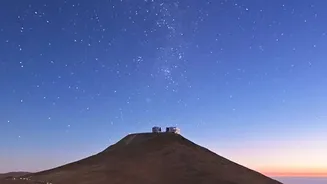
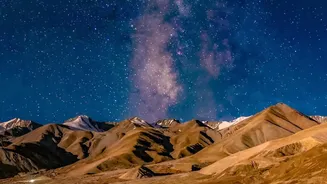
Deep in Ladakh’s Changthang region, at a staggering altitude of 4,500 metres, lies Hanle. In December 2022, this area was officially designated as India's first Dark Sky Reserve, a globally recognised status for places with exceptionally dark, clear night
skies. The reserve covers a 22-kilometre radius around the village, a commitment made by the local administration, the Ladakh Autonomous Hill Development Council, and the Indian Institute of Astrophysics (IIA) to protect this pristine environment from artificial light pollution. The air here is so thin, dry, and clear that Hanle boasts some of the darkest skies on the planet, achieving a Bortle 1 classification—the highest possible rating. This makes it a world-class location not just for tourists, but for scientists.
The Battle Against Light Pollution
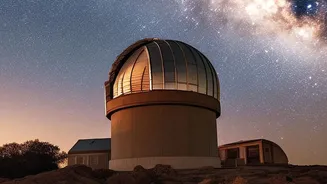
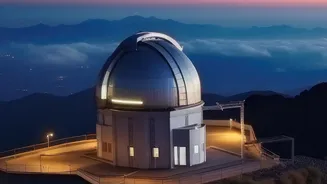
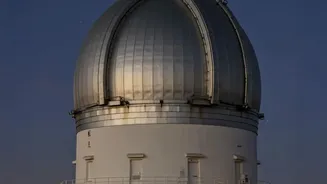
For most of the world's population, the Milky Way is a sight reserved for pictures. The culprit is light pollution: the excessive and misdirected artificial light from cities and towns that creates a pervasive 'sky glow', obscuring our view of the universe. This isn't just an astronomical problem; it disrupts ecosystems, affects human health, and severs a cultural connection to the night sky that has existed for millennia. In Hanle, the threat was particularly acute. The Indian Astronomical Observatory (IAO), operated by the IIA, hosts some of the world's most powerful telescopes. Even minimal light from villages or vehicle headlights can interfere with sensitive instruments conducting deep-space research, potentially damaging their electronics and ruining hours of observation.
How the Dark Sky Network Works
Protecting Hanle's darkness required a community-wide effort. The initiative is more than just a declaration; it's a practical, multi-pronged strategy. The IIA, with funding from the Union Territory administration, has distributed blackout curtains, shielded outdoor lamps, and special warm-tone light bulbs to every household in the reserve. These measures ensure that light is directed downwards where it's needed, not escaping sideways or upwards into the sky. Strict rules have also been implemented, prohibiting high-beam headlights on vehicles within the reserve, and road delineators have been installed to guide drivers safely in the dark. This network of simple but effective solutions is what allows Hanle to preserve its celestial views.
A Boost for Science and Livelihoods
The Hanle Dark Sky Reserve is a powerful example of science-driven sustainable development. The primary goal is to safeguard the cutting-edge research at the IAO, which studies everything from stars and galaxies to high-energy cosmic phenomena. But the initiative has also sparked a new wave of astro-tourism, creating economic opportunities for the local community. More than 20 local villagers, many of them women, have been trained as 'astronomy ambassadors'. Equipped with telescopes, they guide visitors through the cosmos, sharing local folklore and scientific knowledge. This has led to a boom in homestays, with the number growing from just a handful to over 70, providing a sustainable income that encourages residents to stay and invest in their community.
Planning Your Celestial Escape
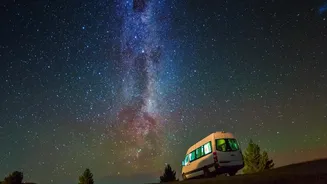
A trip to Hanle is an adventure that requires careful planning. Located about 270 kilometres from Leh, the journey takes 8-10 hours through a starkly beautiful landscape. Visitors must secure permits due to the area's proximity to the border. The key to a successful stargazing trip is timing. The best views are found during the new moon phase, when moonlight doesn't wash out the fainter stars. Acclimatisation is also crucial; spending a few days in Leh is recommended to adjust to the high altitude before heading to Hanle. While facilities are modest, the experience is unparalleled. By following responsible tourism practices—like using red-light torches and respecting the light discipline—visitors can help ensure this celestial sanctuary remains for generations to come.