






An in-flight emergency is a terrifying thought, but modern jets are masterpieces of preventative design. Their primary safety feature isn't just one system, but a philosophy: to slow down a crisis and give pilots the one thing they need most—time.
A Philosophy of Redundancy
The
cornerstone of aviation safety is redundancy, which is the practice of duplicating or even triplicating critical systems. Aerospace engineers assume that components will eventually fail, and they design the aircraft accordingly. This means a passenger jet doesn't just have one hydraulic system for its flight controls; it typically has three, often powered by different sources. If one system fails, another seamlessly takes over. This principle applies across the aircraft, from electrical power systems with multiple generators to navigation and communication radios. This layered approach ensures that a single point of failure is highly unlikely to become a catastrophe, transforming a potential disaster into a manageable problem that the crew can address.
Smarter Cockpits, Calmer Crews
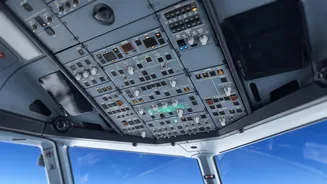
In an emergency, information overload is a real danger. Modern cockpits use sophisticated systems to prevent this. Systems like Boeing's EICAS (Engine Indicating and Crew Alerting System) and Airbus's ECAM (Electronic Centralized Aircraft Monitor) are designed to monitor the aircraft and prioritize alerts. Instead of a cascade of alarms, these systems use color-coded messages—red for urgent warnings, amber for less critical cautions—to focus the crew's attention on what matters most. The goal is to reduce pilot workload by having computers automatically monitor hundreds of inputs. An ECAM system often goes a step further by displaying the relevant checklist on-screen, guiding pilots through the correct procedure. This intelligent filtering and guidance turns the cockpit from a source of potential confusion into a clear, decision-making environment.
An Automated Guardian Angel
Many modern aircraft, particularly those from Airbus, feature 'fly-by-wire' systems with flight envelope protection. This system acts as a digital safety net, preventing a pilot from making control inputs that would push the aircraft beyond its aerodynamic or structural limits. For example, it can prevent the plane from stalling by limiting the angle of attack or protect against over-speeding. This allows pilots to react decisively and instinctively in an emergency—like pulling back hard on the controls to avoid an obstacle—without fear of accidentally putting the aircraft into an unrecoverable state. The system ensures the plane remains controllable, giving pilots the confidence to fly the aircraft to its maximum safe performance during a critical moment.
Power When All Else Fails
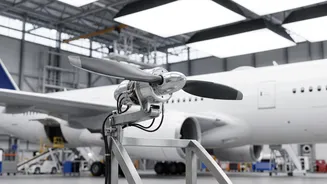
What happens if a plane loses power from all its engines? While exceedingly rare, there is a final backup: the Ram Air Turbine, or RAT. This small propeller is stowed in the wing or fuselage and can deploy automatically or manually into the airstream. As the aircraft moves through the air, the wind spins the RAT's blades, which in turn drive a hydraulic pump or an electrical generator. It doesn't produce enough power for all the aircraft's systems, but it provides enough for the essentials: the flight controls, critical instruments, and communication equipment needed for the pilots to glide the plane to a safe landing. The RAT is a testament to designing for the worst-case scenario, providing a lifeline powered by nothing more than the air the jet is flying through.
Containing and Suppressing Fire
An onboard fire is one of the most serious emergencies. Aircraft are designed with both passive and active fire protection. Passive measures include using fire-resistant materials and building firewalls to compartmentalize sections like the engines. Active systems include sophisticated smoke detectors and fire suppression equipment. In areas like cargo holds, detectors are designed to provide a warning to the cockpit within a minute of a fire starting. Pilots can then remotely discharge a suppression agent, typically a gas like Halon, to extinguish the flames. A second, metered discharge is often available to suppress the fire for an extended period, giving the crew sufficient time to divert and land at the nearest suitable airport.