





Understanding Monsoon Hair Woes
During the monsoon, the high humidity in the air is the primary culprit behind our hair troubles. Hair is porous, and when the air is moist, each strand absorbs that excess moisture, causing the hair shaft to swell. This leads to the all-too-familiar
frizz and makes hair feel unmanageable. Furthermore, this constant swelling and drying can weaken the hair's structure over time. Add environmental pollutants, which are common in urban areas, and you have a recipe for disaster. Pollutants can create buildup on the scalp, clog follicles, and strip hair of its natural protective layers, leading to breakage, dullness, and even hair loss.
The Chemical Conditioner Quick-Fix
When faced with frizz, most of us reach for a chemical conditioner. These products often contain ingredients like silicones, which work by coating each hair strand with a thin, waterproof film. This coating smooths the hair's cuticle, providing that instant silky, detangled feeling and a glossy shine. However, this is largely a cosmetic effect. The problem is that many silicones are not water-soluble and can build up on the hair over time. This buildup can weigh hair down, block nourishing ingredients from penetrating the shaft, and ironically, lead to dryness and dullness in the long run. To remove this buildup, harsh sulfate-based shampoos are often needed, which can strip the hair of its natural oils, creating a cycle of damage.
The Nourishing Power of Herbal Treatments
In contrast, natural herbal treatments work on a different principle. Instead of just coating the hair for a temporary fix, they aim to nourish, strengthen, and repair the hair and scalp from within. Ingredients drawn from Ayurveda are packed with vitamins, antioxidants, and nutrients that address the root causes of hair problems. They help balance the scalp's natural oils, strengthen follicles, and improve the hair's inherent texture and resilience. While the results may not be as instantaneous as a silicone-based serum, the long-term benefits include healthier, stronger hair that is better equipped to handle environmental stressors.
DIY Hero: The Amla, Reetha, and Shikakai Trio
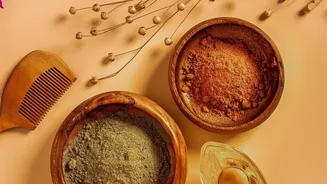
This classic Ayurvedic combination is a powerhouse for hair health. Amla (Indian Gooseberry) is rich in Vitamin C and antioxidants, which strengthen hair roots and promote growth. Reetha (Soapnut) is a natural cleanser with saponins that gently remove dirt and excess oil without stripping the scalp. Shikakai, which translates to 'fruit for hair', acts as a natural conditioner, detangling strands and adding shine. To create a simple hair rinse, soak a few pods of Reetha and Shikakai with some dried Amla pieces in water overnight. The next morning, boil the mixture, let it cool, and use the strained liquid to wash your hair. It cleanses and conditions in one step.
DIY Hero: Hibiscus and Fenugreek Mask
For combating frizz and promoting softness, a mask made from hibiscus flowers and fenugreek (methi) seeds is incredibly effective. Hibiscus is known for its conditioning properties that help create soft, shiny hair. Fenugreek seeds are rich in protein and nicotinic acid, which are known to help combat hair fall and dandruff, while their mucilage content provides excellent slip for detangling. To make a mask, soak a few tablespoons of fenugreek seeds overnight. In the morning, grind them into a paste along with a handful of fresh hibiscus flowers and leaves. Apply this paste to your scalp and hair, leave it on for about 30 minutes, and then rinse thoroughly.