
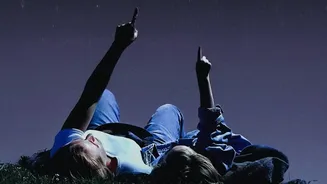

The Perseid Meteor Shower Peaks
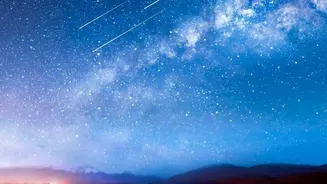
The star of the August show is the annual Perseid meteor shower, which is set to be one of the best in years. The shower peaks on the night of August 12 and into the pre-dawn hours of August 13. What makes 2026 exceptional is that the peak coincides perfectly
with the new moon, meaning the sky will be completely dark and free of moonlight, allowing even fainter meteors to shine. Observers in dark locations could see up to 100 meteors per hour. For viewers in India, the best time to watch is between 2:00 AM and 4:30 AM IST on August 13, when the shower's radiant point in the constellation Perseus is high in the northeastern sky. These meteors are fragments of the comet Swift-Tuttle, and they are known for being bright and fast, often leaving persistent trails.
A Parade of Planets
August 2026 offers a fantastic opportunity to spot several planets. Throughout the month, yellowish Saturn will be visible, rising in the east in the evening and remaining high in the sky before dawn. Reddish Mars will also be visible in the pre-dawn sky. Around August 12, a six-planet alignment will occur, though not all will be easily visible. Mars and Saturn will be the easiest to see with the naked eye. Venus will be a dominant, super-bright object in the western evening sky after sunset. For those with binoculars, Uranus and Neptune can also be spotted, while Mercury and Jupiter will be very low on the eastern horizon before sunrise, presenting a challenge for most observers.
Navigating the Monsoon Challenge
The biggest hurdle for stargazing in India during August is, of course, the monsoon. Widespread cloud cover can frustrate even the most dedicated sky-watchers. However, success often comes down to location. The key is to target regions that fall in a rain shadow or are high enough to be above the densest clouds. Checking weather apps for clear-sky charts becomes essential. Don't be discouraged by a cloudy evening; weather patterns can shift, opening up windows of clear sky, particularly in the post-midnight hours when temperatures drop.
Best Spots for August Viewing
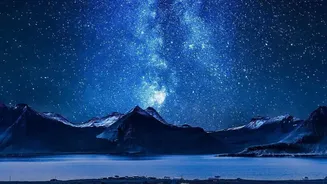
To escape the monsoon clouds, your best bets are high-altitude cold deserts. Ladakh is India's premier stargazing destination, and home to the country's first official Dark Sky Reserve in Hanle. Places like Hanle, Pangong Tso, and the Nubra Valley offer exceptionally clear skies, as they are shielded from the monsoon. Similarly, Spiti Valley in Himachal Pradesh is another excellent choice, with villages like Kaza, Kibber, and Langza providing pristine viewing conditions. For those in other parts of the country, the arid Thar Desert in western Rajasthan, particularly around Jaisalmer, can also offer clearer skies than the rest of the subcontinent.
Your Stargazing Starter Kit
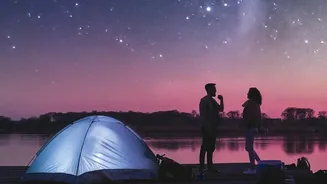
You don’t need expensive equipment to enjoy the night sky. The most important tool is patience. Find a comfortable spot away from city lights and give your eyes at least 20-30 minutes to fully adapt to the darkness. Avoid looking at your phone screen, as the white light will ruin your night vision; if you need a light, use a red torch. A simple pair of binoculars can dramatically enhance your view, revealing details on the moon and bringing faint star clusters into focus. For identifying constellations and planets, apps like Star Walk 2 or Stellarium can be incredibly helpful. Lastly, dress in layers, as even summer nights can get chilly, especially at higher altitudes.