






The Case for Slow Travel
Choosing a train over a plane in Southeast Asia is about more than just transport; it's a conscious decision to travel deeper. The modern traveller is increasingly weary of the sterile, hurried experience of budget air travel—the long security lines,
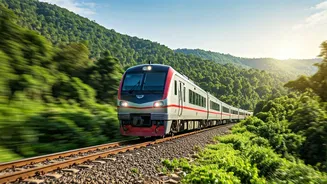
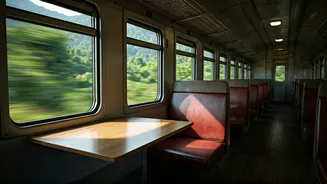
the cramped seats, the taxi rides to and from remote airports. Train travel is the antidote. It’s a more sustainable choice, with a significantly lower carbon footprint per passenger. More importantly, it re-inserts the journey into your adventure. Instead of flying over a country, you travel through it, watching the landscape shift from bustling cities to tranquil rice paddies and limestone cliffs from the comfort of your window. It’s an opportunity to meet locals, share a meal with fellow travellers, and see the slices of daily life that are completely invisible from 30,000 feet.
Vietnam: The Reunification Express
Stretching over 1,700 kilometres between Hanoi in the north and Ho Chi Minh City in the south, the Reunification Express isn't a single train but a railway line that stitches a nation together. While the full 30+ hour journey is an epic undertaking, most travellers opt for its most scenic and manageable sections. The stretch from Hue, the former imperial capital, to Da Nang is arguably the most famous. This leg of the journey takes you along the stunning Hai Van Pass, with the railway line clinging to cliffs as it offers breathtaking views of the South China Sea on one side and lush, jungle-clad mountains on the other. It’s a few hours of pure cinematic beauty, offering a perspective on Vietnam’s coastline that you simply cannot get any other way.
Thailand: The Historic Death Railway
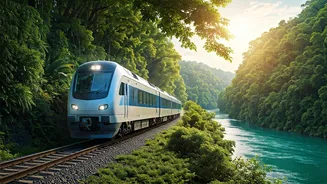
This route from Bangkok to Nam Tok carries a heavy but important history. Built by prisoners of war during World War II under brutal conditions, the “Death Railway” is now a poignant memorial and a stunningly scenic journey. The train ride from Kanchanaburi is the most popular segment, taking travellers through peaceful countryside before it reaches the journey’s dramatic climax: the slow crawl over the historic Wang Pho Viaduct. Here, the train travels along a wooden trestle bridge built into the side of a cliff, with the River Kwai flowing directly below. It’s a beautiful, humbling, and deeply moving experience that combines natural beauty with a powerful reminder of the past.
Malaysia: The West Coast Line
Connecting Malaysia’s major cities, the West Coast Line offers a comfortable and efficient way to see the country's diverse landscapes. For a truly scenic ride, take the Electric Train Service (ETS) from Kuala Lumpur north towards the Thai border. As you leave the urban sprawl of the capital behind, the scenery transforms into a mesmerising tapestry of palm oil plantations, vibrant green paddy fields, and dramatic limestone karst formations that jut out of the flat plains. A popular route is from KL to Ipoh, a city famous for its colonial architecture and fantastic food. Or, continue all the way to Padang Besar on the border, where you can easily connect to Thailand's rail network for a multi-country adventure.
The Luxury Route: Eastern & Oriental Express
For those seeking to make the journey itself the main event, the Belmond Eastern & Oriental Express is the pinnacle of luxury train travel. This is not a commuter train; it is a rolling five-star hotel that glides through the landscapes of Singapore, Malaysia, and Thailand. Passengers enjoy private cabins with en-suite bathrooms, fine dining in opulent restaurant cars, and cocktails in an open-air observation car as the Southeast Asian scenery unfolds. While it comes with a premium price tag, it represents a return to the golden age of travel, transforming a simple journey into a once-in-a-lifetime experience.