








Why Your Desk Job Hurts Your Back
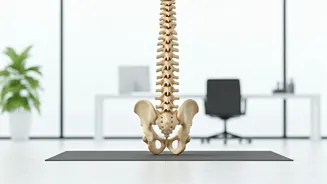
Sitting for extended periods, a reality for many office workers in India, puts continuous pressure on the spine. Between each vertebra are fluid-filled discs that act as cushions. Gravity and a slouched posture compress these discs throughout the day,
squeezing out fluid and reducing the space between vertebrae. This constant compression can lead to stiffness, discomfort, and over time, contribute to chronic lower back pain and poor posture. The muscles in your back and shoulders can also become tight and sore from being held in a fixed position for too long.
What is a Dead Hang?
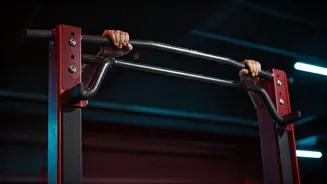
A dead hang is a simple yet effective bodyweight exercise. It involves hanging from a horizontal bar with your arms fully extended and your feet off the ground. The name comes from the fact that you are meant to hang passively, without any pulling or movement, letting your body hang like a 'dead weight'. This allows gravity to gently pull your lower body downwards, creating a natural stretching force through your entire torso and spine. It's an isometric exercise, meaning the muscles are engaged without changing length.
The Science of Spinal Decompression
The primary benefit of a dead hang for back pain is spinal decompression. As you hang, the force of gravity creates traction, gently increasing the space between your vertebrae. This can help relieve pressure on the compressed intervertebral discs, allowing them to rehydrate by drawing in fluid and nutrients. This rehydration is crucial for disc health and can alleviate pressure on nearby nerves that might be causing pain. The stretch also lengthens the latissimus dorsi ('lats') and other back muscles, which can become tight from sitting.
How to Perform a Dead Hang Correctly
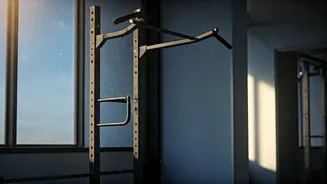
Proper form is crucial to get the benefits and avoid injury. Start by finding a sturdy, stable overhead bar, like a pull-up bar at a gym or a park. Use a box or a bench to easily reach the bar; you should not have to jump up to grab it. Grip the bar with both hands using an overhand grip (palms facing away from you), with your hands placed slightly wider than your shoulders. Step off the bench so your body is hanging freely with your arms straight. Keep your shoulders relaxed and avoid shrugging them up towards your ears. Let your body hang completely relaxed. Try to hold the position for 10-20 seconds to begin with, and gradually work your way up to 45-60 seconds as your grip strength improves. To finish, step back onto the bench before letting go of the bar.
When and How Often Should You Hang?
Dead hangs are best performed after your workday or at the end of a workout as part of your cool-down routine, as passive stretching isn't ideal before a workout. Consistency is key. Aim to perform dead hangs a few times a week. You can do 3 to 4 sets, holding each hang for as long as you can with good form, resting for about a minute between sets. Even starting with short 10-second hangs daily can begin to make a difference. The goal is to accumulate time spent hanging to allow for that gentle decompression.
Important Precautions and Who Should Avoid It
While beneficial for many, dead hangs are not for everyone. If you have a pre-existing shoulder injury, such as a labrum tear, shoulder instability, or hypermobility, you should be extremely cautious or avoid this exercise. The hanging position can put significant stress on the shoulder joint. It's also wise to consult a doctor before starting if you have wrist issues or high blood pressure. Pain is a signal to stop. While muscle soreness from a new exercise is normal, sharp or shooting pain in your shoulders, wrists, or back is not.