






Understanding the PUC Mandate
A Pollution Under Control (PUC) certificate is a document that certifies your vehicle's emissions are within the government-prescribed limits. Under the Central Motor Vehicles Rules, 1989, it is mandatory for every motor vehicle—including petrol, diesel,
and CNG models—to have a valid PUC certificate one year after its initial registration. This rule is a key part of the region's Graded Response Action Plan (GRAP) to manage air quality, especially during the winter months when pollution levels spike. Electric vehicles are the only exception and do not require a PUC certificate as they have zero tailpipe emissions.
The Consequences of Non-Compliance
The changes for drivers are significant and twofold. First, driving without a valid PUC certificate can result in a hefty fine of ₹10,000, potential imprisonment for up to six months, or both. Authorities can also suspend your driving licence for three months. Second, under the 'No PUC, No Fuel' rule effective from October 1, 2026, all fuel stations across Delhi and the wider National Capital Region (NCR) are directed to deny petrol, diesel, or CNG to any vehicle without a valid PUC. Fuel stations will use Automatic Number Plate Recognition (ANPR) cameras or manual checks to verify your vehicle's PUC status in the central VAHAN database before refueling.
How to Get or Renew Your PUC Certificate
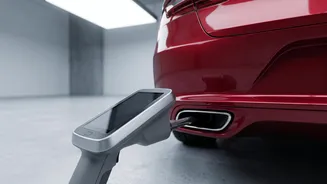
Obtaining or renewing a PUC certificate is a straightforward process. You must take your vehicle to an authorised emission testing centre, which are commonly found at petrol pumps and workshops across the city. An operator will use a device to analyse your vehicle's exhaust emissions. If the emissions are within the legal limits, a certificate is issued on the spot and the data is uploaded to the Parivahan database. The entire test usually takes less than 15 minutes. You can find a list of authorised centres on the Parivahan portal. While you must visit a centre for the test, you can download a digital copy of an existing, valid certificate online via the Parivahan or mParivahan apps.
Cost and Validity Details
The cost for a PUC test in Delhi is nominal, generally ranging from ₹80 to ₹140, depending on the vehicle and fuel type. For new vehicles (BS-IV and BS-VI compliant), the initial certificate is valid for one year. After that, and for all older vehicles, the certificate must be renewed every six months. It is crucial to keep track of your certificate's expiry date to avoid the significant penalties and inconvenience of being denied fuel. You can check your PUC status and expiry date online through the Parivahan website by entering your vehicle registration number.
Beyond the Fuel Pump
The enforcement of PUC norms is part of a larger strategy to curb vehicular pollution, which is a major contributor to the region's poor air quality. Authorities are also cracking down on older, more polluting vehicles. For instance, there are restrictions on the entry of commercial vehicles that are not BS-VI compliant into Delhi, especially between November and January. Petrol vehicles older than 15 years and diesel vehicles older than 10 years are generally not eligible for a PUC certificate in Delhi and face being scrapped. By ensuring your vehicle has a valid PUC, you are not only following the law but also contributing to a cleaner environment.