





The Spark: What's Happening?
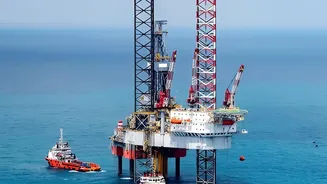
Recent military exchanges between the United States and Iran have disrupted shipping in the Strait of Hormuz, the world's most critical chokepoint for oil transport. Attacks on oil tankers and retaliatory strikes have raised fears of a wider conflict
that could severely constrain global oil supplies. As a result, Brent crude, the international benchmark, has surged, hovering near the $100 per barrel mark, a level not seen for weeks. Analysts warn that if the situation escalates, prices could climb as high as $120 per barrel.
India’s Heavy Reliance on Imports
India's economy is uniquely vulnerable to these global price shocks because it imports over 85% of its crude oil requirements to fuel its growing nation. A significant portion of these imports, historically around 45-55%, comes from the Middle East and must pass through the now-volatile Strait of Hormuz. While India has made efforts to diversify its sources, including increasing purchases from Russia, its dependence on Gulf producers like Iraq and Saudi Arabia remains substantial. This deep-seated reliance means that any disruption in the Middle East has an immediate and direct bearing on India's energy security.
From Crude to Your Car: The Price Trail
The journey from a barrel of crude oil to the petrol or diesel in your vehicle is a complex one, but higher crude prices are the starting point for pain at the pump. After oil is purchased in US dollars, it's refined and sold to Oil Marketing Companies (OMCs) in India. These companies then calculate the final retail price, which is heavily influenced not just by the crude cost but also by the rupee-dollar exchange rate and, crucially, by central and state taxes. Taxes, including central excise duty and state-level VAT, can make up more than half of the final price you pay. While the government sometimes absorbs initial price shocks to cushion consumers, a sustained rise in crude prices inevitably leads to higher fuel bills.
The Ripple Effect Across the Economy
The impact of expensive oil goes far beyond just transportation. Higher fuel costs create a domino effect across the entire economy. Diesel is the lifeblood of freight, so when its price rises, so does the cost of transporting everything from vegetables to manufactured goods, stoking inflation. This directly affects household budgets. For the government, a rising oil import bill puts immense pressure on the nation's finances, widening the Current Account Deficit (CAD) — the gap between the country's imports and exports. Economists estimate that for every $10 increase in the price of a barrel of crude, India's import bill rises by billions of dollars, which can also weaken the rupee.
Pressure on Growth and Industry
Sustained high oil prices can act as a brake on economic growth. Industries that are heavy energy consumers, such as manufacturing, chemicals, and aviation, face squeezed profit margins as their input costs soar. This can lead to lower corporate earnings and discourage new investments. Furthermore, to combat the resulting inflation, the Reserve Bank of India (RBI) may be forced to keep interest rates high, which makes borrowing more expensive for both businesses and consumers, potentially slowing down overall economic activity.