




When it comes to low-impact cardio, cycling and skating are two of the most popular choices. While cyclists often focus on core strength for power, the graceful glide of skating hides an intense stability challenge that is second to none.
Cycling's Stable Foundation for Power
On the surface,
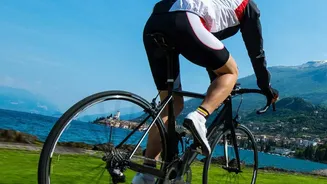
cycling appears to be all about leg strength. The powerful quadriceps, hamstrings, and glutes do indeed drive the pedals. However, any seasoned cyclist will tell you that a strong core is the unsung hero of an efficient ride. The core—a complex of muscles around your trunk and pelvis—acts as a stabilizing platform. When you ride, your core works to prevent your upper body from rocking side to side, ensuring that all the energy you generate is transferred directly into your pedal stroke. Without this stability, power is wasted in unnecessary upper-body movement. Think of your core as the frame of the bike itself; it needs to be rigid and strong to allow the moving parts (your legs) to function effectively. A solid core minimizes extraneous motion, improves balance in the saddle, and helps maintain a powerful, aerodynamic posture, especially during long rides or intense climbs.
Skating’s Constant Quest for Balance
Skating, whether on ice or with inline skates, introduces a completely different type of physical demand. While cycling involves a largely fixed, two-dimensional plane of motion, skating is a masterclass in dynamic instability. From the moment you push off, your body is on a constantly moving surface, requiring continuous, minute adjustments to stay upright. This is where the core’s role becomes profoundly apparent. Every glide, turn, and stop forces the abdominal, oblique, and lower back muscles to fire relentlessly to maintain your center of gravity. The simple act of balancing on one leg while the other propels you forward is an intense core exercise in itself. This constant engagement builds not only strength but also proprioception—your body's awareness of its position in space.
The Key Difference: Static vs. Dynamic Stability
The comparison between the two activities highlights a crucial distinction in how they challenge core stability. Cycling demands a strong, braced core to create a static, stable base for power generation. The challenge is to prevent motion. Skating, conversely, demands a reactive, adaptable core that can manage and control motion in a constantly changing, unstable environment. Your core isn't just bracing; it's actively steering, correcting, and re-balancing with every stride. Skating engages the entire core musculature, including the deeper stabilizing muscles and the hip abductors and adductors, which are crucial for the side-to-side push-off motion. While cycling primarily focuses on forward propulsion, skating requires 360-degree control, making its core challenge more comprehensive in terms of coordination and dynamic balance.
A Full-Body Perspective
Beyond the core, both sports offer phenomenal fitness benefits. Cycling is a powerhouse for building lower_body strength, particularly in the quads and calves, and is excellent for cardiovascular endurance over long distances. Skating provides a more complete full_body workout. The push_and_glide motion develops the glutes and hamstrings in ways cycling doesn't, and the need to swing your arms for balance and momentum also engages the upper body and shoulders. Because it involves constant adjustments, skating is also exceptional for improving overall coordination and agility. Furthermore, the smooth, gliding nature of skating makes it a very low_impact activity, putting less stress on the joints than even cycling.