
The Science of Kiwi Pollination
Most kiwifruit varieties, including the common fuzzy kind (Actinidia deliciosa), are dioecious. This botanical term simply means that individual plants are either male or female, producing only male or female flowers, respectively. For fruit to develop,
pollen must travel from a male flower to a female flower. The female plants are the ones that bear fruit, but only after they have been successfully pollinated by a nearby male plant. Without a compatible male vine flowering at the same time, a female vine will produce lovely flowers but no fruit. This process of cross-pollination is primarily carried out by bees, who are attracted to the blossoms. Wind can play a small role, but it's much less effective.
Identifying Male vs. Female Flowers
The only sure way to tell your kiwi vines apart is by examining their flowers when they bloom in late spring or early summer. At first glance, they look similar, but the centers are distinctly different. Female flowers have a well-defined, greenish-white ovary at the very base, which is the part that will swell into a fruit. Radiating from this central ovary are numerous long, sticky stalks called stigmas, designed to catch pollen. Male flowers, on the other hand, lack this central ovary. Instead, their center is a burst of bright yellow, pollen-covered stamens. Their sole job is to produce copious amounts of pollen to attract bees and ensure the nearby females are pollinated.
Your Garden Planting Strategy
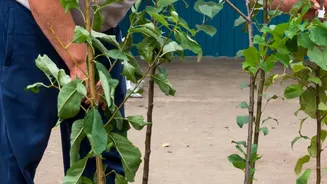
To ensure a good harvest, you need a proper male-to-female ratio and correct placement. A single male vine produces enough pollen to fertilise up to eight female vines. For most home gardens, one of each is perfectly sufficient. Plant them relatively close to each other, ideally within about 15 metres (or 50 feet), to give pollinators like bees the best chance of travelling between them. It’s also crucial to choose male and female varieties that have overlapping bloom times to ensure pollen is available when the female flowers are receptive. When purchasing from a nursery, plants are often tagged by gender and variety name (e.g., 'Hayward' is a popular female, while 'Tomuri' is a common male pollinator).
What If You Only Have Room for One?
For gardeners with limited space, the need for two large vines can be a significant barrier. Fortunately, horticulture has provided a solution: self-fertile kiwi varieties. Varieties like 'Issai' (a hardy, smooth-skinned kiwiberry) and 'Jenny' (a fuzzy kiwi) are capable of producing fruit from a single plant. These plants are technically 'parthenocarpic', meaning they can set fruit without pollination. However, it's important to note that even these self-fertile types will produce a much larger and more reliable crop if a male plant is nearby to assist with pollination. So, while you can get a harvest from one, adding a male pollinator will almost always boost your yield and fruit size.
Taking Matters Into Your Own Hands
Sometimes, nature needs a little help. Kiwi flowers don't produce nectar, which means they aren't a top priority for bees who may be distracted by other, sweeter blossoms. If you notice a lack of bee activity or have a male vine with a short bloom time, you can try hand-pollination. This simple technique can dramatically increase your fruit set. Gently pluck a freshly opened male flower and brush it against the centre of several open female flowers, transferring the yellow pollen to their sticky stigmas. You can also use a small, soft brush or cotton swab to collect pollen from the male anthers and 'paint' it onto the female stigmas. This manual assistance ensures that pollination occurs, setting you up for a delicious autumn harvest.