


A Policy Shift Opens the Skies
For decades, space in India was the exclusive domain of the Indian Space Research Organisation (ISRO). But a major policy shift, crystallized by the Indian Space Policy of 2023, has opened the floodgates for private enterprise. The creation of the Indian National
Space Promotion and Authorisation Centre (IN-SPACe) as a single-window agency is designed to nurture this budding ecosystem. IN-SPACe's role is to facilitate private activities, from building rockets and satellites to sharing ISRO's world-class infrastructure, effectively transitioning from an ISRO-centric model to a collaborative public-private framework. This move allows ISRO to focus on advanced research and deep space exploration while private players drive commercialization and scale.
The Rocket Builders: Reaching for Orbit
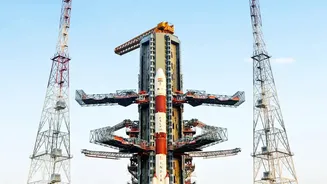
At the forefront of this new wave are the launch vehicle startups. Hyderabad-based Skyroot Aerospace made history by launching Vikram-S, India's first privately developed rocket, and followed up with the successful orbital launch of Vikram-1. Their rockets utilize innovative technologies like carbon composite structures and 3D-printed engines to make space access more affordable. Similarly, Chennai's Agnikul Cosmos is pioneering with its Agnibaan rocket, which is highly customizable and features the world's first single-piece 3D-printed engine. This innovation drastically reduces manufacturing complexity and time, showcasing a new path for rapid rocket production.
Eyes in the Sky: A New Constellation of Satellites
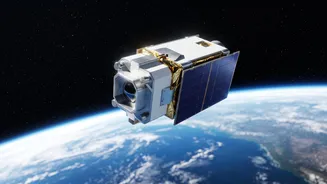
It’s not just about the launch; it’s about what you put into orbit. Bengaluru-based Pixxel is carving out a global niche by building a constellation of hyperspectral imaging satellites. Unlike standard cameras, these satellites capture hundreds of light wavelengths, providing incredibly detailed data that can detect crop diseases, monitor pollution, and identify mineral deposits from space. Meanwhile, Dhruva Space, a full-stack space engineering company, is building versatile satellite platforms like the P-DoT and P-30 bus. These modular platforms allow other companies to deploy their own payloads—from IoT sensors to communication devices—without having to build a satellite from scratch, accelerating access to space.
The Full Stack: Propulsion, Platforms, and Data
A robust space economy requires a deep supply chain. Companies like Bellatrix Aerospace are developing critical subsystems, including greener propulsion systems and orbital transfer vehicles that act as 'space tugs' to place satellites in precise orbits. Others focus on the downstream applications, where the real economic value is often unlocked. Startups like SatSure leverage satellite data to provide decision intelligence for agriculture, finance, and infrastructure sectors. This full-stack approach, from manufacturing components to analyzing the data they collect, is what transforms space activity into a thriving, integrated industry.
An Economy Ready for Liftoff
The impact of this private-sector push is expected to be enormous. India's space economy is projected to grow from around $8.4 billion to as much as $44 billion by 2033. This growth is fueled by a surge in startups, which have grown from a handful in the last decade to over 400 by 2026. With a reputation for cost-effective engineering and a government mandate for commercialization, these private firms are not just supporting national ambitions. They are positioning India as a competitive hub for global launch services, satellite manufacturing, and data applications, ensuring the country's journey into space is both ambitious and economically sustainable.