

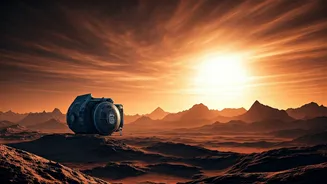


Earth's Lost Sibling
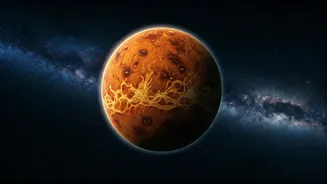
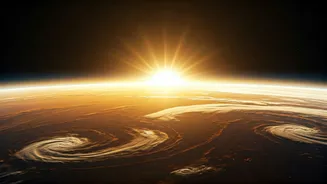
Venus is often called Earth's twin because they are similar in size, mass, and composition. But the similarities end there. Venus suffers from a runaway greenhouse effect, boasting a thick, toxic atmosphere of carbon dioxide and sulfuric acid clouds that
traps heat. This results in surface temperatures hot enough to melt lead and an atmospheric pressure over 90 times that of Earth's. Scientists believe Venus may have once hosted water oceans, making it a crucial case study for understanding how a planet so similar to our own could become so inhospitable. Unlocking its secrets could provide cautionary lessons about climate change on our own planet.
Enter Shukrayaan: India's Venus Quest
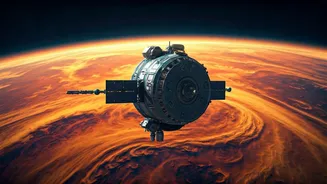
Following its successful missions to the Moon (Chandrayaan) and Mars (Mangalyaan), ISRO is preparing for its next great interplanetary leap: Shukrayaan-1. The name combines the Sanskrit word for Venus, "Shukra," with "Yaan," meaning craft. This orbiter mission is India's first dedicated venture to our shrouded neighbour. The mission, which has received cabinet approval, is tentatively scheduled for a launch in March 2028. It represents a significant step in India’s ambition to become a major player in planetary science, joining a new wave of global interest in Venus.
The Scientific Toolkit
Shukrayaan-1 will carry a suite of about 100 kg of scientific instruments designed to peer beneath the planet's thick cloud cover. A key instrument is a high-resolution Synthetic Aperture Radar (SAR), which can map the planet’s surface regardless of the clouds, searching for geological features like volcanic hotspots and lava flows. Other instruments will study the structure and composition of the atmosphere, investigate how the solar wind interacts with the Venusian ionosphere in the absence of a global magnetic field, and analyse cloud chemistry. The mission will feature collaborations with international space agencies, including Sweden and Russia, on some of its key payloads.
Decoding a Hostile World
The primary goals of Shukrayaan-1 are ambitious and wide-ranging. ISRO aims to create the first comprehensive map of Venus's subsurface, an area that has never been observed before. Scientists want to understand the mysterious 'super-rotation' of the Venusian atmosphere, where winds whip around the planet far faster than the planet itself spins. Another major objective is to investigate the planet's geological activity to determine if Venus is still volcanically active today. By studying the processes that led to Venus losing its water and developing its extreme climate, the mission hopes to gather vital data on how Earth-like planets evolve and what makes a planet habitable.
A New Chapter in Space Exploration
Shukrayaan-1 is more than just a scientific mission; it is a statement of India’s growing prowess in deep space exploration. The mission will pioneer new techniques for ISRO, including aerobraking—using a planet’s atmospheric drag to slow the spacecraft and adjust its orbit, saving precious fuel. As global space agencies like NASA and ESA also plan their own return to Venus in the coming decade, India’s mission is poised to provide crucial, complementary data. By aiming to decode the secrets of our sister planet's extreme environment, ISRO is not just exploring another world, but seeking profound insights into the past, present, and future of our own.